
Somewhere inside every expensive machine there is a part nobody thinks about. A drill rig sweating in the desert. A robot arm on hour nine of its shift. An engine that has to survive years between overhauls. All of them run on shafts and rotating components that no catalog sells. One machine. One drawing. Built for that job only.
Foshan Ruizheng Machinery Manufacturing Co., Ltd. has worked this ground since 2013. It started as a small lathe shop. Today? Lathes, milling machines, grinders — plus a constant-temperature testing chamber and robotic systems handling loading and unloading. Customers buy from them in Europe, the United States, Japan, Southeast Asia. Equipment list, product range, all of it sits on the Ruizheng official website.
Below: what three brutal application areas demand from a custom part. Which part types actually carry the load. And where material, heat treatment, and inspection choices decide whether a part lasts — or dies young.
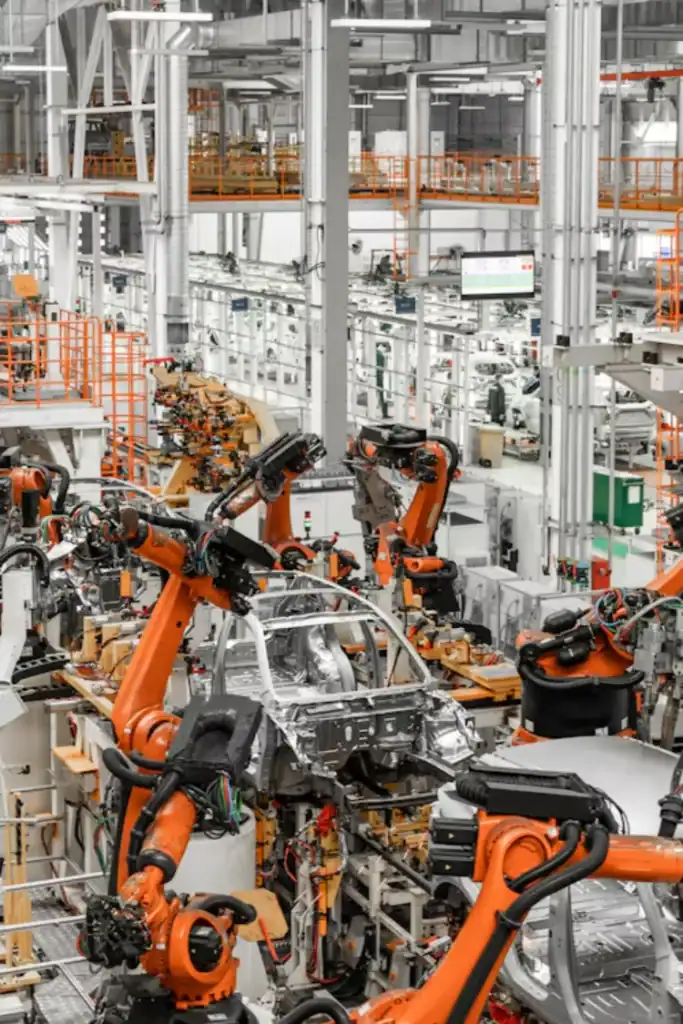
What Oilfield, Robotics and Engine Systems Demand From a Part
Different industries, different failure modes. Yet a pattern keeps showing up. The part that survives is the one matched to its load. Its temperature. Its duty cycle.
Oilfield Equipment: Heavy Loads and No Room for Downtime
Oilfield machinery is hard on shaft parts. Static loads that never let up. Shock. Vibration — always there, never quite stopping. Then dust, temperature swings, maintenance windows counted in hours. A stepped transmission shaft out here is no consumable. Pull it and you pull the whole assembly with it. So the part has to run long duty cycles without a word of complaint. Buyers respond the way you’d expect: forged alloy steels, through-hardening, safety factors kept conservative at every diameter transition.
Robotics: Repeatability Beats Brute Force
Robot arms want something else entirely. The loads? Moderate. But position has to repeat — thousands of times an hour, all shift, year after year. Backlash creeps in. So does wear on any journal a few microns out of round. This is where concentricity and surface finish stop being drawing footnotes. Joint shafts, rotary table components, reducer inputs: they live or die on those two things. A separate guide on how to specify custom CNC parts for industrial robot arms covers the drawing details that matter here.
Engine Systems: Heat, Speed, and Fatigue
Engines and compressors pile on cyclic stress. A crankshaft or eccentric shaft sees millions of load reversals. Thermal cycling. Sliding contact under an oil film. Fatigue is the enemy — and fatigue starts at stress raisers. A sharp fillet. A rough surface. A decarburized layer some careless heat treatment left behind. Suppliers who control the whole chain, material certificate to final grinding, are the ones engine components reward.
The Parts That Carry These Jobs
Ruizheng’s custom work centers on one family of CNC components. Three of them keep appearing in the applications above.
Custom Step Shafts
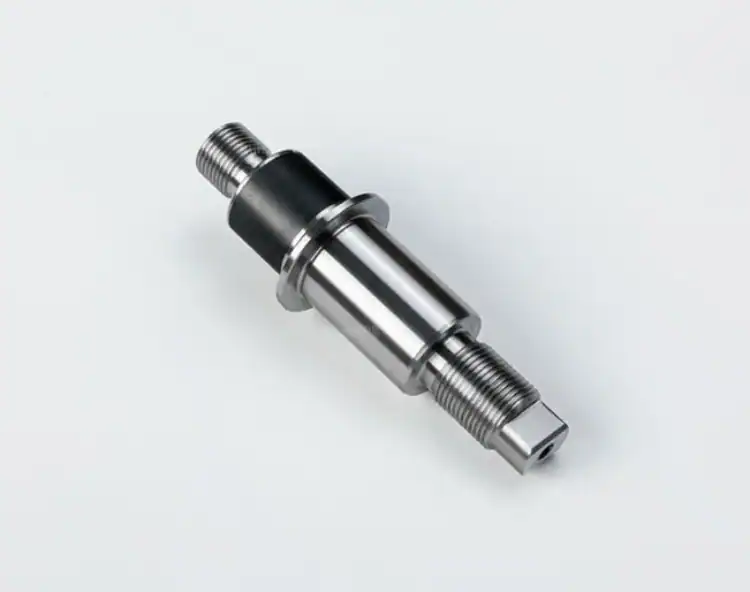
A custom step shaft changes diameter along its length, so bearings, gears, seals — each lands on a surface sized for it. Simple idea. Manufacturing it? Not simple. Every diameter transition is a potential stress concentration. Fillet radii, shoulder faces, runout tolerances: define them on the drawing, then actually hold them. Step shafts serve machinery manufacturing, automotive, aerospace, and the energy industry — oilfield drives and engine accessory systems covered in one stroke.
Eccentric Shafts
An eccentric shaft turns rotation into controlled offset motion. Vibratory feeders use the principle. Pumps. Test rigs. A long list of automation equipment besides. The hard part is geometric: the eccentric section has to sit accurately relative to the main bearing journals, or the machine shakes in ways nobody asked for. Why does Ruizheng keep a grinding line and a constant-temperature measurement room? Largely to hold exactly this kind of relationship.
Spindle Parts
Spindle parts carry power and support rotation in machine tools, grinders, high-speed equipment. Ruizheng machines them to 0.001 mm concentricity. A custom spindle part drags supply chain questions along with it, though — bearings, seals, fasteners all have to show up matched. Ruizheng helps source those consumables alongside the machined part. Machine builders get a shorter assembly path out of it.
Material and Heat Treatment Choices
Choosing the Base Material
Three material families dominate: alloy steel, stainless steel, titanium alloy. The load case picks. Alloy steel is the default when a shaft carries high loads — its hardenability supports through-hardened sections, and its fatigue behavior is well understood. Corrosive or washdown environment? Stainless earns its price there. Titanium appears where weight beats surface hardness in priority. Most oilfield and engine work ends up a question of which alloy steel grade, and that depends on section size and required core hardness — not on a catalog number.
Heat Treatment Without Guesswork
Heat treatment is available across the line. Specify it — don’t assume it. Shafts loaded in torsion take well to through-hardening. Journals needing a hard skin over a tough core want case hardening. Hardness goes on the drawing in HRC. The target inspection grade — IT6, say, or IT7 — has to survive whatever distortion the heat treatment causes. Process order matters too. Rough machine first. Then heat treat. Finish grind the functional diameters last. A shop that plans this way holds tolerance where it counts. The other kind chases distortion after the fact.
How Reliability Gets Verified
Claims are cheap. Inspection records aren’t. Under its ISO 9001 quality management system, Ruizheng runs three gates on every part — first-piece inspection, full-process inspection, final inspection before shipment. All measurement happens in a constant-temperature testing room. A micron-level dimension means nothing if part and gauge sit at different temperatures. Credentials on file: ISO 9001 certification, an SGS test report, National High-tech Enterprise status. Material reports, dimensional inspection reports, RoHS documentation — all supplied on request. Buyers shipping into European and American markets ask for exactly this set. Every time.
The table below maps the three application areas to the checks worth demanding.
| Application | Critical property | Verification to request |
| Oilfield drives | Core strength, wear resistance | Material report, hardness in HRC, dimensional report |
| Robotics | Concentricity, runout | Dimensional report from constant-temperature measurement |
| Engine systems | Fatigue performance | Heat treatment records, surface finish on fillets and journals |
Nothing exotic there. That’s the point. Reliability comes from verification that actually happened.
Drawing to delivery — the path is short. Ruizheng evaluates drawings and quotes within 24 hours. Proofing and small batch trial production are supported. Ordinary parts ship in 20 to 30 days; high-end precision work takes 40 to 60. Machine tool projects can start from the logic used for machine tool rotary table components — settle the datums and mating interfaces before any cutting begins.
Every project here began as a drawing plus a load case no catalog could cover. Sound like your situation? Then talk to a shop that asks about duty cycle and inspection gates before it asks about price. Send your 2D or 3D drawings and contact Ruizheng — the team comes back inside one working day with a drawing evaluation, a tolerance discussion, and a quotation.
FAQ
Can Ruizheng Machine Custom Parts From Our Drawings?
Yes. Custom production from customer 2D or 3D drawings is the core of the business. Non-standard shafts, flanges, bearing seats — plus the part families described above.
What Tolerance Can Be Held on a Custom Shaft?
Processing accuracy reaches the 0.001 mm class; concentricity sits at 0.001 mm. Your part’s practical tolerance depends on its size, its material, the heat treatment route. That’s why the drawing review comes first.
Is Small Batch Trial Production Possible Before Volume?
Yes. Proofing and trial production are both supported. Validate the part in your assembly first, scale up later. Samples can go out before batch production.

