
To specify custom CNC parts for industrial robot arms, start with the assembly interfaces and turn them into an approved drawing, matching model and inspection request. Agree what the sample review will cover before ordering a batch. The manufacturer needs to know how you’ll accept this particular component.
Take a wrist-to-tool adapter as a working example. Which side faces the robot? What locates the tool? Who approves the sample? This is a specification exercise, with no assumed loads or tolerance values; it follows the questions a buyer needs answered before sending the part out for machining.
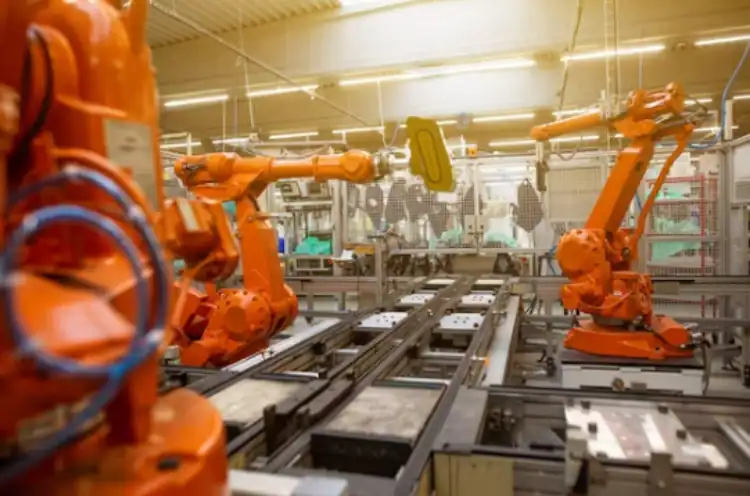
Why Industrial Robot Arms Need Carefully Specified CNC Parts
A drawing of an adapter can look straightforward: two faces, a locating feature and some holes. In the enquiry, identify the robot face and tool face explicitly. Let the supplier propose how to machine them, but keep approval of the interfaces with the person responsible for the design.
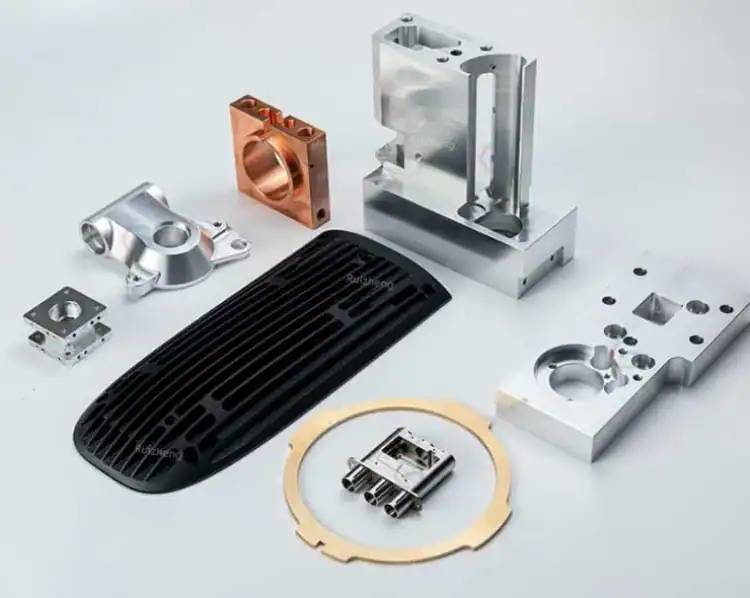
Ruizheng can also custom-machine shafts, flanges, bearing seats, etc. other special mechanical parts, such as parts for machine tools and industrial robot arms, which are made into non-standard parts according to customers’ 2D & 3D drawings. Sample can be supplied before entering into batch production and cooperation is welcome during the proofing and trial production stage.
Start With the Robot Arm’s Actual Operating Requirements
The geometry needs a short operating brief beside it. If a load value is still an estimate, mark it as provisional and put a name against its confirmation. Otherwise that estimate can travel into the enquiry as though the design review had already approved it.
Define Load, Motion, and Operating Speed
For the wrist adapter, ask the design owner for the tool mass and center of gravity, intended motion and relevant service loads. Add the mounting arrangement and working environment. One payload figure doesn’t tell the manufacturer which conditions have been considered in the part design.
Keep responsibility clear in the order. The machining quotation addresses a component specification; someone still has to validate the robot installation and approve the resulting design. Name that person or team before unresolved design questions reach the shop.
Identify the Part’s Position in the Robot Assembly
An assembly view is useful even for a small adapter. Highlight the part, label the robot and tool sides, and show the intended orientation. Include access and nearby clearances where they affect the requirements. The supplier shouldn’t have to reconstruct the installation from an isolated solid model.
Use a feature register to describe the interfaces. “Face A mounts against the wrist; pilot B locates the adapter; holes C provide fastening” is a review example. The actual datum letters and locating scheme must come from the approved design.
Specify the Geometry and Critical Dimensions
Send the drawing and model together, under the same part number and revision. Decide which controls requirements that appear in only one file. If the two files disagree, settle it before production approval; a note asking the workshop to use its judgment doesn’t close a design question.
Define Datums and Functional Dimensions
Begin the datum discussion at the assembled interface. Get the design owner to define the datum for the locating face, centering feature and axis of rotation. Then verify that your inspection setup can simulate these references.
ASME Y14.5 drawing requirements establish a shared geometric language. Verify that the drawing reflects the agreed upon standard and revision. Be able to distinguish between different conventions and notation and state the interpretation for any mix of notation.
Set CNC Tolerances Based on Function
Near each of the critical adapter requirements, indicate why that requirement is needed in the assembly. This will give the designer something very specific to dispute with the supplier’s proposal for change, rather than just arguing over whether a given tolerance is too tight.
Separate Critical and Non-Critical Tolerances
For our adapter exercise, put the mounting face and locating pilot on the review list separately from an outside clearance edge. Which requirements control assembly? Which may use general tolerances? Get those answers approved. A feature’s appearance alone isn’t enough to decide its importance.
Ruizheng offers assembly-tolerance recommendations for custom parts. Include mating geometry with the enquiry so that discussion can address the interface. Its service also includes usage guidance and assembly suggestions, which can support the technical exchange during sample review.
Consider Concentricity, Runout, and Alignment
Choose the geometric control that expresses the actual design requirement under the agreed standard. Don’t use concentricity, runout, and alignment as interchangeable words in an email. Ask the designer to put the required relationship and reference features into the controlled drawing.
Choose Materials and Surface Requirements
Put the selected material grade and delivery condition in the enquiry. Then mark the finish and any surfaces that must remain untreated. For locating or fitted features, ask the designer to confirm the required final condition and whether the drawing dimensions apply before or after treatment.
Ruizheng’s custom CNC machined parts provide a product enquiry route for non-standard components. Across its machining services, the company processes carbon steel, stainless steel, aluminum alloy, and copper alloy. Its precision-parts business also supports alloy steel and titanium alloy, together with heat-treatment requirements.
Specify Inspection Requirements Before Production
Decide what you want to see in the inspection report while the drawing is still under review. Waiting until the parts are finished leaves another question to resolve: did the agreed work include the measurements and records you’re now asking for?
Decide What Needs to Be Measured
For the adapter, go back to the locating interface and review the face relationships, hole locations and threads against the drawing. Mark which characteristics need recorded results. The order should also state the inspection quantity and any planned assembly checks, so the buyer and supplier are reviewing the same scope.
Ruizheng performs first-piece inspection, checks during production, and final inspection before shipment. It has a constant-temperature inspection room and a coordinate measuring machine. Discuss the method for each characteristic instead of treating the equipment list as an inspection plan.
Define Inspection and Reporting Requirements
A result needs a feature reference. Ask for the drawing or balloon number beside the requirement and measured value, with deviations identified for review. Agree who receives the sample documents and how approval will be returned; ‘send an inspection report’ leaves those details unanswered.
Material reports and dimensional inspection reports are available from Ruizheng on request. Include these requirements with the quotation. For measurement discussions, NIST’s definition of repeatability concerns repeated measurement under the same conditions; it is distinct from a robot’s operational positioning specification.
Make the Drawing Easy for the CNC Manufacturer to Quote
Before sending the enquiry, check that the files below are present and agree with each other. Complete the handoff sheet with approved project information; leave unresolved questions visible.
| Package field | What to supply |
| Component identity | Part number, drawing revision, and matching model |
| Interface description | Assembly view with robot side and tool side identified |
| Manufacturing definition | Material, final condition, tolerances, and finish requirements |
| Quantity | Separate sample, initial batch, and repeat-order quantities |
| Acceptance | Recorded characteristics, inspection quantity, and document list |
| Open decisions | Question, responsible person, and required approval |
Ruizheng combines CNC turning and milling equipment with machining centers, centerless grinders, and CNC cylindrical grinders. Ask for the proposed route for your component, including any clarification needed before quotation. The equipment mix supports a process discussion; it doesn’t determine which operations your part requires.
How to Review a CNC Part Specification Before Mass Production
When the sample arrives, retrieve the revision used to make it. Review the dimensional report against that revision, then carry out the agreed assembly evaluation. If you accept a deviation, record its scope separately. A short ‘sample approved’ email shouldn’t also grant an undefined concession for future batches.
Ruizheng supports proofing and trial-production cooperation and confirms production details before manufacturing. If a quality issue arises, defect analysis reports and quality-related return or exchange support are available. Customized products without quality issues are not eligible for returns. Video communication can be used to discuss problems. Agree the next action against the affected feature and revision before ordering replacements or a larger batch.
Choosing a CNC Manufacturing Partner for Robot Arm Components
For the wrist adapter enquiry, look at how the supplier responds to the actual questions. Has it understood the two interfaces? Has it addressed the selected material, sample quantity and requested records? Those answers are useful grounds for the next technical discussion.
Ruizheng was established in 2013 and uses automated loading and unloading robotic systems alongside its precision machining equipment.
Send your package through the robot component enquiry. Identify the decisions you want reviewed and keep the remaining design approvals visible. The order can then move forward with a defined component, an agreed sample review, and clear acceptance documents.

