
4340 Steel Connecting Rods are often specified for engines where repeated loading places greater demands on the rotating assembly. For a buyer, however, writing “4340” on the drawing is only the starting point. The finished component still depends on material condition, heat treatment, geometry, surface condition, dimensional consistency, and inspection. A suitable alloy cannot compensate for an uncontrolled manufacturing route.
Ruizheng focuses on precision shafts and custom non-standard mechanical parts for automotive and industrial applications. Its capabilities include turning, milling, grinding, heat-treatment support, drawing-based customization, and dimensional inspection. For buyers sourcing engine components, this allows material requirements, machining steps, and inspection criteria to be discussed as one manufacturing plan rather than as separate tasks.
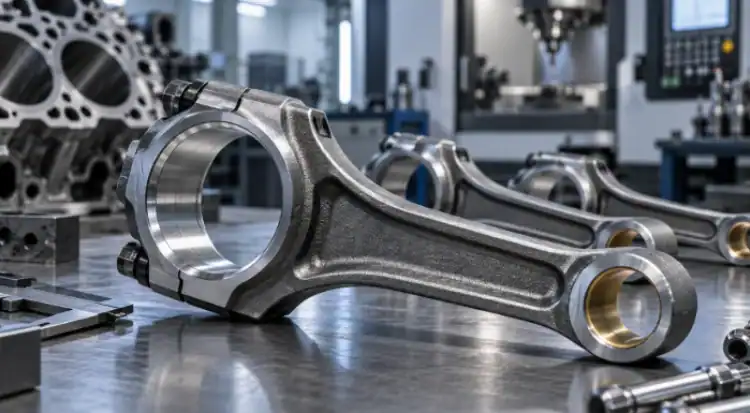
Why Does Material Matter So Much for a Connecting Rod?
Connecting rod material selection affects more than nominal strength. A rod transfers combustion force while also responding to changing inertia as the piston reverses direction. This makes the relationship between material, geometry, processing condition, and actual engine duty especially important.
Connecting Rods Face Repeated and Reversing Loads
A connecting rod experiences alternating tensile and compressive loads throughout engine operation. In high-load engine connecting rods, small weaknesses in geometry or surface condition can become more important as operating cycles accumulate.
This is why 4340 steel connecting rods should not be evaluated only by material grade. Operating speed, load pattern, lubrication, rod geometry, and the condition of the complete rotating assembly all affect how the part works in service.
Fatigue Life Depends on More Than Maximum Strength
The 4340 steel connecting rod fatigue life is not determined by strength alone. Poorly controlled bores, unsuitable processing sequences, sharp transitions, or machining marks in highly stressed areas can increase local fatigue risk even when the material itself is appropriate.
For buyers, the sourcing question should therefore move beyond “Which steel is stronger?” A more useful question is whether the supplier can control the features that influence how repeated loads are transferred through the finished part.
High-Load Parts Require Material and Processing to Be Evaluated Together
Ruizheng works with alloy steel and supports heat treatment for precision mechanical parts. Material condition, machining allowance, finishing sequence, and final inspection can therefore be discussed before production begins.
For a 4340 rod, the material certificate is only one part of the approval process. The finished component still has to meet the drawing and the required post-treatment dimensions.
Why Is 4340 Steel Considered for High-Load Connecting Rods?
4340 is commonly considered for demanding mechanical components because it can be processed to provide a useful balance between strength and toughness. That does not mean every connecting rod made from this alloy should follow the same manufacturing route.
The actual process depends on the specified material condition, heat-treatment requirement, geometry, machining sequence, and inspection criteria.
4340 Steel Combines Strength With Toughness
A connecting rod should not be selected by hardness or nominal strength alone. It must carry repeated loads while avoiding excessive sensitivity to local stress concentration or processing variation.
Good connecting rod material selection therefore considers the relationship between strength, toughness, geometry, and fatigue resistance. For high-load engine connecting rods, the material should be selected because it matches the duty of the engine, not simply because it is regarded as a higher-grade alloy.
Heat Treatment Changes the Final Performance of the Part
Connecting rod heat treatment affects the material condition that enters later machining and service. Buyers should therefore define heat-treatment requirements together with critical dimensions, machining allowances, and final inspection expectations.
Ruizheng’s Precision Manufacturing Services combine machining, grinding, heat-treatment support, and inspection within one manufacturing plan. This is useful when post-treatment dimensions need to be considered before the machining sequence is finalized.
For a 4340 connecting rod project, Ruizheng would first review the specified material condition, heat-treatment requirement, machining allowance, final bore geometry, and inspection criteria from the customer drawing. General alloy-steel machining capability should not be treated as proof that every 4340 rod can follow the same process route. The final plan has to be confirmed against the actual material certificate, part geometry, and required post-treatment dimensions.
Material Choice Should Match the Actual Engine Duty
4340 Steel Connecting Rods are most relevant when the design requires an alloy-steel rod for demanding cyclic loading. Even then, material selection should be checked against operating speed, load pattern, geometry, lubrication, and expected service conditions.
If another material and process route already meet the required duty, specifying 4340 without a clear design reason may only add cost and manufacturing complexity.
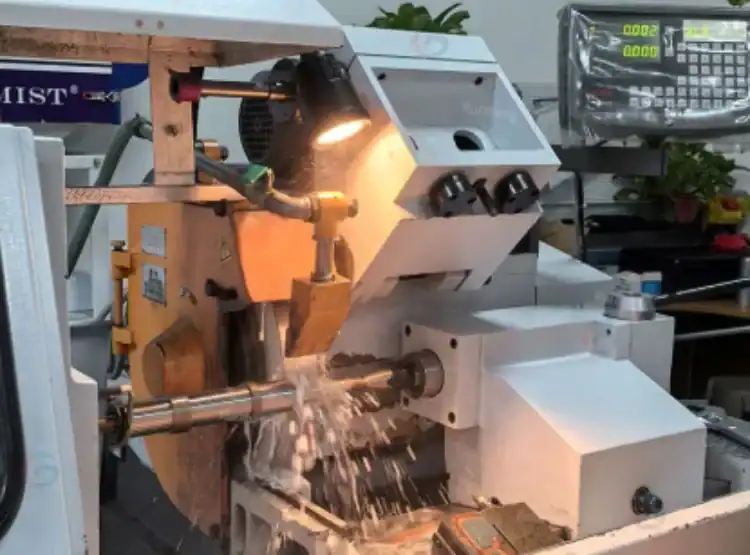
What Manufacturing Factors Affect 4340 Connecting Rod Fatigue Life?
Once the material route is defined, manufacturing control becomes the next major concern. Custom connecting rod machining must preserve the geometry assumed by the design while avoiding local features that increase stress or interfere with assembly.
Bore Geometry and Dimensional Control Affect Load Distribution
The big-end bore, small-end bore, center-to-center distance, and relative alignment influence how the rod fits and transfers load.
Ruizheng supports drawing-based custom production, uses a constant-temperature inspection room, and can achieve machining accuracy down to 0.001 mm for precision mechanical work.
For these rods, buyers should identify which dimensions affect fit, alignment, and load transfer instead of applying unnecessarily tight tolerances to every feature. This makes the drawing easier to manufacture and keeps inspection focused on functional areas.
Surface Condition and Stress Concentration Require Careful Machining
Custom connecting rod machining should avoid abrupt transitions, uncontrolled tool marks, and poorly defined fillet areas in stressed regions. A dimension can pass inspection while the local surface condition still creates a fatigue concern.
This is also why connecting rod heat treatment and the final machining sequence should be planned together. If treatment changes the dimensional condition of the part, critical surfaces or bores may need additional finishing afterward.
Inspection Must Confirm the Finished Part, Not Just the Drawing
Ruizheng applies first-piece inspection, process inspection, and final inspection before shipment. Material reports and dimensional inspection reports can also be provided when required.
For a 4340 project, the RFQ should clearly identify:
- material specification and required condition;
- heat-treatment requirement;
- big-end and small-end bore requirements;
- center-to-center and alignment requirements;
- critical surfaces and inspection points;
- required material and dimensional reports.
Connecting rod reliability should also be evaluated as part of the complete rotating assembly. Buyers changing crankshaft geometry or engine loading can continue with Upgrading Your Crankshaft? Why You Must Upgrade Your Connecting Rods Too for the relationship between the crankshaft and connecting rod system.
What Should Buyers Specify When Sourcing Custom Connecting Rods?
A clear RFQ reduces repeated drawing revisions and makes supplier comparisons more meaningful. The goal is not to specify every feature as tightly as possible, but to communicate which requirements actually control fit, load transfer, and service performance.
Define Material, Heat Treatment, and Critical Geometry Together
For 4340 steel connecting rods, the material grade, specified material condition, heat-treatment requirement, critical geometry, and inspection criteria should be reviewed as one package.
The manufacturer also needs to know whether critical dimensions apply before or after heat treatment. This affects machining allowance, operation sequence, and final inspection planning.
Send Complete 2D or 3D Drawings Before Production
Ruizheng supports customized non-standard parts based on customer 2D and 3D drawings and can provide assembly-tolerance suggestions. Its CNC Part capability is relevant when a connecting rod or related engine component cannot be sourced as a standard catalog part.
A production drawing should clearly identify datums, critical bores, center distances, material condition, surface requirements, and inspection points. The more clearly these functions are defined, the easier it is to separate necessary precision from dimensions that do not control assembly or load transfer.
Sample Validation Reduces Production Risk
Ruizheng supports samples and small-batch trial production before larger production runs.
For high-load engine connecting rods, sample validation gives buyers an opportunity to check fit, bore geometry, dimensional consistency, surface condition, and inspection results on the actual manufactured component before scaling the order.
This is especially useful for a new design or a changed material route, where heat treatment and machining sequence still need to be confirmed against the final geometry.
How Can Ruizheng Support Custom High-Load Engine Component Projects?
For buyers, the value of a precision machining supplier lies in its ability to convert a drawing into a controlled process and keep material, machining, and inspection decisions connected throughout the project.
CNC Part Supports Drawing-Based Custom Components
Ruizheng’s CNC Part capability supports customized mechanical components for automotive and industrial applications. Buyers can submit 2D or 3D drawings and discuss the machining route, sample stage, critical features, and inspection requirements before batch production.
This is particularly relevant when the geometry of a 4340 rod has been developed around a specific engine rather than a standard catalog size.
Precision Manufacturing Services Connect Machining, Heat Treatment, and Inspection
Ruizheng’s Precision Manufacturing Services cover turning, milling, grinding, drilling, heat-treatment support, and inspection.
For buyers, the benefit is not simply access to more processes. The main value is that machining allowance, datum relationships, heat-treatment requirements, finishing operations, and final verification can be considered within the same production discussion.
This reduces the risk of treating each manufacturing step in isolation.
Start With Your Drawing and Application Requirements
If your project involves 4340 Steel Connecting Rods or another custom engine component, prepare the material specification, material certificate requirement, heat-treatment condition, 2D or 3D drawing, operating requirements, and critical dimensions before supplier review.
Sharing these items when you contact Ruizheng gives both sides a concrete basis for discussing machining sequence, sample validation, and inspection before production begins.
FAQ
Are 4340 Steel Connecting Rods Suitable for Every Engine?
No. 4340 Steel Connecting Rods are appropriate only when the design and operating duty justify the material route. Buyers should evaluate cyclic loading, rod geometry, operating speed, required material condition, heat treatment, and the complete rotating assembly before selecting the alloy.
What Should Be Included in a 4340 Connecting Rod RFQ?
Include the material specification, required material condition, material certificate requirement, connecting rod heat treatment, 2D or 3D drawing, critical bore and center-distance requirements, surface requirements, inspection points, and any reports needed before production approval.
Why Is Sample Production Useful Before a Batch Order?
A sample allows the buyer to verify geometry, fit, surface condition, and inspection results on the actual finished component. For custom connecting rod machining, this is particularly useful when the material condition, heat treatment, machining allowance, and final dimensions must be confirmed together before larger production runs.

