
A fuel-powered industrial UAV stays airborne only while its engine maintains torque, compression, lubrication, and controlled vibration. The most important drone engine parts are therefore the components that carry combustion force, keep the rotating assembly aligned, and preserve sealing through long operating cycles.
Ruizheng manufactures non-standard crankshafts, camshafts, covers, pistons, and connecting rods. It supports drawing-based production, samples, small batches, heat treatment, and inspection.
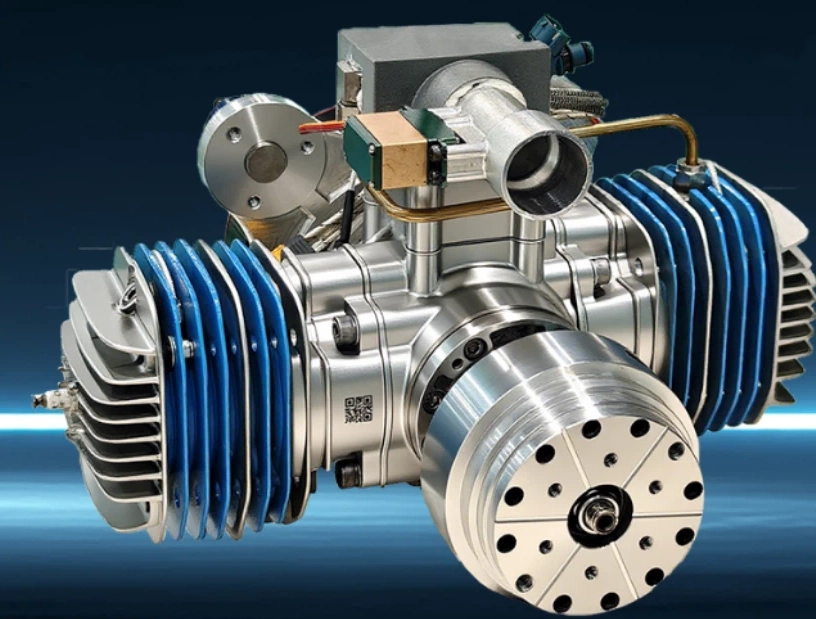
Which Drone Engine Parts Have the Greatest Impact on Long-Endurance Flight?
These drone engine parts work as one system. A precise crankshaft cannot correct a misaligned rod or worn cylinder bore.
Crankshaft Stability and Consistent Power Transfer
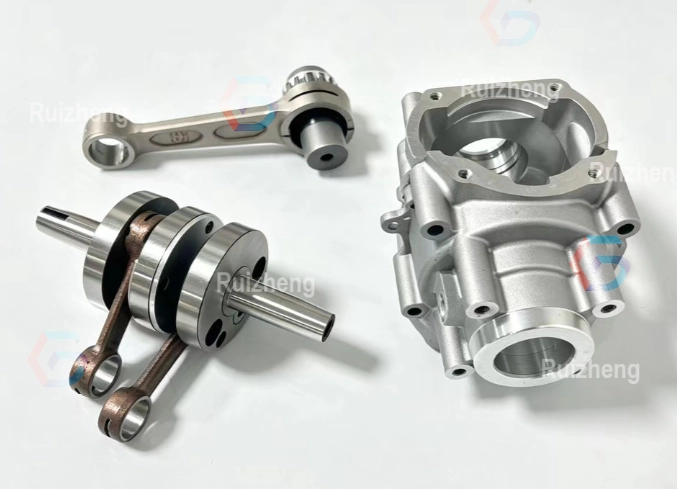
The crankshaft converts piston movement into rotary output. Journal runout, incorrect crank throw, poor fillet geometry, or unsuitable counterweight design can increase vibration and bearing load.
Ruizheng’s custom drone crankshaft CNC machining service suits engines requiring non-standard journals, shaft ends, crank throws, counterweights, or interfaces. Buyers should mark datums, runout limits, heat treatment, and inspection points on the drawing.
Connecting Rod Strength Under Repeated Combustion Loads
The connecting rod transfers force between the piston pin and crankpin. Buyers should check material, bore alignment, center distance, edge transitions, and bearing fit. A strong rod can still create side loading if its two bores are not aligned.
Piston-to-Cylinder Sealing and Wear Control
The piston and cylinder control compression, oil movement, friction, and heat transfer. Piston-to-cylinder clearance, bore geometry, pin fit, ring grooves, and surface finish must be reviewed together. For repairs, measure the engine instead of copying a worn sample.
How Should Buyers Prioritize Parts for Different Flight Missions?
Priority changes with payload, cruise duration, engine layout, and whether the project is a prototype or repair.
| Operating Concern | Review First | Main Check |
| Heavy payload | Crankshaft and rod | Material, heat treatment, alignment |
| Long cruise | Piston and cylinder | Clearance, sealing, lubrication |
| Vibration | Rotating assembly | Runout and mating fits |
| Legacy repair | All mating parts | Actual dimensions and sample wear |
| Prototype | Core moving parts | Drawing maturity and trial assembly |
High-Load Missions Require Strong Rotating Parts
Heavy payloads and repeated power changes increase bending and torsional demands. Alloy steel may suit heat-treated parts, but it cannot correct a weak radius, incorrect journal fit, or misaligned rod bore.
Long Cruise Cycles Increase Heat and Wear Demands
During extended cruise, small sealing, alignment, or lubrication losses can accelerate wear. Check piston surfaces, ring grooves, cylinder bores, crankshaft journals, rod bores, and oil passages.
Repair Projects Depend on Dimensional and Assembly Matching
For UAV engine replacement parts, visual similarity does not prove compatibility. Confirm the crankcase, bearings, pins, seals, and connected components.
A useful RFQ includes:
- The sample and known failure condition
- Drawings or marked critical dimensions
- Mating dimensions and required fits
- Notes on wear, seizure, cracking, or vibration
- Quantity and required inspection records
What Should Buyers Check Before Approving Drone Engine Parts?
Before approval, convert the operating problem into measurable drawing and inspection requirements. Tight control should remain on functional surfaces.
Materials, Heat Treatment, and Hardness Requirements
State the material grade or equivalent, heat-treatment condition, hardness range, and surface treatment. Ruizheng supports alloy-steel and stainless-steel machining. Show where hardness applies and when final machining occurs.
Critical Fits, Tolerances, and Inspection Reports
Ruizheng states that machining accuracy can reach 0.001 mm for suitable precision work and refers to IT6 and IT7 machining grades. That figure should not be assigned to every surface.
Focus tighter control on:
- Crankshaft journals and bearing seats
- Connecting-rod bores and center distance
- Piston pin bores and sealing diameters
- Cylinder bores, runout, and datum-related geometry
Sample Validation Before Batch Production
Ruizheng supports samples, small-batch trials, and first-piece, process, and final inspection. Approval should cover assembly force, free rotation, interference, sealing, and lubrication access. For small-batch CNC machining, this allows drawing corrections before repeat production.
When Is Custom Machining Better Than Standard Replacement Parts?
Standard parts suit stable engine models. Custom machining becomes practical when a component is discontinued, an interface changes, or several mating parts need coordinated revision.
Custom Drone Crankshafts for New Engine Designs
A new crankshaft may require a different throw, journal arrangement, shaft end, counterweight, oil passage, or drive interface. Check the prototype for assembly and free rotation before repeat production.
CNC-Machined Pistons, Connecting Rods, and Cylinders for Non-Standard Builds
Ruizheng’s CNC Machining Service supports non-standard pistons, rods, cylinders, camshafts, covers, and related interfaces. Buyers can review mating components together, with turning, milling, or grinding selected by geometry.
Small-Batch Trials for Design and Supplier Qualification
Ruizheng lists 20–30 days for ordinary parts and 40–60 days for high-end precision parts, subject to project requirements. A trial batch lets buyers review fit and consistency before repeat ordering.
How Can Ruizheng Reduce Procurement Risk from Prototype to Production?
The buyer gains a clearer route from drawing review to repeat supply.
Drawing Review and Quotation Before Machining
Ruizheng supports 2D and 3D drawing review and states that evaluation and quotation can be completed within 24 hours. Submit quantity, material, heat treatment, critical tolerances, mating dimensions, sample condition, and required records together.
Controlled Machining and Inspection Through Every Stage
Ruizheng uses first-piece, in-process, and final inspection, supported by a constant-temperature inspection room. Its precision manufacturing services combine turning, milling, and grinding for shafts and non-standard parts. For fuel-powered industrial UAV projects, the inspection plan should follow drawing datums, functional fits, and reported failure risks.
Final Procurement Check Before Production Release
Before release, the purchasing engineer should confirm:
- The latest drawing revision is identified.
- Critical datums, fits, runout limits, and inspection points are marked.
- Material, heat treatment, and hardness requirements are complete.
- The sample has been checked in the actual mating assembly.
- Wear from an old sample has not been copied into the drawing.
- Inspection reports match the acceptance dimensions.
- Packaging protects journals, bores, sealing surfaces, and threads.
- Approved deviations are recorded before repeat production.
This check helps prevent a part from passing dimensional inspection but failing during assembly.
Service and Contact for Samples, Orders, and After-Sales Support
For a new engine, discontinued component, or recurring fit problem, send drawings, sample conditions, mating dimensions, quantity, and document needs through Ruizheng’s contact page. The team can review whether the project needs one component, matched drone engine parts, or a trial batch.
FAQ
Q: Which drone engine parts should be checked first for long-endurance flight?
A: Start with the crankshaft and rod for force transfer and alignment, then check the piston and cylinder as a matched sealing system. Final priority depends on payload, vibration, lubrication, and measured wear.
Q: Can a fuel-powered UAV engine part be reproduced from an old sample?
A: A sample is useful, but wear may make it unreliable as the only reference. Ruizheng also needs critical dimensions, mating information, material and heat-treatment requirements, and preferably a drawing or 3D model.
Q: Should every critical engine dimension use a 0.001 mm tolerance?
A: No. Tolerance should follow function. Journals, pin bores, sealing diameters, and datum-related geometry may need tighter control, while non-critical surfaces can use wider limits.

