
A fuel powered drone can carry heavier loads and stay in the air longer, but that also means the engine has less room for poor machining. Under repeated payload missions, a small crankshaft imbalance, loose shaft fit, or weak support component can turn into vibration, bearing wear, heat, and unstable operation. For buyers sourcing parts for drone engines, reliability is not decided by engine power alone. It depends on whether the rotating and supporting components can hold accuracy after real work, not just pass a simple assembly check.
Ruizheng manufactures precision shaft parts, non-standard CNC parts, crankshafts, bearing housings, flanges, and other mechanical components for demanding equipment applications. The company works with turning, milling, grinding, inspection, and drawing-based custom production. Its service is useful for buyers who need parts made according to 2D or 3D drawings, especially when the project involves high speed, high load, heat, vibration, or special assembly requirements. For a fuel powered drone project, this kind of machining support matters because a small part can affect the whole engine system.

Why Does a Fuel Powered Drone Become Riskier Under Heavy Loads?
A drone used for spraying, inspection, mapping, field support, or payload transport often works longer and carries more load than a light battery drone. That turns engine stability into a purchasing issue, not just a performance claim. Heavy load drone engine reliability depends on how well the mechanical system handles repeated stress.
Buyers usually need to check:
- Whether the engine runs smoothly under load
- Whether the crankshaft remains balanced
- Whether shafts and support parts hold alignment
- Whether materials can handle heat and fatigue
- Whether inspection reports match drawing requirements
Longer Flights Put More Stress on the Engine
Longer flight time means more heat, more rotation cycles, and more chance for wear. A part that works during short testing may fail faster after repeated field use. This is why high load missions need careful part selection before batch production.
Heavy Payloads Increase Vibration and Wear
A heavier payload affects more than the airframe. It also increases stress on the engine, mounts, rotating parts, and powertrain. If vibration appears during payload testing, buyers should check crankshaft balance, shaft fit, bearing support, and mounting accuracy before replacing the full engine assembly.
Reliability Depends on More Than Power Output
A larger engine does not automatically make a stable fuel powered drone. If the parts around the engine are not accurate, the system may still suffer from noise, loose fit, heat buildup, or shortened service life. Good reliability comes from matched parts, controlled machining, and verified assembly dimensions.
Which Core Parts Affect Fuel Powered Drone Reliability Most?
After the engine type is selected, the next concern is the parts that transfer and support power. In small fuel engine systems, the crankshaft, shaft parts, bearing support parts, and nearby CNC components often decide whether the engine runs smoothly under load.
Crankshaft Balance for Smoother Rotation
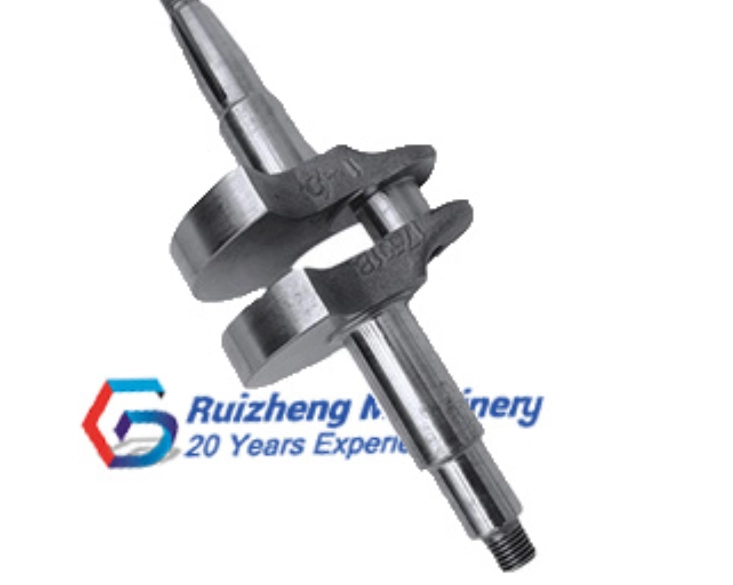
The crankshaft is one of the most sensitive parts in a drone engine. It must handle repeated force while keeping rotation stable. Poor balance can increase vibration. Weak material choice or poor machining can shorten service life. For special engine layouts, prototype updates, or replacement development, custom drone crankshaft machining is often more practical than forcing a standard part into the design.
Ruizheng’s Custom DRONE crankshaft CNC machining SERVICE supports crankshaft production based on specific drawings, shapes, sizes, and material requirements. This is especially useful when the engine structure is not standard or when the buyer needs better control over fit and rotation quality.
Shaft Accuracy for Stable Power Transfer
Shaft accuracy affects how smoothly power moves through the engine system. If roundness, concentricity, or key fit areas are not controlled, the engine may develop noise, unstable rotation, or faster bearing wear. Under high load work, these small problems usually appear sooner.
Engine Components That Support Long Service Life
Not every critical part is a crankshaft. Mounting parts, housings, spacers, connection parts, and other CNC machined drone engine components can also affect alignment. If these parts are inconsistent, the engine may face uneven stress during operation.
How Can Precision Machining Improve High Load Drone Performance?
Precision machining matters most where small errors become repeated mechanical stress. Better machining does not replace engine design, but it helps the engine work closer to the intended design. For teams trying to reduce drone engine vibration, this is often a more useful starting point than changing the whole engine too early.
| Buyer Concern | What to Check Before Ordering | Why It Matters in High Load Missions |
| Engine vibration | Crankshaft balance, shaft concentricity, bearing fit | Helps reduce unstable rotation during repeated payload work |
| Early part wear | Material choice, heat treatment need, surface finish | Helps parts handle heat, friction, and fatigue |
| Assembly mismatch | 2D/3D drawing review and key tolerance confirmation | Lowers rework risk during prototype or batch assembly |
| Supplier uncertainty | First-piece inspection, process inspection, final report | Gives purchasing and engineering teams clearer acceptance standards |
Tighter Tolerances That Reduce Mechanical Deviation
Loose tolerance can create small misalignment. At high speed, that misalignment may become vibration, friction, or uneven loading. Tighter tolerance control helps the part stay closer to the drawing and reduces uncertainty during assembly.
Better Material Control for Heat and Fatigue Resistance
Drone engine parts work under heat and repeated force. Buyers should not only ask for a material name. They should discuss material suitability, heat treatment needs, hardness requirements, and working conditions with the supplier before production.
Surface Finish That Helps Lower Friction and Wear
Surface finish affects contact, rotation, and bearing support. Rough or uncontrolled surfaces may increase friction or damage nearby parts. Controlled finishing is especially important around rotating areas, bearing contact surfaces, and assembly fits.
What Should Buyers Check Before Choosing Drone Engine Components?
In drone engine parts procurement, the safest choice is usually the supplier that can review drawings, confirm tolerances, discuss materials, and support prototype checks before volume production. Price matters, but repeated rework, vibration problems, and poor fit can cost more than the part itself.
Custom Manufacturing Based on Real Drawings
A serious supplier should be able to work from 2D or 3D drawings and discuss key tolerance areas before production. This matters when the engine structure has changed or when the buyer is still improving a prototype.
Inspection Reports for Safer Procurement Decisions
Buyers should ask what inspection can be provided before shipment. First-piece inspection, in-process inspection, final inspection, material reports, and dimensional checks help reduce risk. These records also make it easier for purchasing and engineering teams to confirm whether the parts match the project requirement.
Prototype Testing Before Bulk Production
Prototype or small batch testing is useful before a large order. It helps buyers check fit, assembly flow, vibration behavior, and field performance. For custom crankshafts and CNC machined engine components, this step can prevent expensive changes later.
Buyers should also know when custom machining is not necessary. If the engine model is common, the load is light, and the original replacement part fits well, standard parts may be more efficient. Custom machining becomes more useful when the engine layout has changed, the payload is heavier, vibration appears during testing, or repeatable parts are needed for small batch production.
When Should Buyers Choose Custom Machining for Fuel Powered Drone Parts?
Buyers usually look for a machining partner after a prototype shows vibration, fit problems, short part life, or unstable assembly. In these cases, Ruizheng’s crankshaft and CNC machining services are easier to connect with real engineering needs than a general parts catalog.
Custom DRONE Crankshaft CNC Machining SERVICE for Special Engine Needs
Choose Custom DRONE crankshaft CNC machining SERVICE when crankshaft geometry, balance, material, or fit affects engine stability. It is suitable for prototype development, replacement part development, modified engines, and non-standard structures. For a fuel powered drone used in heavier missions, the crankshaft should be reviewed as a working part, not just a metal component.
CNC Machined Engine Components for Powertrain Support
Ruizheng’s CNC machined engine components service can support custom metal parts around the engine and powertrain. These may include mounting parts, support parts, connection parts, housings, spacers, and other precision components. The goal is not to add more parts, but to make sure the parts already in the system fit and work as required.
Ruizheng Service Support for Drawing Review and Part Evaluation
For a standard repair, off-the-shelf parts may be enough. For heavier payloads, longer duty cycles, or modified engine layouts, custom machining gives buyers more control over fit, material, and inspection. Before ordering in volume, test prototype parts under real payload and vibration conditions.
Before sending a drawing, list the engine type, working load, target material, key tolerance areas, sample quantity, and any vibration or wear problem found during testing. If the part is still in prototype stage, mark the dimensions that may change later. This helps Ruizheng review whether Custom DRONE crankshaft CNC machining SERVICE or CNC machined engine components are more suitable for the project. You can share the drawing and project notes through the contact page for a focused technical review.
For light-duty, standard drone engine maintenance, off-the-shelf parts are cost-effective. If you run heavy payload flights, modified engines or face vibration and rapid component wear during testing, custom drone crankshaft machining and CNC machined drone engine components will greatly boost high load drone engine reliability. Before contacting suppliers, prepare your drawings, load data and test failure records to cut repeated prototype revisions.
FAQ
Q: What makes a fuel powered drone more reliable in high load missions?
A: A reliable fuel powered drone needs stable engine operation, balanced rotating parts, accurate shafts, suitable materials, controlled surface finish, and proper inspection before assembly. Power output is only one part of the system. The parts that transfer and support power often decide whether the engine can keep running smoothly under load.
Q: Why is the crankshaft important in a drone engine?
A: The crankshaft converts engine force into rotation. If it is poorly balanced, weak, or not machined to the right fit, the engine may vibrate more and wear faster. Custom crankshaft machining is useful when the engine has a special structure, heavier workload, or strict assembly requirement.
Q: Should buyers choose standard parts or custom CNC parts for drone engines?
A: Standard parts may work for common engine repairs and light duty use. Custom CNC parts are better when the engine design is non-standard, the payload is heavier, or the buyer needs better fit, material control, and inspection support. For demanding missions, custom parts can reduce uncertainty during testing and production.

