
A wrong shaft choice can create more than a small assembly issue. It can cause unstable stroke, repeated vibration, fast wear, bearing damage, batch rework, and even machine downtime. In a linear motion system, the key part is not always a standard guide shaft. If the machine needs rotary input to create a controlled stroke or offset movement, an Eccentric Shaft may be the part you need to evaluate first.
The first decision is simple. If your design only needs straight sliding support, a normal linear shaft may be enough. If the system needs repeated reciprocating action, compact force transfer, or a fixed offset path, the shaft design must be checked more carefully.
Ruizheng manufactures high-precision shaft components and custom non-standard mechanical parts for machine tools, industrial equipment, robotic arms, compressors, and other demanding assemblies. Its work covers turning, milling, grinding, inspection support, and drawing-based customization. For buyers handling special motion parts, this is useful because the final shaft must match both the drawing and the real assembly condition.
Why Does an Eccentric Shaft Matter in Linear Motion Applications?
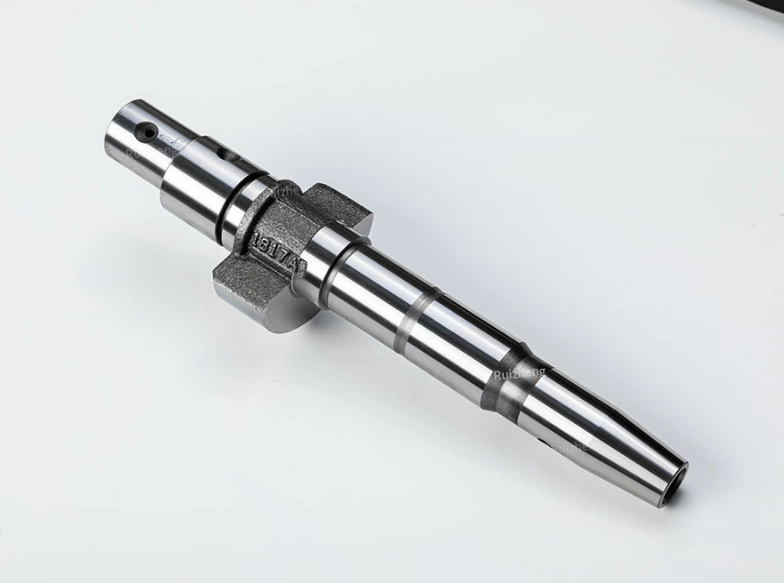
A standard linear shaft mainly guides straight movement. It works with bearings, bushings, or sliding components to keep motion aligned. But some mechanisms need rotation to create a repeated stroke. In that case, the offset center of an Eccentric Shaft can help convert rotary motion into controlled reciprocating movement.
This is why an eccentric shaft for linear motion should be selected by stroke, support, load, and assembly fit, not only by outside diameter.
Controlled Stroke From Rotary Input
The eccentric offset creates movement as the shaft rotates. In many simple crank-style layouts, the stroke is closely related to the eccentric offset, but the final motion also depends on the follower structure, bearing position, and assembly design.
For buyers, this means the offset value cannot be guessed. It should come from the required movement path and the machine’s working condition.
Compact Structure for Limited Assembly Space
Many industrial machines do not have enough room for long linear actuators or extra linkage parts. A compact eccentric structure can create a repeated movement path in a smaller space.
This is useful in compact drive mechanisms, compressor-related assemblies, pumps, replacement parts, and equipment where redesigning the full machine is not practical.
Lower Risk of Repeated Motion Failure
Unstable movement often comes from poor offset control, weak support, rough contact surfaces, or a shaft that does not match the actual installation method. A better shaft design reduces these risks before sampling, not after the machine starts running.
Is an Eccentric Design Suitable for Your Application?
Not every linear motion problem needs an eccentric structure. Some systems only need a guide shaft. Others need a part that actively creates motion. Buyers should make this judgment before discussing material or machining cost.
| Choose This Type of Shaft When | A Standard Linear Shaft May Be Enough When |
| The system needs rotary input to create a fixed stroke | The system only needs straight sliding guidance |
| The mechanism needs repeated offset movement | The shaft only supports a bearing or bushing path |
| Assembly space is limited and motion must stay compact | There is enough space for a normal guide structure |
| The drawing includes non-standard offset geometry | A catalog shaft size already fits the machine |
| The old part failed due to stroke, wear, or vibration | The old part only needs simple replacement by size |
For R&D Engineers
Engineers should first check the motion path, eccentric distance, support method, and contact surfaces. The shaft is not just a turned round part. It is part of the motion system.
If the offset, datum, or bearing fit is wrong, the machine may still assemble, but it may not run smoothly.
For Purchasing Teams
Purchasing teams should not compare suppliers only by unit price. For custom eccentric shaft machining, drawing review, process planning, inspection ability, and sampling support affect the final cost more than the first quotation.
A cheaper sample that requires repeated correction can delay the whole project.
For Equipment Repair and Replacement
For repair projects, the old shaft often tells the real story. Wear marks, broken edges, bearing damage, or uneven contact can show whether the issue came from material, surface finish, poor support, or incorrect offset.
Photos, old samples, and installation notes are useful when no complete drawing is available.
What Should You Check Before Production?
Before sending a drawing to a supplier, define the working problem first. Is the shaft used to create stroke, carry side load, reduce vibration, or replace a worn part? These answers affect material, tolerance, machining route, and inspection focus.
| If Your Application Has This Issue | Check This First | What to Confirm With the Supplier |
| Stroke is unstable or too short | Eccentric distance and datum reference | Whether the offset can be controlled during machining and inspection |
| Noise or vibration appears during running | Surface finish, roundness, bearing fit | Whether grinding or closer inspection is needed on contact areas |
| Shaft bends or wears too fast | Load direction, shaft diameter, material | Whether material, heat treatment, or support design should be adjusted |
| Assembly is difficult | End structure, shoulder position, keyway, thread | Whether the drawing matches the real installation method |
| Standard parts do not fit | Custom dimensions and special geometry | Whether trial production is possible before batch orders |
Eccentric Distance and Stroke
The eccentric distance should match the required stroke. If it is too small, the mechanism may not complete its movement. If it is too large, the system may face impact, noise, or extra stress.
The drawing should connect this dimension to a clear datum reference. Without a clear datum, inspection results may look acceptable but fail to match the real assembly.
Material and Working Load
For eccentric shaft material selection, buyers should look at load, speed, wear risk, and working environment. Alloy steel may be considered for strength and wear resistance. Stainless steel may be considered when corrosion resistance matters. Heat treatment may be needed when the part works under repeated load or contact.
The material should not be selected by name alone. It should match how the shaft works inside the machine.
Surface Finish, Wear, and Vibration
Many eccentric shaft wear and vibration problems start from poor surface finish, weak support, unsuitable hardness, or poor bearing fit. Contact areas, bearing seats, sliding sections, and sealing surfaces need extra attention.
Grinding may be needed when the shaft must run smoothly with tight-fit parts. A surface can pass a basic size check but still fail during long running if the finish is not suitable.
When Should You Choose Custom Processing?
Standard shafts are useful when the structure is simple and replacement is easy. But many industrial buyers deal with non-standard drawings, limited assembly space, or old parts that no catalog item can replace.
A custom shaft is more practical when the motion path, offset distance, installation interface, or wear surface must follow the machine’s own design.
Non-Standard Drawings and Offset Geometry
Custom processing of eccentric shaft is suitable when the drawing includes offset geometry, special bearing seats, tight-fit areas, grooves, threads, shoulders, or a stroke requirement that standard shaft sizes cannot meet.
The supplier should review the part as a working component, not only as a machined metal part.
Tight Assembly and Precision Motion
Custom processing makes more sense when small dimensional errors can create vibration, heating, noise, or installation failure. This is common in compact industrial equipment, compressor-related parts, drive structures, and old shaft replacement projects.
For these parts, tolerance, datum control, surface finish, and inspection method should be confirmed before sampling.
Trial Production Before Batch Orders
A trial batch helps confirm fit, stroke, noise, wear, and installation details before larger orders. It is useful for new equipment development, design changes, and replacement parts with uncertain working conditions.
Ruizheng supports drawing-based custom processing and small-batch trial production, which helps buyers reduce repeated changes before batch production.
How Can Ruizheng Support the Project?
A capable shaft manufacturer should ask how the part works inside the assembly, not only the quantity and material grade. For special motion parts, the early review stage can prevent machining mistakes, poor fit, vibration, and repeated sampling.
Ruizheng’s Services cover precision machining support such as turning, milling, grinding, and custom processing for shaft mechanical parts. For buyers, the value is whether the supplier can turn the drawing into a shaft that fits, runs smoothly, and passes inspection without repeated rework.
Drawing Review Before Machining
Drawing review should cover eccentric distance, datum surfaces, bearing fit areas, grinding requirements, heat treatment notes, and inspection points.
Ruizheng can work from customer 2D or 3D drawings and discuss practical production details before machining. This is helpful when the buyer needs the shaft to fit an existing machine instead of a standard product list.
Machining and Inspection Control
Turning may shape the main shaft structure. Milling may create grooves, flats, keyways, or special connection areas. Grinding may be used for final fit and surface quality.
Inspection should focus on the areas that affect motion stability, including offset position, bearing seats, contact surfaces, and assembly-related dimensions. For precision parts, first-piece inspection, in-process inspection, and final inspection help reduce batch risk.
Information Buyers Should Prepare
Before sending the project for review, prepare these details:
- 2D or 3D drawing
- Required stroke or eccentric distance
- Material preference or working environment
- Load direction and approximate speed condition
- Bearing, bushing, or seal contact areas
- Heat treatment or surface finish requirement
- Trial quantity and expected batch order plan
A clear project file helps the supplier judge whether the part needs turning, milling, grinding, heat treatment, or extra inspection before sampling.
If your project involves special stroke, repeated wear, difficult assembly, or a shaft that standard parts cannot replace, send the drawing and working notes through the contact page. Share the eccentric distance, contact surfaces, bearing fit, material preference, and trial quantity. This gives Ruizheng enough information to review the machining route and inspection focus before production discussion.
FAQ
Q: What is the main difference between a linear shaft and an Eccentric Shaft?
A: A linear shaft mainly guides straight movement. An Eccentric Shaft has an offset centerline, so it can help convert rotary motion into repeated linear or reciprocating movement. If the system only needs sliding guidance, a standard shaft may be enough. If it needs controlled stroke or offset movement, the eccentric structure is more suitable.
Q: What causes eccentric shaft wear and vibration?
A: Common causes include poor surface finish, weak support, unsuitable hardness, poor bearing fit, unclear datum control, or an eccentric distance that does not match the required stroke. Buyers should check both the drawing and the actual assembly condition before production.
Q: What details should buyers send before custom eccentric shaft machining?
A: Send the 2D or 3D drawing, eccentric distance, material request, key tolerances, bearing fit areas, surface finish requirement, heat treatment notes, working speed, load direction, and trial quantity. These details help the supplier review the machining route and inspection focus.

