A ladder inspection checklist for a wholesale delivery should connect each inspected unit to its purchase specification, shipping lot, and acceptance decision. Check shipment condition and documents, inspect selected ladders using the agreed procedure, then record whether the goods are released or held. Keep unresolved defects out of saleable stock.
For an importer or distributor, the receiving desk is where an approved sample becomes a shipment of products. A familiar model name doesn’t prove that the accessories, instructions, and packing match what you ordered. Your records need to explain both what arrived and why your team accepted it.
The procedure below is a proposed buyer workflow. It doesn’t certify a ladder or replace the tests and conformity documentation required for your destination market.
Key Takeaways
– Agree on specifications and acceptance rules before shipment.
– Record which cartons and units were inspected, including damaged packages.
– Separate an unloaded function check from formal performance testing.
– Release stock only after the responsible person resolves outstanding findings.
Establish the Acceptance File Before Delivery
Give the receiving team one controlled file containing the purchase order, model schedule, approved drawings or specifications, and agreed packing requirements. Add the current instruction manual and the approved label artwork. Where an approved sample is used, record its identity and any differences expressly accepted for production.
The file should distinguish the ladder’s overall dimensions from working or standing positions defined in its instructions. Record tolerances agreed with the supplier; warehouse staff shouldn’t have to decide whether a measurement is close enough.
For a private-label order, check who approved the manual and who owns subsequent revisions. A shipment can match the ladder drawing while containing an outdated leaflet. Keep document versions in the acceptance file so the receiving team can identify that mismatch.
Jadduo‘s company profile provides supplier background, but your acceptance file still needs evidence tied to the model ordered. Request the applicable reports and documents before dispatch. Check the product identification, tested configuration, report scope, and issuing organization rather than treating a logo on a catalog as sufficient evidence.
Identify the Lot and Select Samples Deliberately
Start with the shipment reference, arrival date, carton count, and model quantities. Photograph packaging damage before unpacking changes the evidence. Record the relevant pallet or carton identifiers and any batch identification on the product.
Define the lot before selecting samples. Different models or documented production batches may need separate inspection records under your agreed plan. If goods arrive without usable traceability, log that omission and seek clarification before merging them into existing inventory.
Use the sampling plan specified in the purchase agreement or quality arrangement. It should state how samples are selected, the sample size, defect definitions, and the decision rules. Don’t invent an acceptable quality limit at the loading dock. Have a qualified quality professional select or review a statistical plan when one is needed.
Opening only the easiest cartons to reach gives you a weak record. Follow the agreed selection method, and record any extra checks prompted by crushed cartons or other visible damage separately. A damage investigation and the planned acceptance sample answer different questions; keep their results distinguishable.
Use This Receiving Inspection Checklist
Apply the checks below to the selected units and record the actual result. A blank box is ambiguous: use pass, fail, not applicable, or not checked, with an explanation where necessary.
| Inspection area | Check against the order | Record or action |
| Identity and quantity | Model, product identification, carton count, accessories | Record discrepancies by carton and unit |
| Packaging | Specified protection, restraints, visible impact or moisture damage | Photograph damage before removing packing |
| Frame and connections | Visible deformation, cracks, loose or missing components | Identify the affected location and hold suspect units |
| Feet and stabilizers | Correct parts, attachment, visible damage, assembly instructions | Compare with the approved configuration |
| Operating mechanisms | Manual-specified opening, locking, and closing checks | Record the exact section or joint with a fault |
| Labels and documents | Agreed artwork, warnings, manual version, model-matched records | Resolve missing or conflicting information before release |
The table is a starting point for a buyer’s procedure, not a universal test specification. Add model-specific checkpoints from the approved drawings and manual. Agree in advance which findings require a hold and who can authorize disposition.
Inspect the Structure Without Improvised Testing
Look for bent side rails, damaged rungs, missing feet, and loose connections. The UK’s Health and Safety Executive identifies these as important defects in its pre-use ladder checks. Those observations help inform a receiving checklist, although HSE’s page addresses use at work rather than commercial shipment acceptance.
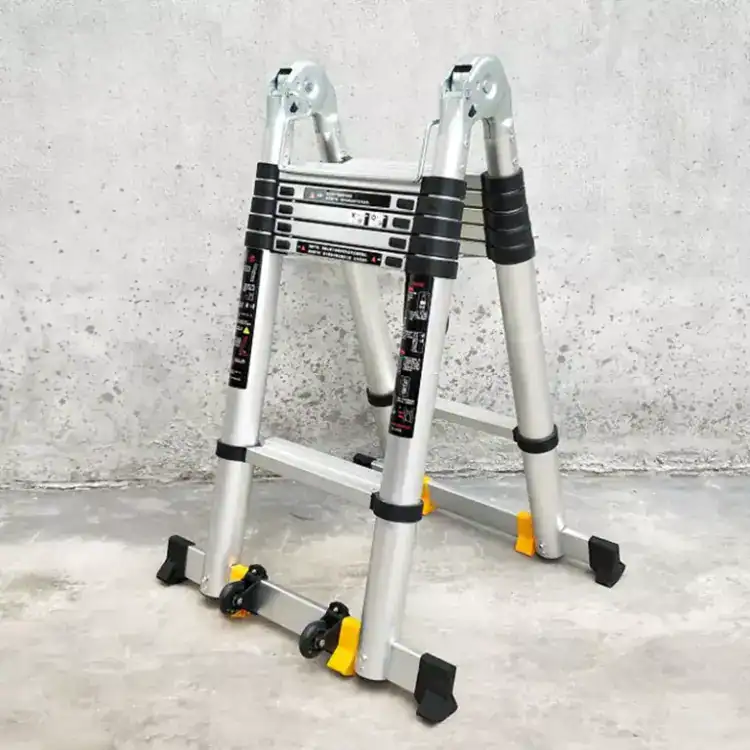
Compare supplied components with the ordered configuration. For example, Jadduo lists a multipurpose ladder with two balance bars. An order for that configuration should include the specified parts and the instructions needed to fit them. A similar-looking ladder without the agreed accessories is a discrepancy to resolve.
Don’t ask a warehouse employee to prove load capacity by climbing, bouncing on, or loading a sample. Any formal load or durability testing belongs in a defined test program with appropriate equipment and qualified personnel. An unloaded inspection cannot establish structural performance or guarantee safety.
Check Locks According to the Model’s Manual
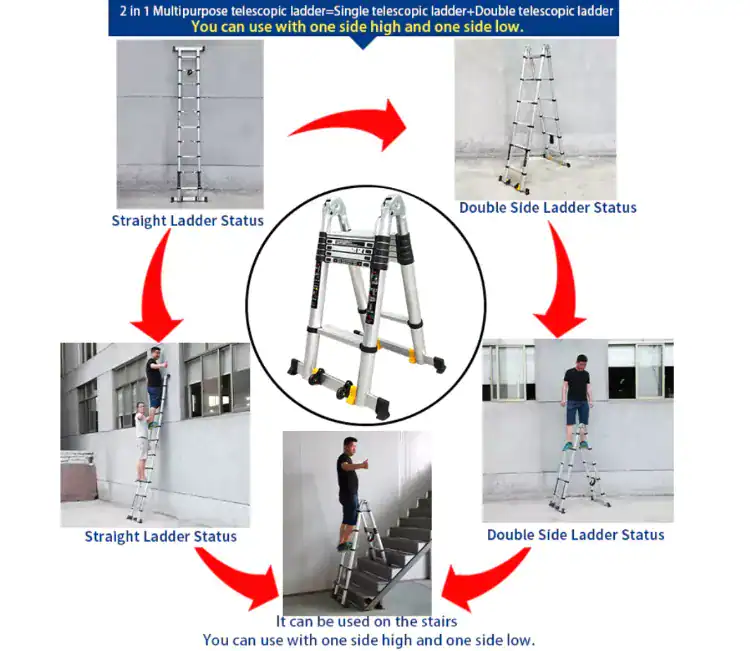
Use the manufacturer’s opening and closing procedure for telescopic or articulated models. Keep the inspection area controlled, follow the stated handling precautions, and check the lock indications specified for that model. A sound alone is not a substitute for the prescribed confirmation method.
HSE’s guidance on telescopic ladders calls for checking the mechanisms that lock each section and warns that important parts can be hidden inside. It also highlights finger-trapping risks during closing. Record sticking, unexpected movement, or an uncertain lock indication and stop handling the suspect unit until it has been assessed.
For combination ladders, include only the configurations permitted by the manual in the agreed receiving procedure. HSE advises rechecking locking mechanisms whenever the setup changes. Never assume that successful operation in one configuration establishes correct operation in every other configuration.
Turn a Defect into a Traceable Decision
Write findings so another person can locate and assess them. “Bad ladder” tells the supplier little. A useful record identifies the shipment and unit, the affected component, the observed condition, and the specification or check it failed. Add photographs or a short video where these clarify the observation.
Keep affected units in a designated hold area and mark their inventory status so they cannot be picked for orders. Preserve relevant packaging. Notify the supplier through the agreed claims process, and avoid disassembly or unauthorized repair that could change the evidence.
For example, suppose a sampled telescopic ladder has a lock indicator that won’t reach the position shown in its manual. Record the section involved, identify the unit, and place it on hold. Apply the agreed decision rules to the associated lot. Ask the supplier and responsible quality person to determine the investigation and disposition; opening another carton with a working ladder doesn’t erase the first finding.
A disposition may involve documented replacement, return, or approved corrective work followed by verification. Safety-related defects need qualified assessment. Don’t allow a commercial price adjustment to substitute for resolving an unsafe or uncertain condition.
Close the Record Before Releasing Stock
The release record should identify the lot, inspection scope, findings, and person who authorized acceptance. Attach the evidence and supplier correspondence. Record any remaining restrictions explicitly; receiving stock into the building and releasing it for sale are separate inventory decisions.
Keep the original result when corrective work is completed. Add the correction and reinspection outcome as a new entry so the history remains visible. This makes a later claim easier to investigate and gives purchasing a basis for reviewing repeat problems.
Before your next bulk order, contact Jadduo with your model list and receiving requirements to agree on the documents, accessories, and acceptance procedure before shipment.
Frequently Asked Questions
Should Every Ladder in a Wholesale Delivery Be Inspected?
The inspection extent depends on your agreed quality plan, product risks, and any findings during receipt. A sample check doesn’t confirm every unit is defect-free. Where a defect suggests a wider problem, hold the relevant stock and let the responsible quality person determine further inspection or testing. Don’t choose an arbitrary percentage simply because it fits the warehouse schedule.
Does a Test Report Replace an Incoming Inspection?
No. A report provides evidence within its stated scope and for the product it identifies. Incoming inspection checks whether the delivered goods match the order and whether there are observable discrepancies or transport damage. Both records matter. Investigate differences between the report’s model or configuration and the received product before relying on it for an acceptance decision.
Is Receiving Inspection the Same as a Pre-Use Ladder Check?
No. Receiving inspection supports a buyer’s decision about a shipment. A pre-use check concerns the ladder’s condition when a person is about to use it. HSE calls for pre-use checks at the beginning of the working day and after relevant changes, such as a ladder being dropped. Passing an earlier receiving inspection doesn’t remove that later responsibility.