
A fuel powered agricultural drone engine can fail even when the crankshaft looks correct on the drawing. A small error in crankpin position, journal fit, counterweight balance, or surface finish may cause vibration, bearing wear, difficult assembly, or unstable power output after field testing.
For buyers developing or replacing a non-standard crankshaft, the real task is not only to find a CNC machining supplier. You need to confirm whether the design can match the engine layout, working speed, bearing structure, connecting rod, piston movement, and long outdoor operation.
This guide focuses on the practical design and purchasing checks behind non-standard crankshafts for fuel powered agricultural drones, so you can reduce sample correction and avoid moving a risky part into batch production too early.
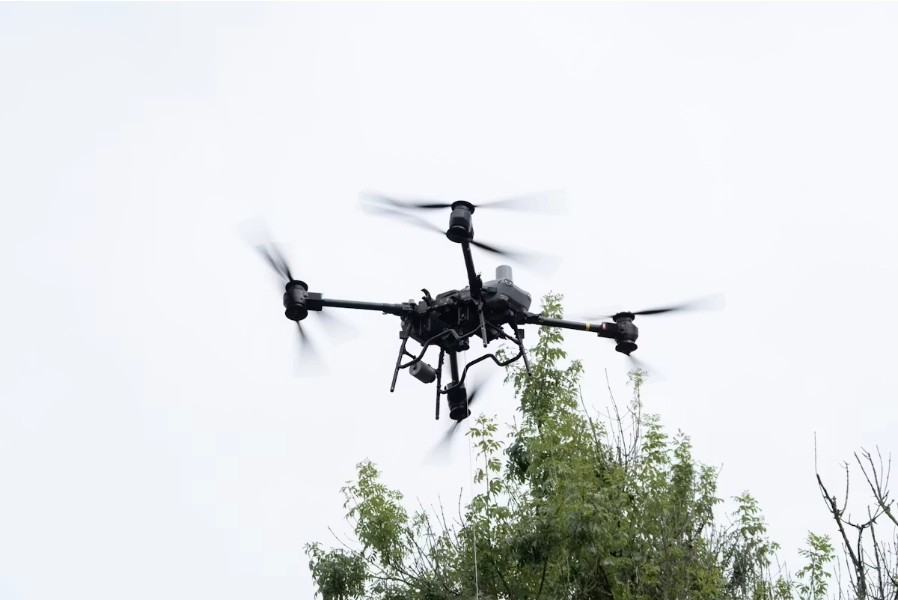
Why does a fuel powered agricultural drone need a non-standard crankshaft?
A fuel powered agricultural drone is different from a small electric drone. Its engine must handle repeated ignition force, fast rotation, fuel combustion load, vibration, dust, and outdoor use. If the crankshaft does not match the engine structure, the problem may appear during assembly, testing, or later field operation.
A non-standard crankshaft is usually needed when the engine has a special layout, limited installation space, modified stroke, or hard-to-source replacement part.
Common buyer situations include:
- The original crankshaft is discontinued or difficult to purchase.
- The engine needs a custom stroke or crankpin position.
- The journal or bearing fit does not match standard parts.
- A prototype engine needs testing before larger production.
- The repair market needs replacement engine parts based on samples.
- The crankshaft must match nearby parts such as camshaft, cover, piston, and connecting rod.
For agricultural drone buyers, the goal is not only to make the part rotate. The goal is to keep the engine stable after assembly, reduce vibration, and avoid early wear in real operation.
Where does Ruizheng fit into custom crankshaft development?
Ruizheng focuses on high-precision shaft parts and non-standard mechanical parts. Its work covers crankshaft, camshaft, cover, piston, connecting rod, spindle parts, flanges, bearing seats, machine tool parts, machine tool accessories, and industrial equipment parts. For fuel powered agricultural drone projects, this background is useful because a crankshaft needs the same discipline found in high-speed and high-load shaft machining: stable geometry, clean surfaces, controlled tolerance, and practical assembly feedback.
Buyers should not treat a crankshaft as only a metal part. A reliable supplier should be able to read drawings, check process risks, give feedback on material and tolerance, support sample testing, and keep inspection records before delivery.
For engine developers, repair part buyers, or small batch production teams, this type of support can reduce repeated modification and help move from sample testing to usable production more smoothly.
What should buyers confirm before crankshaft design starts?
Before machining begins, the buyer should prepare more than a basic drawing. A crankshaft cannot be checked only by outside size. The supplier also needs to know how it fits with the bearing, connecting rod, piston, and engine cover.
The more complete the early information is, the easier it is to avoid wrong machining routes, unclear tolerances, or sample correction after delivery.
| Information to Prepare | What It Helps Confirm |
| Engine type | Whether the crankshaft is for a single-cylinder or twin-cylinder engine |
| Working speed range | Balance, journal load, and wear risk |
| Stroke and crankpin position | Piston movement and power output |
| Bearing size and fit | Rotation stability and assembly quality |
| Material requirement | Strength, wear resistance, and cost direction |
| Heat treatment need | Surface durability in high-friction areas |
| Old sample condition | Whether reverse checking is reliable or wear has changed key dimensions |
| Quantity plan | Prototype, small batch, or repeat production route |
If the project is still at the early design stage, a 3D drawing, 2D drawing, or physical sample can help the supplier check risky areas such as sharp corners, thin sections, difficult oil holes, or unclear fit requirements.
How should the structure of a drone crankshaft be designed?
For a fuel powered agricultural drone engine, the crankshaft must keep rotation stable while controlling unnecessary weight. Every extra gram matters, but removing too much material can weaken the part or increase vibration.
The structure should be reviewed around the areas that affect actual engine performance, not only the appearance of the part.
Journal and crankpin fit
The main journal and crankpin must support stable rotation and proper bearing contact. If the journal is too small, the bearing area may wear faster. If the tolerance is too loose, the engine may vibrate after long operation.
Buyers should confirm:
- Main journal diameter
- Crankpin diameter
- Stroke distance
- Bearing matching requirement
- Oil hole position, if required
- Runout and concentricity requirement
These dimensions directly affect how smoothly the engine runs after assembly.
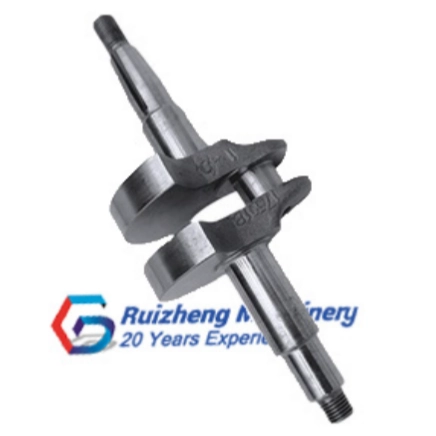
Counterweight and vibration control
The counterweight helps reduce vibration and protects nearby engine parts. Poor balance may affect the bearing, connecting rod, piston, cover, and engine housing.
For agricultural drone engines, vibration is not only an engine issue. It may also affect the frame, tank, spraying system, and flight stability. A practical design should avoid both extremes: a crankshaft that is too heavy for payload efficiency, and a crankshaft that is too light to stay stable under load.
Transition radius and fatigue risk
Crankshaft failure often starts from stress concentration. Sharp corners around the crankpin, journal shoulders, or step transitions should be avoided where possible. A proper transition radius can reduce cracking risk and improve service life.
Buyers should not approve a crankshaft only because the drawing size is correct. The final test is whether the part runs smoothly after assembly and does not create abnormal wear.
Common design risks buyers should avoid
Several crankshaft problems do not appear until the engine is assembled and tested. A crankpin position error may change piston movement. Poor journal fit may create bearing wear. Weak transition areas may crack after repeated load. An unbalanced counterweight may increase vibration and affect the drone frame during operation.
If the part is copied from an old sample, worn surfaces should not be treated as original dimensions. Buyers should confirm which surfaces are worn, which dimensions are functional, and which areas must follow the engine assembly requirement.
Which machining process supports better crankshaft fit?
A non-standard crankshaft usually needs more than one machining process. The route may include turning, milling, drilling, grinding, heat treatment, and inspection. The correct choice depends on the drawing, working load, and final assembly requirement.
For buyers searching for drawing-based drone crankshaft production, the Custom DRONE crankshaft CNC machining SERVICE is suitable when the part needs customized geometry, sample matching, and controlled finishing. It is useful for prototype engines, repair replacement parts, and small to medium production plans.
A typical machining route may include:
- CNC turning for shaft body, journals, and shoulders
- CNC milling for flats, slots, keyways, or non standard structures
- Drilling for oil holes or mounting holes
- Grinding for journal finish and tighter bearing fit
- Heat treatment for surfaces that need better wear resistance
- Final inspection before shipment
Ruizheng’s broader services are more useful when the project includes more than one matched engine part. For example, a buyer may need the crankshaft to fit with a camshaft, cover, piston, connecting rod, spacer, or shaft sleeve. Keeping these parts in one machining communication flow can reduce mismatch between drawings, samples, and final assembly.
How should buyers check quality before batch production?
Quality checking should focus on the dimensions that affect engine running, not only the outside shape. A part may look correct but still cause problems if the running surfaces, bearing fits, or crankpin position are not controlled well.
For custom crankshaft projects, buyers should check:
- Main journal and crankpin size
- Runout and concentricity
- Bearing contact surface finish
- Hole position, if oil holes or mounting holes are required
- Stroke accuracy
- Key assembly dimensions
- Material and heat treatment confirmation, if required
Main journal runout may lead to vibration. Crankpin position affects piston movement. Poor surface finish on bearing contact areas may increase wear after long operation. If the drawing does not clearly mark these areas, buyers should ask the supplier to confirm which dimensions are assembly-critical before machining starts.
This step is especially important before batch production. A small batch test gives the buyer a chance to check fit, vibration, wear marks, and assembly feedback before approving a larger order.
Final selection advice for buyers
A non-standard crankshaft is worth developing when the original part cannot match your fuel powered agricultural drone engine layout, when the crankpin or journal position needs adjustment, or when a repair replacement part is no longer easy to source.
If your project is still at the testing stage, do not move directly into batch production. Start with a sample or small batch, test assembly fit, check vibration during engine running, and confirm wear marks after real operation.
If the part is only a simple replacement with no structure change, a sample-based machining route may be enough. If the engine structure is new, prepare a drawing, working condition notes, and assembly requirements before machining starts.
This same purchasing logic can also support related single-cylinder and twin-cylinder engine parts used in fuel powered drone projects and categories such as jet ski, powered parachute, outboard motor, snowmobile, ATV, UTV, and kart parts.
Project contact for custom crankshaft machining
If your crankshaft project is still unclear, prepare the drawing, sample photos, engine type, bearing fit, material request, quantity, and working condition notes before you contact the team. These details help confirm whether the part should be made by sample matching, drawing-based machining, or prototype trial production. For fuel powered agricultural drone engines, this early check can reduce repeated sample changes and help you avoid batch production before the key assembly dimensions are stable.
FAQ
Q: Can a non-standard crankshaft be made from a damaged sample instead of a complete drawing?
A: Yes. A damaged sample can help with reverse checking, but the supplier should not copy every worn surface directly. Bearing fit, journal diameter, crankpin position, stroke, and assembly dimensions should be reviewed before machining.
Q: What should I check before ordering a custom crankshaft for a fuel powered agricultural drone?
A: Check engine type, working speed, stroke, journal size, crankpin size, bearing fit, material requirement, heat treatment need, quantity, and whether the part is for prototype testing, repair replacement, or batch production.
Q: Is small batch production suitable before mass production?
A: Yes. Small batch production is safer for non-standard crankshafts because it allows engine testing before larger orders. Buyers can check assembly fit, vibration, surface wear, and running stability before confirming the final production plan.

