
If you operate heavy-duty, gasoline-powered industrial drones for tasks like agricultural spraying, long-range mapping, or emergency delivery, you already know that fuel efficiency is your biggest hurdle. Most engineering teams look only at engine size or fuel quality when trying to increase flight times, completely missing a massive mechanical power thief hidden right inside the motor setup. The small linkages and connecting rods that transfer the explosive force of combustion must withstand extreme heat and constant high-speed stress. If these internal links allow even a tiny bit of wobble or flexing, you are bleeding precious engine power before it ever reaches the rotors. Upgrading to a High Precision CNC component at these critical structural junctions is the fastest, most direct way to stop mechanical drag and get the maximum range out of every single tank of fuel.

Meet Your High-Precision Component Partner
When you are trying to upgrade your commercial drone hardware or scale up UAV production, you need a hands-on manufacturing ally who takes micro-level accuracy just as seriously as your own design team. Ruizheng is a high-precision manufacturing specialist focusing heavily on drone engine accessories. We spend our days working on complex internal combustion parts, connecting rods, miniature engine shafts, and precision bearing blocks specifically designed for high-load industrial drones. Because we combine strict ISO 9001 quality audits with direct, transparent communication, we excel at turning complicated engine technical plans into highly rugged physical components that give your drone fleet a real power and endurance advantage.
Transforming Engine Precision into Maximum Flight Range
When internal components in a combustion drone are moving thousands of times per minute under intense heat, any tiny manufacturing error or weight imbalance creates a huge performance penalty. Mass-produced, low-tier linkages simply cannot handle this severe stress without bending, creating major problems across your entire platform.
The Hidden Impact of Vibration
A connecting rod that lacks true, uniform alignment creates a destructive outward centrifugal pull as it spins inside the engine cylinder. This constant, high-speed tugging puts immense physical strain on your internal bearing seats and surrounding support frames. More importantly, it generates massive amounts of parasitic heat. This heat is direct proof that your engine is wasting expensive fuel just to fight its own internal mechanical friction, instead of converting that energy into lifting power for your payload.
Premature Wear on Critical Engine Parts
The damage from continuous engine shakes does not stop at fuel loss. Ongoing mechanical vibration transfers directly into the core components of industrial equipment and motor drives. Over a short period, these constant micro-impacts grind down internal needle bearings and loosen critical hardware connections.
Disruption of Sensitive Onboard Gear
Heavy-duty industrial drones carry highly sensitive onboard equipment, cameras, and guidance sensors that must remain perfectly stable to do their jobs. Heavy structural vibration caused by poorly balanced engine links acts as severe mechanical noise, blinding your navigation system and making it difficult for the flight controller to hold a steady position. Swapping out loose, standard hardware for a specialized High Precision CNC connecting rod solves these problems directly at the source. A perfectly balanced mechanical link allows combustion force to move predictably, letting you get more flight distance from your fuel tank.
Achieving Peak Fleet Performance Through Advanced Machining
Standardized hardware parts from a general catalog are made for cheap, low-stress applications. Industrial-grade machinery and heavy-duty combustion engines require a much more precise touch.
High Precision CNC Manufacturing for Lower Power Draw
When your mechanical linkages possess true micron-level tolerance, your entire engine assembly operates with minimal internal resistance. This reduces the workload on the internal bearings, letting the engine run cooler and more efficiently. Tight manufacturing tolerances translate into instant fuel savings and longer operational life.
Here is a clear look at how tight tolerances change your performance numbers in real-world, high-stress applications:
| Performance Metric | Standard Machined Linkages | High Precision CNC Linkages |
| Dimensional Tolerance | ±0.05 mm to ±0.1 mm | ±0.001 mm to 0.005 mm |
| Energy Loss via Internal Friction | 8% to 12% of total power | Less than 1.5% of total power |
| Component Vibration Level | Baseline (100%) | Reduced by 75% to 80% |
| Bearing Service Life | 300 to 500 hours | 2,000+ hours |
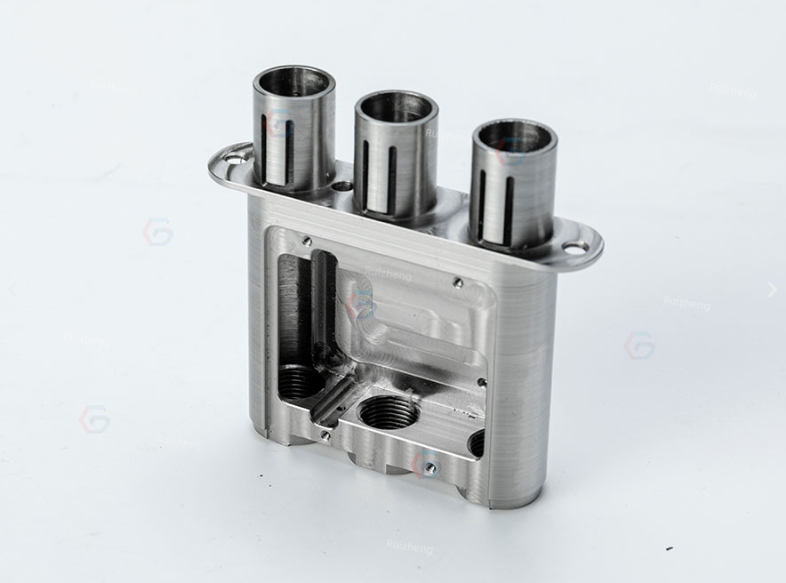
Solid Material Selection and Enhanced Durability
Choosing high-strength alloy steel or robust stainless steel ensures that your connecting linkages handle heavy payload torque and explosive combustion pressures effortlessly. This ensures that your customized CNC part maintains its structural shape and stays perfectly straight even during sudden speed changes.
To help your procurement team see the difference in component longevity under continuous stress, review this material breakdown:
| Material Type & Treatment | Surface Hardness (HRC) | Yield Strength (MPa) | Fatigue Resistance Limit |
| Standard Carbon Steel (Untreated) | 15 – 20 HRC | ~350 MPa | Low |
| Premium Stainless Steel (Precision Machined) | 25 – 35 HRC | ~550 MPa | Medium-High |
| Alloy Steel + Specialized Heat Treatment | 45 – 55 HRC | 850 – 1,100 MPa | Maximum |
Why Global Industrial Equipment Leaders Partner with Us
Moving a complex mechanical design from an initial blueprint to a finished product involves many production challenges. You deserve a smooth manufacturing setup that adapts to your exact needs instead of pushing your engineers toward restrictive standard catalog limits.
- Rapid Blueprint Reviews: Send your detailed 2D or 3D technical plans to our engineering team and receive a comprehensive review within 24 hours. This rapid feedback loop speeds up design changes ahead of your rivals, letting you launch updates without hitting a wall of supplier delays.
- Scalable Production Volumes: From small experimental test runs to massive ongoing batch supplies, the right manufacturing ally supports business growth at every stage of development. You do not have to worry about shifting suppliers when moving from prototyping to full commercial deployment.
- Global Logistics and Full Compliance: Total DDP shipping services and detailed material verification files ensure parts reach your facility exactly on schedule. They arrive fully prepared for direct assembly, no matter where your production plant is situated worldwide.
Utilizing our full suite of services keeps your specialized drone engine components—such as connecting rods, precision shafts, and engine bearing mounts—under one single quality management operation to protect your brand from supply chain gaps.
The Ultimate Competitive Advantage for Your Brand
In the commercial market, the true cost of a component is never just the initial purchase price; it is the long-term cost of operation. Choosing high-end High Precision CNC connecting linkages is a proactive business strategy to secure your market position.
If you are ready to fix your high-RPM vibration issues and upgrade your machine parts, please contact us today. Our engineering team is ready to review your blueprints and provide a clear, accurate quote within 24 hours.
FAQ
Q: How does a High Precision CNC connecting rod improve the fuel efficiency of an industrial engine?
A: The rod keeps a 0.001 mm fit and strong concentricity. These features cut friction and heat inside the motor. Energy therefore moves to the drive shafts with less loss, so the engine wastes less fuel.
Q: What materials are available for custom non-standard mechanical parts?
A: We use high-grade materials that suit heavy factory loads. Premium alloy steel and stainless steel are common choices. Both receive special heat treatments, which raise hardness and improve wear resistance.
Q: What is the typical turnaround time for receiving custom industrial parts?
A: Standard non-standard components need 20–30 days. Parts that require fine grinding or extra checks in the constant-temperature testing suite need 40–60 days.

