
While fuel powered drones are generally chosen for their extended flight time, increased payload capacity and the ability to complete outdoor work that would otherwise be limited by a drone’s battery life, the engine is now a critical component in the overall reliability of the system. The reliability of the machined engine components becomes increasingly important as the drone is no longer just a frame, propeller and fuel system.
A crankshaft is one of the parts that quietly decides whether the engine runs smoothly or creates vibration, wear, and unstable power delivery. For buyers, maintenance teams, and drone engine developers, this means crankshaft machining quality can affect flight stability, service life, and long-term operating cost.
Ruizheng focuses on high-precision shaft components and custom non-standard mechanical parts. Its work covers CNC machined shafts, spindle parts, flanges, bearing seats, crankshafts, and other precision components used in demanding mechanical systems. For fuel powered drone projects, this experience matters because drone engine parts often require compact structure, controlled tolerance, reliable material performance, and repeatable batch quality.
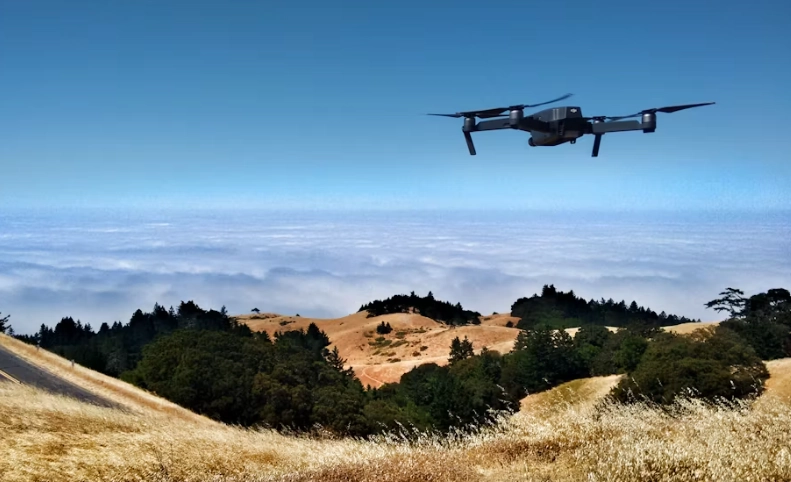
Why Does Crankshaft Precision Matter in Fuel Powered Drones?
A fuel powered drone engine works under constant vibration, heat, rotation, and load changes. Even a small dimensional error in the crankshaft can create problems that may not appear during simple bench testing but become clear after longer use.
A Crankshaft Turns Combustion Into Usable Power
In a fuel powered drone engine, the crankshaft converts piston movement into rotational motion. That rotation then supports power transmission to the propeller system. If the crankshaft is not accurate enough, the engine may still run, but it may not run smoothly.
For a drone buyer, the practical concern is simple:
- Will the engine stay stable during long flights?
- Will vibration damage surrounding parts?
- Will the crankshaft fit well with bearings and related components?
- Will every batch perform consistently during assembly?
Precision crankshaft machining helps answer these questions at the mechanical level. It does not replace good engine design, but it gives the design a more reliable foundation.
Small Errors Can Increase Vibration and Wear
Fuel powered drones often operate in outdoor missions such as mapping, agricultural work, inspection, or cargo-related use. These applications do not leave much room for avoidable engine trouble.
Poor crankshaft machining may lead to:
- Higher vibration during rotation
- Uneven load on bearings
- Faster wear on connected parts
- Assembly difficulty
- Shorter maintenance intervals
- More frequent replacement of engine components
For buyers, this is not only a technical issue. It affects downtime, after-sales pressure, inventory planning, and the cost of keeping drones in operation.
What Should Buyers Check Before Choosing a Drone Crankshaft Supplier?
A crankshaft is not a general hardware part. In many fuel powered drone projects, it must match the engine design, space limit, load requirement, and assembly method. That is why supplier selection should focus on process control, not only price.
Can the Supplier Work From Custom Drawings?
Many drone engine projects need non-standard crankshafts rather than catalog parts. A reliable machining partner should be able to review 2D or 3D drawings, check key dimensions, and discuss machining feasibility before production.
This is especially useful during prototype and trial production. If the first sample shows fit or tolerance issues, the buyer needs a supplier that can give practical feedback instead of only following the drawing mechanically.
Ruizheng’s Custom DRONE crankshaft CNC machining SERVICE fits this type of project because it is built around custom crankshaft processing for drone engine applications. It is more suitable for buyers who need drawing-based production, sample verification, or small-batch development before moving into larger orders.
Can the Supplier Control Turning Grinding and Finishing Quality?
A fuel powered drone crankshaft may need several machining steps. Turning shapes the main structure. Milling may be needed for special features. Grinding helps improve shaft accuracy, surface quality, and fit. Heat treatment may also be required when strength and wear resistance are important.
The buyer does not need to manage every process detail, but should ask the right questions:
| Buyer Concern | Why It Matters for Fuel Powered Drone Engines |
| Concentricity | Helps reduce unstable rotation and vibration |
| Surface finish | Affects fit, wear, and bearing contact |
| Material selection | Supports strength, weight, and durability needs |
| Heat treatment support | Helps improve wear resistance when required |
| Final inspection | Reduces batch rejection and assembly risk |
A supplier with complete machining and inspection capability can reduce the risk of receiving parts that look correct but fail during assembly or long operation.
How Does Precision Machining Improve Fuel Powered Drone Engine Reliability?
Precision machining improves reliability by reducing uncertainty. It helps the engine designer, assembler, and end user work with parts that behave more consistently.
It Supports Smoother Rotation
A crankshaft that is machined with better dimensional control can support smoother rotational movement. This helps reduce unwanted vibration from the engine itself. In a drone, lower vibration can also reduce stress on nearby parts, sensors, mounts, and fasteners.
For work drones, this matters because vibration is not only uncomfortable noise. It can influence flight stability, image quality, equipment life, and maintenance workload.
It Helps Related Parts Last Longer
The crankshaft works together with bearings, connecting rods, seals, and other engine parts. If the crankshaft has poor accuracy, these related parts may carry uneven stress.
Better machining helps the full assembly work more naturally. The result is not just a better crankshaft, but a more stable engine system. For buyers, that can mean fewer unexpected failures and easier maintenance planning.
It Improves Batch Consistency
Prototype success is only the first step. If a buyer plans to produce or repair fuel powered drone engines in batches, the real challenge is repeatability. Parts must fit the same way across multiple orders.
This is where process inspection becomes valuable. Ruizheng uses first-piece inspection, in-process inspection, and final inspection before shipment. For overseas buyers, this can reduce communication cost and help keep quality expectations clearer between sample and batch production.
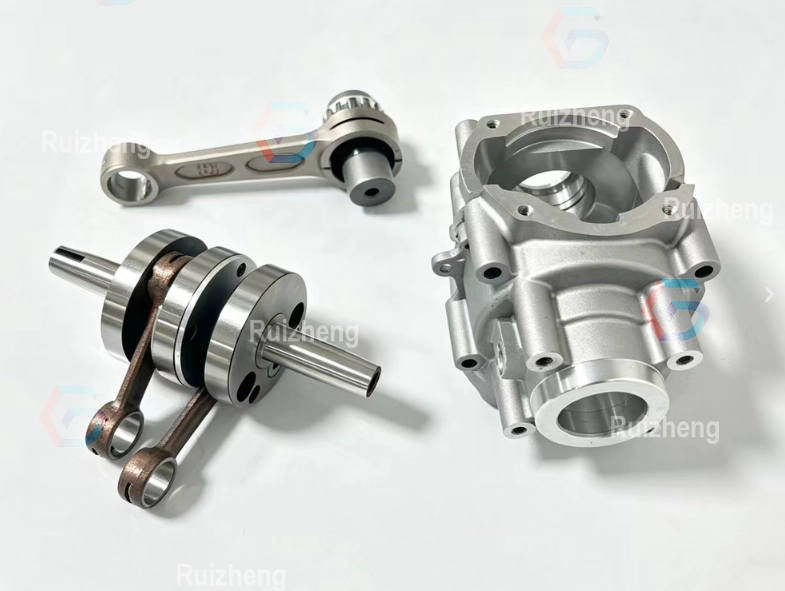
Where Can Ruizheng Fit Into a Fuel Powered Drone Engine Project?
Ruizheng is not positioned as a drone engine brand. Its role is more practical: helping buyers produce precision mechanical components that support fuel powered drone engine reliability.
Custom Crankshafts for Prototype and Small-Batch Projects
Some buyers may already have an engine design but need a crankshaft supplier that can handle custom geometry. Others may have an old part sample that needs improvement or replacement.
Ruizheng can support custom machining based on drawings, and this is useful for:
- Fuel powered drone engine development
- Replacement crankshaft projects
- Small-batch trial production
- Custom shaft parts for rotating systems
- Engine-related non-standard mechanical parts
This type of cooperation helps buyers test design fit before committing to larger production quantities.
More Than Crankshafts
A reliable fuel powered drone engine may also require other precision parts. Connecting rod, bearing, piston, cylinder, crankcase, and oil seal ect can all affect alignment and assembly quality.
Ruizheng’s services cover custom machining support for various precision mechanical parts. For buyers managing several related components, working with one machining partner can reduce mismatch between parts made by different suppliers.
This is useful when the project needs:
- CNC shaft machining
- Grinding for tighter fitting surfaces
- Non-standard part customization
- Material and dimension inspection
- Export packing and document support
How Can Better Machining Lower Long-Term Drone Project Cost?
Many buyers compare crankshaft suppliers mainly by unit price. That is understandable, but it is not enough. A cheaper crankshaft may become expensive if it causes failure, rework, delayed assembly, or repeated supplier communication.
Lower Failure Risk
A well-machined crankshaft helps reduce mechanical stress and avoidable wear. This can lower maintenance pressure after the drone enters actual use.
Easier Assembly
Stable dimensions make assembly smoother. For buyers producing drone engines or repair parts in batches, this can reduce rejected parts and shorten production adjustment time.
Clearer Procurement Communication
A precision machining supplier should help buyers confirm drawings, materials, tolerances, inspection needs, and delivery expectations before production. This makes purchasing less risky, especially for overseas projects where every correction cycle costs time.
Why Choose Ruizheng for Fuel Powered Drone Crankshaft Machining?
For a fuel powered drone project, the strongest supplier is not always the one with the longest product list. It is the one that can read the drawing, understand the working condition, control the machining process, inspect the key dimensions, and support the buyer from sample to repeat orders.
Ruizheng is a practical fit for buyers who need:
- Custom crankshaft machining for drone engine projects
- High-precision shaft parts for compact mechanical systems
- CNC turning, milling, grinding, and related finishing support
- Small-batch trial production before larger orders
- Inspection and quality communication before shipment
- Support for non-standard parts based on 2D or 3D drawings
For fuel powered drones, reliability starts with every rotating part that carries load. A better crankshaft will not solve every engine issue, but poor crankshaft machining can quickly become the source of vibration, wear, and unstable operation.
Project Support and Communication
If your fuel powered drone engine project involves a custom connecting rod, bearing, piston, cylinder, crankcase, and oil seal ect, prepare the drawing, material requirement, surface requirement, and expected working condition before supplier discussion. Ruizheng can review project details and machining feasibility through its contact page, especially when you need sample support, tolerance discussion, or batch production planning.
FAQ
Q: What makes a crankshaft suitable for a fuel powered drone engine?
A: Critical parameters to select suitable crankshaft are Engine structure, Required load, Bearing fit, Rotation requirements. Check material, Dimensional accuracy, Surface finish, Concentricity and supplier capability to perform inspection before shipment.
Q: Is CNC grinding necessary for fuel powered drone crankshafts?
A: It depends on the design and tolerance requirement. For surfaces that affect fit, rotation, or bearing contact, grinding can help improve accuracy and surface quality. It is especially useful when the engine requires smoother operation and more stable assembly.
Q: Can Ruizheng make custom drone crankshafts from drawings?
A: Yes. Ruizheng supports custom non-standard machining based on 2D or 3D drawings. For fuel powered drone engine projects, buyers can provide drawings, material requirements, tolerance needs, and sample expectations for machining review.

