
A drone piston engine used in heavy lift and agricultural UAV applications works under a different load pattern from a light-duty platform. It carries payload, runs through repeated field cycles, and keeps working while vibration, heat, dust, and fuel combustion stress act on the same moving parts. For buyers, the real question is not only whether the part can be installed. The better question is whether the crankshaft, camshaft, cover, piston, connecting rod, and cylinder can keep the engine stable after repeated operation.
Ruizheng focuses on precision CNC machining for shaft parts and non-standard mechanical parts. For fuel drone engine parts, its value is strongest when buyers need drawing-based customization, sample trial production, replacement parts, or longer-term OEM supply. Its Custom DRONE crankshaft CNC machining SERVICE is suitable for crankshaft projects, while its CNC Machining Service can support related custom engine parts such as connecting rods, covers, camshafts, shaft components, and other non-standard hardware.
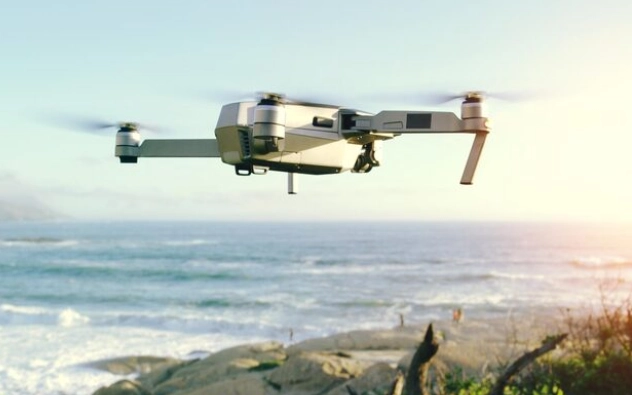
Why Do Heavy Lift and Agricultural UAVs Need Better Drone Piston Engine Parts?
Heavy lift and agricultural UAVs usually work with spraying systems, fuel tanks, sensors, or other mission equipment. A drone piston engine in this setting does not run in a short, clean, low-stress cycle. It must handle takeoff load, climbing load, field operation, return flight, and regular maintenance checks.
High Load Creates Higher Stress on Moving Parts
Crankshafts and connecting rods take repeated combustion force and convert it into rotation. If the crankshaft journal, rod hole, or mating surface is not processed accurately, the engine may show vibration, bearing wear, unstable output, or early fatigue. For heavy lift UAV engine components, small dimensional errors can turn into larger mechanical problems after many cycles.
Agricultural Work Demands Longer Operating Stability
Agricultural UAV engine parts need stable matching between piston, cylinder, crankshaft, and connecting rod. Field work may involve long running time, dust, heat, and short maintenance windows. A piston that wears too quickly or a cylinder with poor mating control can affect compression and field reliability. Buyers should not only ask for the shape of a part. They should ask how the part will be machined, inspected, and matched to the engine design.
Standard Spare Parts May Not Fit OEM Engine Designs
Many industrial fuel UAV engines are modified for payload, endurance, or local service conditions. Standard spare parts may not match the actual bore, stroke, shaft size, mounting hole, or assembly tolerance. For UAV piston engine spare parts, customization is often safer when the engine has been redesigned, discontinued, or adapted for a special airframe.
Which Drone Piston Engine Parts Affect Power and Reliability Most?
The critical components are those that carry force, or guide, seal or time. By knowing the risk associated with the size, material or fit of each individual component, the buyer does not need everything to be custom made.
Crankshafts Control Power Transfer and Balance
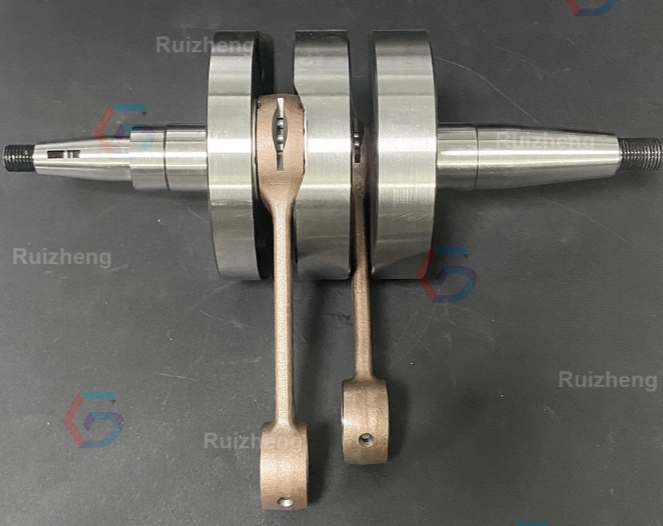
The crankshaft is one of the hardest-working parts in a drone piston engine. It affects rotation balance, bearing contact, vibration control, and power transfer. For custom drone crankshaft machining, buyers should prepare 2D or 3D drawings, material requirements, heat treatment requests, and key tolerance points. Ruizheng can process custom crankshafts based on drawings and supports precision machining for non-standard shaft parts, which makes it relevant for OEM and repair projects.
Connecting Rods Link Combustion Force to Rotation
The connecting rod must handle repeated tensile and compressive force. Its big-end and small-end holes need controlled alignment, and weight consistency matters when the engine runs at speed. Poor rod machining can lead to extra vibration or uneven wear. Before ordering, the buyer should confirm hole size, center distance, surface finish requirements, and whether heat treatment is needed.
Pistons and Cylinders Affect Compression and Wear
The piston and cylinder decide how well combustion pressure is sealed and how smoothly the engine runs after repeated use. For fuel drone engine parts, this area should be checked carefully because poor mating can increase wear and reduce stability. Covers and camshafts also matter because they affect sealing, timing, and assembly fit. A complete sourcing plan should review all moving and mating parts, not only the most visible component.
| Part | Main Buyer Concern | What to Confirm Before Ordering |
| Crankshaft | Vibration and power transfer | Journal size, concentricity, material, heat treatment |
| Connecting Rod | Fatigue and alignment | Hole accuracy, center distance, weight control |
| Piston | Compression and wear | Diameter, groove details, surface finish |
| Cylinder | Mating and wear control | Inner surface, fit clearance, material request |
| Cover and Camshaft | Assembly and timing fit | Hole position, sealing face, mounting tolerance |
How Should Buyers Evaluate Custom Machining Quality Before Ordering?
A supplier for CNC machining for drone engine parts should be judged by process control, not by a catalog image. Heavy lift and agricultural buyers usually need repeatable parts, not one good sample that cannot be reproduced in batch.
Precision Tolerance and Concentricity Control
Ruizheng’s production background includes lathes, milling machines, grinders, a constant-temperature testing room, and automated loading and unloading robotic systems. According to Ruizheng’s knowledge base, the accuracy of the processing is up to 0.001 mm. For manufacturing of crankshafts and other shaft-type parts, the measurement conditions as well as the machining consistency have to be taken into account in order to achieve the correct concentricity of the holes, the correct journal fit as well as the correct behavior during the final assembly.
UAV Powertrain Engineering Standards: For commercial fuel-powered UAV engines working under repeated agricultural spraying vibration, static dimensional accuracy is only the entry point. Ruizheng’s machining capability gives buyers a clearer supplier-side process boundary: the company’s documented processing accuracy can reach 0.001 mm, supported by a constant-temperature testing room, lathes, milling machines, grinders, and full-process inspection. For crankshafts, camshafts, connecting rods, covers, pistons, and cylinders, this means the technical file should not stop at part name and quantity. It should define the alloy steel or stainless steel requirement, heat treatment request, HRC target if hardness is required, IT6 or IT7 precision grade where applicable, key journal dimensions, hole center distance, sealing surface tolerance, mating clearance, and inspection positions. Ruizheng can also provide first-piece inspection, process inspection, final inspection before shipment, dimensional inspection reports, material reports upon request, and assembly tolerance suggestions. For procurement engineers, this turns custom drone crankshaft machining from a vague “high precision” order into a checkable production agreement: which surfaces carry load, which holes control alignment, which faces seal combustion pressure, and which dimensions must be verified before export.
Material Choice and Heat Treatment Capability
For fuel UAV engine parts, alloy steel and stainless steel are common material directions when strength, wear resistance, corrosion resistance, or machining stability must be considered. Heat treatment can also be requested when the part needs hardness or fatigue resistance. Buyers should not only name a material. They should connect material selection with engine load, expected running time, surface contact, and post-machining inspection.
Inspection Documents for International Buyers
Ruizheng follows ISO 9001 quality management practices and applies first-piece inspection, process inspection, and final inspection before shipment. For overseas buyers, inspection documents reduce communication risk. Material reports, dimensional inspection reports, and related compliance documents can help purchasing teams check whether the part meets the drawing before assembly.
When Is Custom CNC Machining Better Than Standard Drone Engine Spare Parts?
Custom machining is not always needed. If the engine is common, lightly loaded, and the original part is available, standard replacement may be enough. But for industrial fuel UAV work, several situations make custom production more practical.
Prototype and Small Batch UAV Engine Projects
Prototype engines and small-batch agricultural platforms often change during testing. A shaft size may be adjusted, a cover may need a new mounting pattern, or a connecting rod may need a different fit. Ruizheng supports drawing-based customization and small batch trial production, which helps buyers test the part before moving to larger orders.
Replacement Parts for Discontinued or Modified Engines
Repair teams may need parts for older or modified fuel UAV engines. In this case, standard parts may not be available, or they may not match the current engine. A sample or drawing can be used to rebuild the needed component. This is where CNC machining becomes a practical sourcing path for repairers and service companies.
Long Term OEM Supply for Stable Engine Platforms
After testing confirms that the part works, the next concern is batch stability. Ruizheng supports project-based cooperation and long-term supply models. For OEM buyers, this is useful because the same crankshaft, camshaft, cover, piston, or rod may be needed across repeated production and maintenance cycles.
How Can Buyers Reduce Maintenance Cost and Sourcing Risk?
Maintenance cost is not only the price of a spare part. It includes downtime, repeated testing, failed assembly, delayed shipment, and field repair pressure. A lower unit price may not save money if the part creates vibration, fit problems, or short service life.
Confirm Drawings Tolerances and Assembly Fit Early
Before ordering, buyers should prepare drawings, samples, material requests, heat treatment needs, surface treatment notes, and key inspection points. Ruizheng can provide assembly tolerance suggestions, which is useful when the buyer knows the engine function but needs help turning that requirement into a machining request.
Compare Unit Price With Failure Cost
A crankshaft or connecting rod failure can affect bearings, piston movement, cylinder wear, and engine stability. Instead of comparing only unit price, buyers should compare the cost of rework, flight interruption, and repeat shipping. For agricultural UAVs, a delayed replacement part can also affect seasonal work schedules.
Choose a Supplier With Service and Contact Support
For ordinary parts, Ruizheng’s stated delivery cycle is usually 20 to 30 days, while higher-end precision parts may require 40 to 60 days. The company can arrange international express, air, and sea shipping, and can provide packing lists, invoices, certificates of origin, and other export documents. For quality issues, it supports defect analysis reports, which helps buyers trace the cause instead of guessing.
For heavy lift and agricultural UAV projects, the right drone piston engine part should match the drawing, the load, the maintenance plan, and the buyer’s supply schedule. A practical sourcing process starts with drawings and real working conditions, then moves to samples, inspection, and batch planning. Ruizheng’s crankshaft and CNC machining services fit projects where buyers need controlled customization rather than off-the-shelf guessing.
Before sending a drawing, list the parts that cause the most field trouble: crankshaft wear, rod hole mismatch, piston-cylinder fit, camshaft timing, cover sealing, or repeated vibration. Then prepare the sample, 2D/3D file, material note, quantity range, and inspection needs. A focused contact message helps the engineering team check whether the project is suitable for custom machining, sample production, or longer-term supply.
FAQ
Q: What Parts Are Most Important in a Drone Piston Engine for Agricultural UAVs?
A: The crankshaft, connecting rod, piston, cylinder, camshaft, and cover are usually the key parts to review. They affect power transfer, compression, vibration, sealing, timing, and maintenance cost. For agricultural UAVs, stable fit and repeatable machining matter more than only matching the outside shape.
Q: When Should Buyers Choose Custom Drone Engine Parts Instead of Standard Spare Parts?
A: Custom parts are useful when the engine is modified, discontinued, used in heavy load work, or built for an OEM platform. They are also useful when the buyer has drawings or samples but cannot find a standard replacement with the right tolerance, material, or assembly fit.
Q: Can Ruizheng Support Small Batch Parts for a Drone Piston Engine Project?
A: Yes. Ruizheng supports 2D/3D drawing customization, sample and trial production, heat treatment requests, inspection before shipment, and assembly tolerance suggestions. This makes it suitable for prototype testing, repair replacement, and later batch supply for fuel industrial UAV engine parts.

