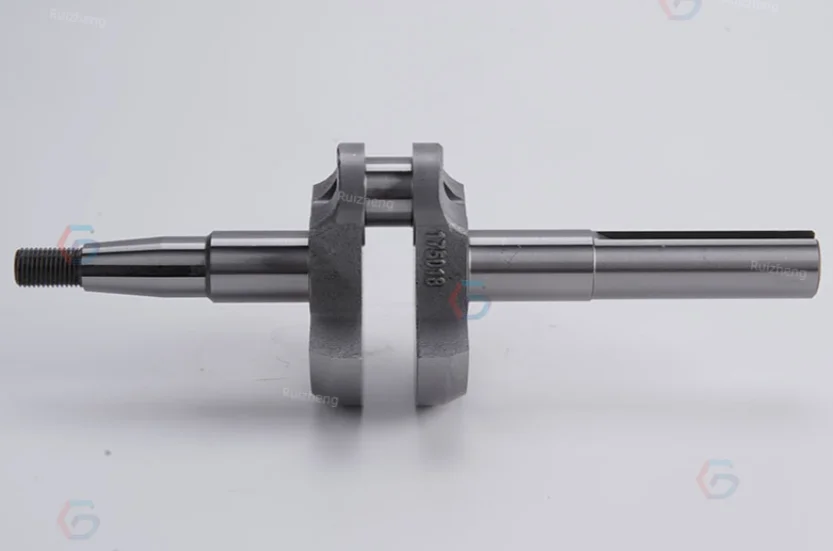
Crankshaft Journals in a fuel-powered industrial drone engine need a controlled bearing surface, not simply a mirror shine. A published engine-bearing reference gives Ra 0.38 µm or better for general crankshafts and Ra 0.25 µm or better for highly loaded duties. These figures are useful starting points, but the approved drawing, bearing design, lubricant, clearance, speed, and load must set the production limit.
Ruizheng manufactures drawing-based crankshafts, camshafts, covers, pistons, connecting rods, and other non-standard parts for fuel-powered industrial drone engines. Its routes include turning, milling, grinding, heat-treatment coordination, and dimensional inspection. First-piece, process, and final checks support sample and small-batch approval before repeat orders.

What Surface Finish Do Crankshaft Journals Need at High RPM?
The useful answer starts with the bearing arrangement. A roughness target has little value unless it matches the surface carrying the load.
No Single Roughness Value Fits Every Journal
Published guidance uses Ra 0.38 µm or better for a general plain-bearing journal and Ra 0.25 µm or better for highly loaded duty. Needle rollers running directly on a hardened shaft raceway may require Ra 0.2 µm and Rz 1 µm.
| Bearing Arrangement | Engineering Reference |
| Plain engine bearing journal | Ra ≤ 0.38 µm |
| Highly loaded plain journal | Ra ≤ 0.25 µm |
| Needle rollers on the shaft raceway | Ra 0.2 µm and Rz 1 µm |
These are reference points, not automatic specifications for every high-RPM drone engine crankshaft. Confirm the bearing data and drawing before machining.
Bearing Type and Lubrication Set the Finish Target
Surface peaks may pass through the oil film and abrade the bearing, but a low Ra reading alone is incomplete. Oil viscosity, supply route, temperature, clearance, and surface lay also matter.
Approve the crankshaft journal surface finish with the lubrication plan. A change from a bushing to a needle assembly requires fresh review.
Surface Finish Must Be Read with Journal Geometry
Crankshaft Journals may meet Ra requirements and still fail because of taper, ovality, cylindricity error, or runout. Texture and form need separate measurements.
Ruizheng’s documented machining capability can reach 0.001 mm where the part and process support it. Buyers must still state datums, diameters, fillet radii, and runout limits.
Why Can a Smooth Journal Still Fail in a Drone Engine?
A polished appearance is easy to see. Bearing conditions are less visible.
Low Roughness Cannot Correct Runout or Roundness
An eccentric crankpin changes clearance as it rotates, while an out-of-round journal concentrates load. Polishing corrects neither fault.
Crankshaft runout inspection should use defined datums and be reviewed with diameter, roundness, and roughness.
Overpolishing Can Disrupt Oil Retention
The risk is not “too smooth” as one number. Uncontrolled polishing can change clearance, round an edge, or leave the wrong lay. Published guidance calls for grinding opposite engine rotation and polishing in the direction of rotation so microscopic burrs do not disturb the oil film.
A mirror appearance is not an acceptance criterion. Finish, lay, diameter, and geometry must meet the drawing.
Heat, Load, and Vibration Accelerate Bearing Wear
Combustion force passes through the piston and connecting rod to the crankpin. Incorrect alignment, bearing clearance, piston-to-cylinder clearance, or lubrication may overload one side.
Check the crankshaft with the connecting rod, piston, cylinder, pin, bearing, seals, and covers.
How Should Buyers Specify and Inspect Crankshaft Journals?
Clear drawings and records reduce rework and repeated engine testing.
Put Roughness, Diameter, and Geometric Tolerances on the Drawing
Mark each main journal and crankpin separately where requirements differ. Include:
- Ra or Rz and evaluation direction
- Diameter and fit
- Roundness, cylindricity, and runout
- Datum references and fillet radius
- Material and heat-treatment sequence
“Smooth finish” and “precision ground” are not measurable acceptance terms.
Combine Surface Checks with Hardness and Dimensional Inspection
Crankshaft Journals should be released after roughness, diameter, form, runout, and hardness are reviewed together. Material and heat-treatment records must match the drawing revision.
Ruizheng applies first-piece, process, and final inspection in a constant-temperature inspection room.
Approve Samples Before Batch Production
Use a sample or trial batch when the part is new, the drawing is incomplete, or the bearing arrangement has changed. Check it against the planned production report, then complete trial assembly and controlled engine testing.
Which Machining Choices Improve Journal Consistency?
A stable result depends on process order from turning through final inspection.
Final Cylindrical Grinding Controls the Bearing Surface
Turning establishes the basic form. Crankshaft journal grinding controls the final diameter, shape, and texture.
Ruizheng’s custom drone crankshaft CNC machining service supports projects needing turning, grinding, inspection, and sample approval in one route. It suits new development and replacement parts rebuilt from drawings or verified samples.
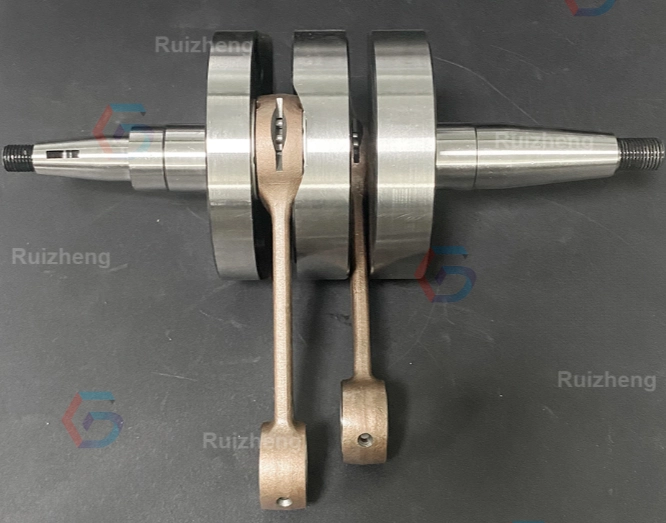
Heat Treatment Must Be Completed Before Finish Grinding
Heat treatment may change hardness and introduce distortion. Leave grinding allowance after treatment instead of relying on heavy polishing. Confirm material condition, hardness, allowance, and final inspection before production.
Material Selection Must Match the Drone Engine Duty
Material selection should reflect fatigue load, wear, heat-treatment response, journal size, and weight limits. The alloy steel grade must follow the engine designer’s requirement.
A new crankshaft fitted to a worn rod bore or unsuitable bearing can still fail. Buyers of custom drone engine parts should provide mating-part data.
What Should Buyers Send Ruizheng Before Requesting a Quote?
A complete RFQ exposes missing tolerances before material is cut.
Crankshaft Drawings and Operating Conditions
Send the 2D or 3D drawing, material condition, heat treatment, journal dimensions, roughness symbols, tolerances, bearing type, lubrication method, speed, load, quantity, and inspection requirements. Ruizheng can also provide assembly-tolerance suggestions.
Matching Data for Connecting Rods, Pistons, and Cylinders
Include rod bore sizes, center distance, bearing details, piston diameter, pin fit, ring grooves, cylinder bore geometry, and cover interfaces.
Ruizheng’s broader Service supports camshafts, covers, pistons, connecting rods, shafts, flanges, and bearing seats.
Trial Production, Service, and Contact
Start with a sample or trial batch when the drawing is new or incomplete. Confirm the inspection method before production.
For uncertain roughness, runout, material condition, or mating dimensions, send the drawing and operating data through the Ruizheng contact page. Include the bearing arrangement, lubrication route, heat-treatment sequence, and required records.
FAQ
Q: What Ra value is commonly used for Crankshaft Journals with plain bearings?
A: Published engine-bearing guidance uses Ra 0.38 µm or better for general journals and Ra 0.25 µm or better for highly loaded journals. The approved drawing and bearing design remain controlling.
Q: Is Ra enough to approve a finished crankshaft journal?
A: No. Review Ra or Rz with diameter, taper, roundness, cylindricity, runout, hardness, fillets, oil-hole edges, and surface lay.
Q: How should buyers approve Crankshaft Journals for a new industrial drone engine?
A: Define the bearing and lubrication conditions, issue a measurable drawing, approve a sample report, and complete trial assembly before batch production. This links the journal finish to the connecting rod, piston, cylinder, and complete fuel-powered engine.