
If you are an overseas buyer or purchasing manager in the machinery industry, you must watch out for a common industry trap. When sourcing core engine components for heavy-duty marine outboard motors, ATVs and large industrial machine tools, some suppliers cut corners on raw material processing and preliminary machining to save costs. As a result, the whole equipment fails on the test bench within months. In worse cases, it breaks down completely during field operation with severe vibration and badly damaged bearing seats.
The truth of this industry is remarkably straightforward. Standard, off-the-shelf parts simply cannot survive high-stress environments. If you want real longevity and quiet operation, you have to invest in proper CNC Crankshaft Machining right from the beginning. If you want to get a clear picture of how a serious, top-tier facility actually handles this kind of work, consider Ruizheng, a serious high-precision operation. They consistently hit that golden 0.001mm tolerance because they strictly follow ISO 9001 protocols and run constant-temperature testing rooms. You absolutely need that exact level of discipline to prevent catastrophic friction in your high-load builds.
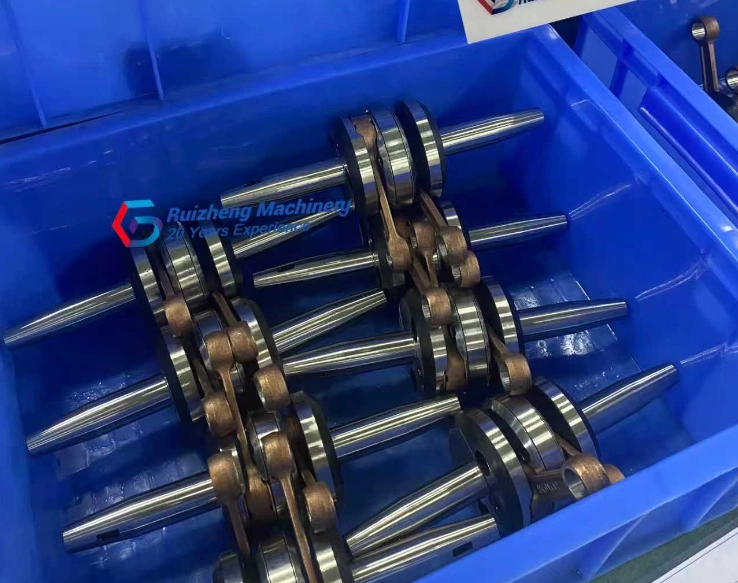
Why “Good Enough” is Never Enough for Engine Cores
Think about the sheer physical stress happening inside a specialized engine. Picture an industrial drone carrying heavy inspection gear over a factory, or a snowmobile hitting a freezing, uneven trail. The engine revs high, and the internal torque is massive. There is no room for error.
If the main shaft has even a tiny concentricity issue—something you cannot even see with the naked eye—it wobbles. That invisible wobble creates uneven, violent pressure on the bearing seats. Heat builds up rapidly inside the casing. Within hours or days, the protective oil film breaks down completely, and then raw metal just grinds directly against raw metal.
Getting your parts made with a strict CNC Crankshaft Machining process stops this entire chain reaction before it ever starts. Paying for tight tolerances is an upfront step that saves you from massive warranty claims, product recalls, and furious end-users later on.
The 4-Step CNC Crankshaft Machining Process
A lot of overseas factories will gladly tell you they can make precision parts. They will show you pictures of shiny machines. But most of them fail because they skip the hard, time-consuming steps. Let us break down how this raw metal actually needs to be processed to survive brutal working conditions.
Step 1: Picking the Right Customized Material
You cannot just grab a random piece of stainless steel off a rack and hope it holds up. Because this specific component handles extreme alternating stress, the material choice must match your exact engine blueprints. A reliable manufacturer will sit down, review your drawings, and source specific high-strength forged steel or heavy-duty iron alloys based strictly on your required load capacity. This critical first step prevents fatigue cracking when your equipment runs at maximum RPMs for days on end.
Step 2: Rough and Semi-Finish Milling
Factories have to remove the bulk of the raw material quickly to keep costs down, but they still need extremely tight control over the geometry. Good machine shops use automated turning and milling centers to cut the main journals and rod journals down to their near-net shapes. This step prepares the metal properly without introducing unnecessary heat stress. It sets a clean, structurally sound foundation for the final finishing phases.
Step 3: Targeted Heat Treatment
A soft crank is a dead crank. The journals endure constant rubbing against the bearings every second the machine operates. You have to run targeted heat treatment to spike the HRC hardness exactly where the friction happens, while keeping the inner core tough enough to flex slightly without snapping under pressure. This specific treatment gives you incredible wear resistance on the outside and solid impact resistance on the inside.
Step 4: The Critical Grinding Phase
This is the exact spot where other suppliers completely mess up. Turning and milling can only get you so far because cutting tools always leave microscopic marks on the metal surface. Grinding is the absolute only way to achieve a true 0.001mm to 0.002mm tolerance. By moving the treated parts to high-end, dedicated grinding machines, the bearing surfaces become smooth like glass. This perfect finish means zero vibration, flawless oil flow, and a massive drop in operating temperatures.
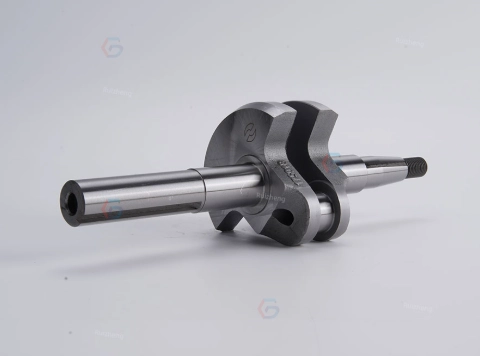
Sourcing Smart: Vetting Your Manufacturing Partner
Knowing the technical steps is great, but as a buyer, your real daily headache is dealing with the supply chain. You hate late deliveries, miscommunications, and messy paperwork. When evaluating a factory across the world, you need to look at their specialized capabilities rather than just their general catalog.
For instance, if you build specialized unmanned aerial vehicles for industrial use, you should look for a dedicated Custom DRONE crankshaft CNC machining SERVICE that proves the factory can handle tight-weight and high-strength demands. If they can build a core for a drone that carries heavy sensors without crashing, they can likely handle your machine tools.
A good partner makes your job exceptionally easy. They give you fast, honest quotes on your 2D or 3D blueprints within 24 hours. They let you run small batch proofing so you can test the CNC Crankshaft Machining quality in your own facility before you commit to buying a whole shipping container. They also handle the international shipping headaches for you, offering straightforward DDP terms along with clean commercial invoices and English packing lists.
Also, try to find a facility that does more than just one specific thing. If your factory also needs flanges, bearing seats, or general machine tool accessories, you want to bundle your orders to save on freight. Check out a broad range of services from your chosen supplier to see if their grinders and mills can handle your entire parts list efficiently.
Final Thoughts Before You Place an Order
Relying on sloppy metalwork is a gamble you will eventually lose. Proper CNC Crankshaft Machining guarantees your machinery runs smoother, hits higher speeds, and stays completely out of the repair shop. Take your time, ask the factory to verify their grinding tolerances, and demand clear communication from their sales engineers.
Do not settle for generic parts that will ruin your hard work. Gather your engineering drawings, review your material requirements, and contact us to get your customized quote started right now with a team that actually knows how to grind metal to perfection.
FAQ
Q: Do factories use standard materials for professional CNC Crankshaft Machining?
A: No. Because these components handle intense physical stress, professional facilities use customized materials like specialized forged steel based entirely on your specific engine application and blueprints.
Q: Turning and milling seem standard everywhere, so how do you reach a 0.001mm accuracy?
A: Turning and milling only rough out the basic shape. The core secret is the precision grinding process. Grinding is the only manufacturing step that hits that strict 0.001 to 0.002mm tolerance and delivers a glass-smooth bearing surface.
Q: How long does a custom precision order typically take to ship?
A: For highly precise engine components, the delivery cycle is usually between 40 and 60 days. This gives the factory the necessary time to handle the custom heat treatment, strict grinding, and full inspection in a constant-temperature room.

