
A Custom Spindle Shaft is a critical component in high-speed machine tools because it directly affects rotation stability, machining accuracy, and long-term operating performance. However, designing a spindle shaft is not simply a matter of choosing a material and machining a cylindrical part. Engineers need to consider the relationship between the shaft structure, operating conditions, precision requirements, and the supporting components around it.
For OEM manufacturers and equipment builders, a successful spindle shaft design needs to balance mechanical strength, dimensional accuracy, manufacturability, and assembly compatibility.
Ruizheng specializes in high-precision shaft components and non-standard mechanical parts. The company provides customized manufacturing solutions for spindle parts, flange parts, bearing seats, and other precision components used in machine tools, industrial equipment, automation systems, and other high-end manufacturing applications. With machining equipment including lathes, milling machines, grinders, and a constant-temperature testing room, Ruizheng supports projects from drawing evaluation to precision machining and inspection.
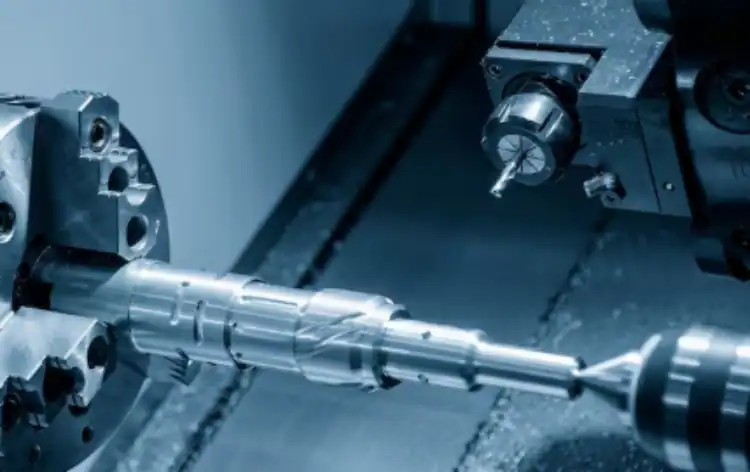
What Factors Should Be Considered Before Designing a Custom Spindle Shaft?
Before machining begins, engineers need to define how the spindle shaft will work inside the complete machine system. A suitable design starts with understanding the actual application requirements rather than focusing only on the shaft shape.
Define the Machine Application and Operating Requirements
The first step in designing a custom spindle shaft is identifying the working environment and equipment requirements. A spindle used in a high-speed machine tool may have different design priorities compared with one used in general industrial equipment.
Factors such as rotational conditions, installation structure, working load, and required precision all influence the final design. For example, a shaft used in precision machining equipment needs better control of alignment and surface accuracy because small deviations may affect machining consistency.
Ruizheng’s precision components are widely used in machine tools, industrial equipment core components, industrial robotic arms, and other manufacturing fields. These applications require close coordination between component design and manufacturing processes.
Determine Shaft Dimensions and Assembly Requirements
A spindle shaft does not function as an independent part. Its dimensions must match other components in the assembly, including bearings, mounting structures, and connection parts.
During the design stage, engineers usually need to confirm the shaft structure, critical machining areas, mounting interfaces, and assembly requirements. For customized projects, clear drawings are especially important because they define the relationship between each functional surface.
Ruizheng supports customized production according to customer 2D and 3D drawings. The company can also provide assembly tolerance suggestions to help customers improve the connection between design requirements and actual manufacturing processes.
Evaluate Speed, Load, and Precision Requirements
High-speed operation places greater demands on spindle shaft stability. Even when the overall shaft structure is strong enough, inaccurate machining of critical areas may influence vibration control and rotation performance.
A practical custom spindle shaft design should consider how speed, mechanical loading, and precision requirements interact. Critical surfaces need to maintain proper alignment, and machining processes need to match the expected working conditions.
Ruizheng develops precision shaft components for high-speed and high-load applications, focusing on machining accuracy, material selection, and process control rather than simply increasing component strength.
How Does Material Selection Affect Custom Spindle Shaft Performance?
Material selection directly affects the spindle shaft’s mechanical properties, machining process, and suitability for different operating environments. The correct material depends on the equipment requirements and the expected working conditions.
Choose Materials Based on Strength and Operating Conditions
Different applications require different material characteristics. A spindle shaft used in demanding industrial equipment may require materials with suitable strength, stability, and machining performance.
Ruizheng supports materials including alloy steel, stainless steel, and titanium alloy for customized mechanical components. Material selection is evaluated together with the part structure, machining requirements, and application conditions.
For example, some projects may prioritize structural strength, while others may require better corrosion resistance or specific processing characteristics. The goal is to select a material that supports both the design requirements and the manufacturing process.
Balance Strength, Weight, and Thermal Stability
Material selection should also consider how the spindle shaft behaves during operation. A spindle component needs to maintain its designed geometry while exposed to continuous rotation and changing working conditions.
Instead of selecting materials only based on hardness or strength, engineers should consider the complete relationship between material properties, machining accuracy, heat treatment requirements, and final assembly performance.
This approach helps avoid issues caused by unsuitable material choices, such as difficult machining, unstable dimensions, or unnecessary manufacturing complexity.
How Can Machining Accuracy Improve Spindle Shaft Performance?
For precision rotating components, machining accuracy directly influences the final assembly result. A well-designed spindle shaft still requires controlled manufacturing processes to achieve the expected performance.
Control Critical Tolerances During Precision Machining
The various functional areas of a spindle shaft must be precisely machined. Their dimensions and tolerances determine the proper interaction with other parts and the smooth running of the spindle after mounting.
Processes such as turning, milling, grinding and other precision finishing operations are organized in relation to the part geometry and the associated tolerances.
Ruizheng operates with lathes, milling machines, grinders, and a constant-temperature testing room. The company’s processing accuracy can reach 0.001mm, supporting projects that require strict dimensional control.
For customers requiring customized production, Ruizheng provides a custom spindle part processing service based on drawings, material requirements, and application conditions.
Maintain Concentricity and Surface Quality for Stable Rotation
For rotating parts, concentricity and surface quality are important. In machining, the relationship between surfaces machined can affect the final assembly’s vibration and operating stability if not properly controlled.
A custom spindle shaft needs consistent accuracy across key areas, including bearing mounting sections and connection surfaces. Grinding and finishing processes help improve the dimensional consistency of these critical areas.
Ruizheng applies precision machining approaches for high-speed applications, including solutions focused on concentricity improvement and material treatment according to different usage scenarios.
Consider the Complete Shaft-Bearing-Housing Tolerance Chain
A spindle shaft should be evaluated as part of a complete rotating system. The shaft, bearing, housing, and mounting structure work together, and the accuracy of one component may influence the performance of the entire assembly.
For example, even a precisely machined shaft may experience performance issues if the bearing fit or housing alignment is not properly controlled. Therefore, engineers should consider the complete tolerance relationship between these components.
For projects involving supporting structures, this guide on custom bearing housing design provides additional reference on housing accuracy, material selection, alignment, and machining considerations.
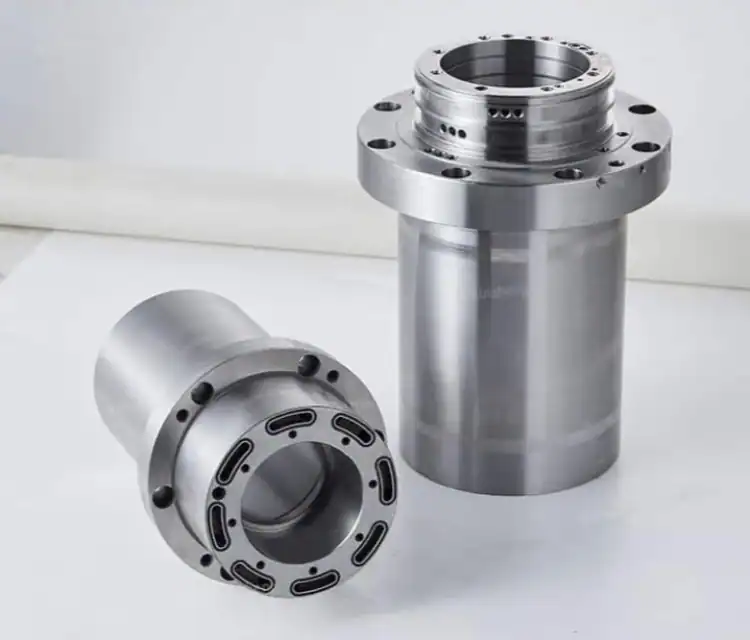
How Should a Custom Spindle Shaft Be Manufactured and Verified?
A successful spindle shaft project requires more than machining according to a drawing. Manufacturing planning, process control, and inspection are all necessary parts of ensuring the final component meets the intended requirements.
Combine Machining Processes With Required Heat Treatment
The manufacturing sequence should be considered during the design stage. Depending on the material and application requirements, production may involve multiple steps, including machining, heat treatment, and final precision processing.
Heat treatment can influence material performance, so it needs to be coordinated with machining processes to maintain the required dimensions after processing.
Ruizheng supports heat treatment for customized mechanical components and works with customers to determine suitable manufacturing approaches based on material and design requirements.
Verify Dimensions Through Inspection and Quality Control
Inspection provides confirmation that the finished spindle shaft meets the required specifications.
Ruizheng follows ISO 9001 quality management procedures and applies first-piece inspection, process inspection, and final inspection before shipment. The company can also provide material reports, dimensional inspection reports, and related documents according to customer requirements.
This inspection process helps customers evaluate whether the manufactured component matches the original drawing requirements before assembly or production use.
Test Prototypes Before Moving to Mass Production
For customized mechanical parts, prototype verification is often an important step before larger production quantities.
Trial production allows engineers to confirm assembly compatibility and identify potential adjustments before full-scale manufacturing. This is especially useful for new equipment development or modified machine structures.
Ruizheng supports sample production and trial production stages, helping customers move from initial drawings to stable manufacturing cooperation.
Why Choose Ruizheng for Custom Spindle Shaft Manufacturing?
Selecting a supplier for precision components requires evaluating not only machining capability but also communication, customization support, and production flexibility.
Support Drawing-Based Customization and Engineering Communication
Many spindle shaft projects begin with customer drawings rather than standard products. The manufacturer needs to understand the design requirements and translate them into practical machining processes.
Ruizheng supports non-standard component customization based on 2D and 3D drawings. The company also provides manufacturing suggestions and assembly tolerance recommendations to help customers improve project feasibility.
Provide Precision Manufacturing for Different Industrial Applications
A spindle shaft design needs to match the equipment where it will be installed. Ruizheng provides customized precision components for applications including machine tools, industrial equipment, automation systems, and robotic equipment.
Its product range includes spindle parts, flange parts, bearing seats, and other non-standard mechanical components designed according to customer requirements.
Offer Flexible Production From Samples to Long-Term Supply
Different customers may require different cooperation methods depending on project stage. Some projects begin with prototype verification, while others require long-term production support.
Ruizheng supports flexible cooperation models, including project-based cooperation and long-term supply arrangements. Customers can also review the company’s manufacturing services to understand the available production and support capabilities.
Contact Ruizheng for Custom Spindle Shaft Projects
For engineers and purchasing teams, selecting the right manufacturing partner often depends on clear communication about drawings, materials, tolerances, inspection requirements, and production plans. Ruizheng supports project discussions based on specific component requirements and helps customers evaluate manufacturing feasibility before production. For more information about your project requirements, you can contact Ruizheng.
FAQ
What Information Is Needed to Design a Custom Spindle Shaft?
A custom spindle shaft project usually requires information about the application, component drawings, material requirements, tolerance requirements, assembly structure, and production quantity. These details help determine suitable machining methods and inspection requirements.
How Does Spindle Shaft Accuracy Affect Machine Tool Performance?
Spindle shaft accuracy influences rotation stability, assembly alignment, and machining consistency. Factors such as dimensional accuracy, concentricity, surface quality, and the relationship with bearing and housing components all affect final performance.
Can Ruizheng Manufacture Custom Spindle Parts From Drawings?
Yes. Ruizheng supports customized spindle parts based on customer 2D and 3D drawings. The company provides precision machining, heat treatment support, inspection, sampling, and trial production services for non-standard mechanical components.

