
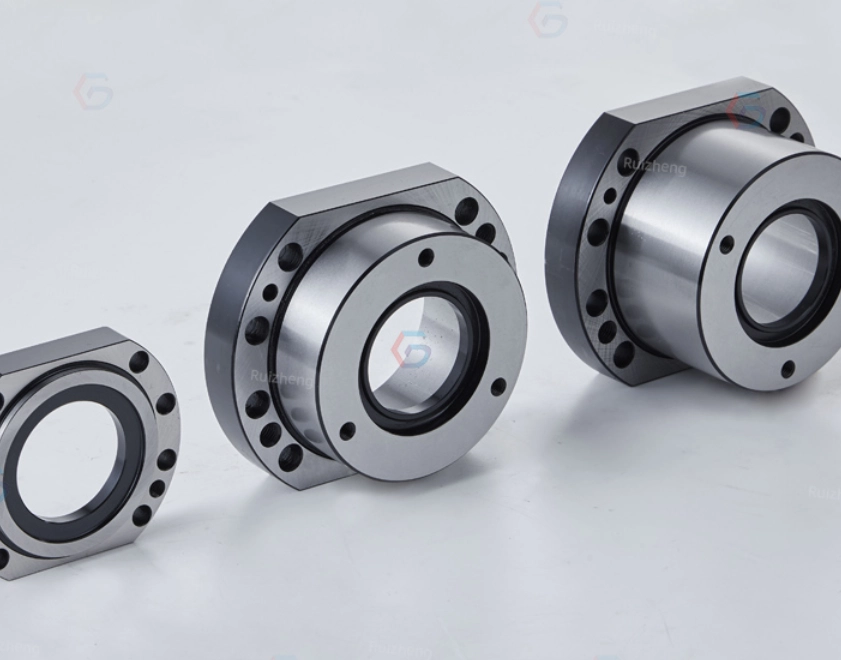
Picture your fast-moving spindle as the beating heart of your CNC machine tool. You have spent a lot of money on top-tier ceramic bearings and perfectly balanced shafts, yet the whole setup starts making a loud, screaming noise or simply stops working within a few months. You double-check the oil and the weight on the machine, but the real trouble-maker stays hidden from view.
The truth is that most spindle problems do not start with the bearings. Instead, the trouble usually comes from the “home” where those bearings live. If your bearing housing is off by even a tiny bit—less than the thickness of a human hair—you are not just running a shop; you are watching a slow disaster happen. High accuracy in the housing is what decides if a machine makes you a profit or eats up your cash with constant repair bills.
1. The Real Price of Being “Close Enough” in Shop Work
When you buy parts for industrial equipment, choosing “standard” sizes might feel like a safe plan. But in the world of machine tool accessories and spindle units, being just “standard” is a big mistake if you want things to last.
Why Small Mistakes Kill Your Spindle
A bearing housing that is not perfectly round or straight forces the outer ring of the bearing to bend out of shape. This creates a bad situation where the pressure is not spread out evenly. Instead of the load moving across all the small rolling parts, it gets stuck on just a few spots. What happens next? A lot of heat builds up very fast. In high-speed cutting or grinding, things get hot in just seconds. If the housing does not leave room for this heat, the bearing gets squeezed from the outside until it breaks.
The Money Drain: Stuck Machines and Bad Parts
For any person running a factory, the numbers that truly matter are how long the machine stays on and how good the finished parts look. A spindle with a bad housing will shake and vibrate. That shaking goes straight to the cutting tool, ruining the smooth surface of your parts and forcing you to throw away expensive metal. You lose money twice: first on the cost of the worker fixing the machine, and second on the wasted materials.
2. Building the Perfect “Home” for Your Moving Parts
To get a machine that works for a long time, we have to look at more than just a simple hole in a piece of metal. We need to talk about how all the shapes work together. As someone who knows this field well, I have seen how Ruizheng, a company that focuses on very precise CNC work for machine tool components, handles this tough job. They do not just “cut steel”; they manage the way things spin. With more than ten years of working in the B2B industrial equipment world, they have learned how to keep things consistent down to the smallest level. This ensures that every custom part acts as a solid base for fast spinning. Their team works more like a helpful partner than just a store, looking closely at your technical needs to make sure the final product actually survives the tough world of a factory that never sleeps.
The Three Keys to a Stable Machine
To make sure your spindle runs cool and stays quiet, three specific shapes must be perfectly matched:
- Straightness (Cylindricity):If the hole is wider at the top than the bottom, the bearing will sit at a slant. Even a tiny tilt will quickly ruin the life of high-end bearings.
- Perfect Centering (Concentricity):In machines with many bearings, the front and back holes must line up on one exact line. If they are even slightly off, the shaft will wobble as it tries to spin around a center that isn’t there.
- Perfect Roundness:Bearings have very thin walls. If the housing is even a little bit like an egg shape, the bearing becomes an egg shape too. This causes the parts inside to slide instead of roll, which creates the heat that eventually makes the machine lock up.
Handling the Heat
Machines in a shop work in places where the temperature changes a lot. A housing made from the wrong kind of iron or steel might grow or shrink at a different speed than the bearing inside it. You need a partner who does the math on these changes. By picking materials that grow at the same rate and designing the walls of the part correctly, you make sure the bearing fits “just right” whether the machine is just starting on a cold morning or running at full speed in the heat of the afternoon.
3. Custom Parts for Better Industrial Results
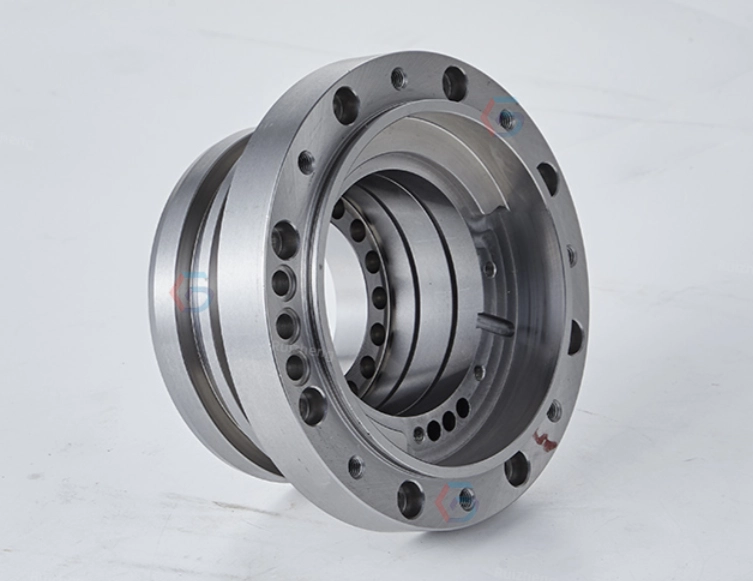
Parts that come off a shelf often fail because they try to fit every machine, but they don’t fit yours perfectly. Your specific water cleaning system, grinding tool, or custom lathe needs a very specific fit. This is where a custom bearing housing processing service becomes the most important part of your equipment’s success.
Why Custom is Better Than Basic
When you choose a custom-made housing, you are doing more than just picking a size. You are choosing how thick the metal is, how the metal was treated with heat to stay strong, and how smooth the surface needs to be so the oil stays in the right spot.
- Stopping the Shake:In machine tool accessories, the ability of the metal to soak up tiny shakes is very important. Custom-made iron parts do a much better job of soaking up these shakes than cheap steel or basic aluminum.
- Line-up Accuracy:Making a custom part allows a shop to drill all the holes at the exact same time. This “one-step” work ensures that the front and back holes are perfectly lined up, stopping the small errors that happen when you move a part from one machine to another.
- Smooth Surfaces and Tiny Details:The way the bearing and the housing touch is a very careful balance. If it is too tight, the bearing will get stuck. If it is too loose, the bearing will move around, causing the metal to rub and wear away. A very smooth, ground finish inside the hole ensures the two parts touch everywhere. This helps the heat move away and keeps the bearing in place without using too much force.
4. The Way to a Stress-Free Factory
Buying parts with high accuracy is about more than just a list of numbers. It is about the good results you see in your bank account at the end of the year.
Real Savings for Your Business
- Fewer Fix-it Days:Instead of changing out your spindle parts every few months, imagine only doing it every two years. The money you save on buying new parts will pay for the better housing many times over.
- Lower Power Bills:A spindle that spins easily without getting hot uses less electricity. If you have twenty machines in your shop, this can really lower your monthly power bill.
- Better Finished Products:When the spindle is steady, the cutting tool is steady. This means you can make parts that are much more accurate, which lets you win better jobs that pay more money.
Expert Help and Tracking
In today’s industrial world, you cannot fix what you do not track. A professional shop gives you more than just a piece of metal; they give you the proof. Every important hole should come with a report from a measuring machine. This proof is like an insurance plan, showing that the part is exactly what you asked for before you ever try to put it into your machine.
5. Make Your Equipment Better Today
The secret to a long-lasting spindle is not a big mystery; it is simply about being very careful with the details. By focusing on how well the housing fits and choosing parts made just for your needs, you stop the main reason machines break down. Stop being okay with “good enough” and start asking for a “perfect fit.”
Your machine tool is only as good as its most accurate part. Whether you are building brand-new industrial tools or fixing up old ones, the long life of your spindle starts with the housing.
Are you ready to see how much better your machines can run? Talk to a technical expert today to go over what your machine needs and make sure your next project is built to last for a long time.
FAQ
Q: Why is it more important for a housing to be round than to have the exact right size?
A: The size tells you if the fit is tight or loose, but the roundness tells you the shape. If a housing is shaped like an egg but has the “right” average size, the bearing will still be forced into that egg shape. This makes the balls inside the bearing squeeze and let go twice every time it spins, which leads to noise, heat, and a broken machine.
Q: How does the type of metal used for the housing change how a fast spindle works?
A: The metal changes two big things: how much the part grows when it gets hot and how much it shakes. For machine tool parts, a high-grade iron is usually the best choice because it soaks up vibrations that would otherwise make the cutting tool jump. Also, the metal must grow at the same speed as the steel bearing to keep the fit correct when things get hot.
Q: Can I get a long-lasting machine just by putting a better bearing into a cheap housing?
A: No. Actually, putting a very expensive, high-accuracy bearing into a cheap housing is a waste of your money. Expensive bearings are thinner and more easily hurt by a housing that is not perfect. A great bearing will break just as fast as a cheap one if the housing is crooked or out of shape.

