
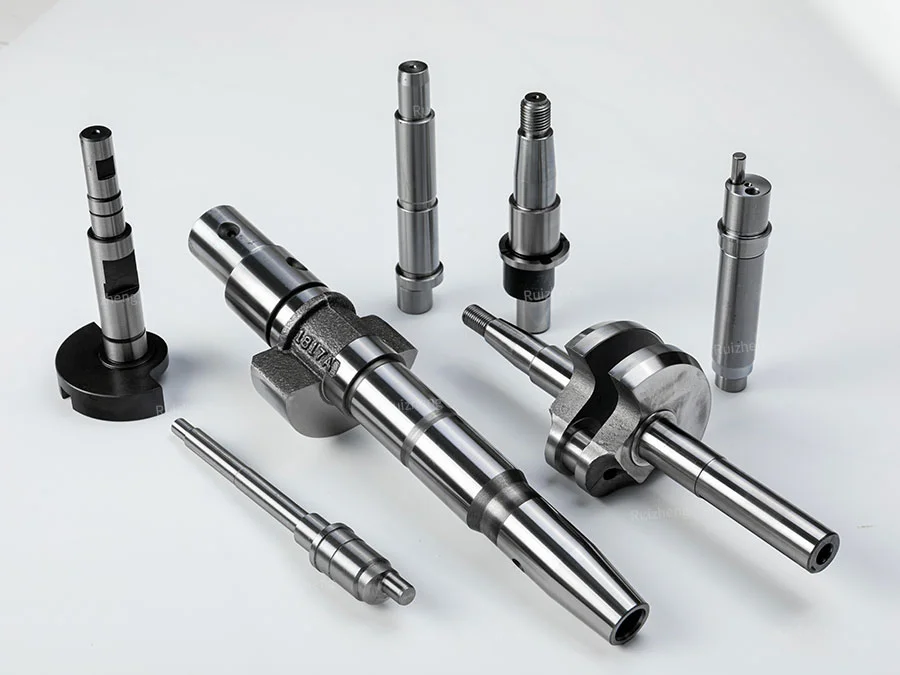
Shaft machining is a detailed process that turns plain metal rods into perfectly shaped round parts. It uses cool tools like CNC lathing, cutting, and gentle grinding to create parts with amazing accuracy, as close as 0.001 mm. Tough materials like high-grade steel and rust-proof steel are chosen because they’re strong, last a long time, and can handle heavy work. Special heat treatments are often used to make the surface extra hard against wear.
Shaft machining is really important in places like car making, airplane building, factory machines, and green energy systems. A well-crafted shaft helps machines run smoothly, cuts down on friction, reduces wear, and makes equipment last longer. In 2023, the global high-precision machining market was worth USD 110.9 billion. Experts predict it will grow by 6.8% every year from 2024 to 2030, according to Grand View Research.
What Are the Key Steps in Making Shafts?

Making shafts involves a few clear steps:
- Picking Materials: Choose the best metal rods, like alloy steel, stainless steel, or carbon steel, depending on the job the shaft will do.
- First Cut: Chop the metal to a size close to what’s needed.
- Lathe Work: Shape the shaft’s outside to make it perfectly round.
- Special Cutting: Add things like grooves, flat spots, or gear teeth.
- Final Polishing: Smooth the surface to make it super slick and hit exact size goals.
Each step needs to be done with care. Getting every part right makes sure the shaft works well and stays strong.
What Materials Are Used for Shafts?
The material picked for a shaft decides how tough it is and where it can work best. Here’s a simple chart showing common materials, their perks, and uses:
| Material | Perks | Where It’s Used |
| Alloy Steel | Really strong, doesn’t break easily | Cars, power systems |
| Stainless Steel | Stops rust, handles hot temperatures | Airplanes, ships, medical tools |
| Carbon Steel | Cheap, easy to shape | Everyday machines |
In 2024, alloy steel was used in 45% of car shafts, and stainless steel was in 60% of airplane shafts, according to ASM International. Heat treatments like induction hardening, quenching, and tempering make shafts tougher, more resistant to scratches, and able to do hard jobs for a long time.
Why Is Being Precise So Important for Shafts?
Shafts need to fit just right and stay steady. Even a small error can cause trouble, like:
- Extra shaking or loud noises.
- Gears or bearings not matching up.
- Parts wearing out too fast.
- Machines stopping completely.
Careful machining keeps everything running nicely. It also saves money by avoiding big repairs.
Can Good Shaft Machining Help Machines Last Longer?
Yes, for sure! A well-made shaft lowers friction and spreads out heavy loads evenly. This does a few great things:
- Less damage to gears, bearings, and other pieces.
- Uses less energy, which saves power.
- Slows down wear on parts.
- Makes the whole machine last longer.
Shafts that get heat treatments stay strong even under constant pressure.
How Do Shafts Deal with Heavy Loads and Fast Spinning?
Shafts carry big weights while spinning super fast, like in robot arms or jet engine turbines. They have to stay tough through heat, twisting, or bending. Careful machining and strong materials make this work. A badly made shaft might snap, which can stop a machine and cause huge issues.
Where Are Precision Shafts Super Important in Industry?
Shaft machining is a big deal because shafts are key in lots of machines. They keep things moving in cars, airplanes, and energy systems. Each field needs shafts made exactly right to do their job well.
What Do Shafts Do in Cars?
In cars, shafts connect the engine to the wheels through transmissions and differentials. Drive shafts handle strong twisting forces and need to stay balanced at high speeds. A poorly made shaft can make annoying noises or break the drivetrain. Great shaft machining keeps cars running smoothly and safely.
Why Is Precision So Critical in Airplanes and Machines?
Airplanes deal with tough stuff, like quick temperature changes or strong forces. Shafts in planes need perfect sizes and special metals to stay safe during flights. A tiny mistake can be risky, so shaft machining has to be spot-on for aerospace. Factory machines also need precise shafts to avoid errors.
How Do Energy Systems, Robots, and Factory Machines Depend on Shafts?
Wind turbines use large shafts to turn motion into electricity. Robots need small, sturdy shafts for exact movements. CNC machines rely on spindles, a type of shaft, to spin tools. All these need awesome shaft machining to work right. A bad shaft can stop a turbine, robot, or machine from doing its job.
What Tools Make Shaft Machining Awesome Today?
Shaft machining has improved a ton. Old hand tools are history. Now, shops use fancy multi-axis machines to make tricky shapes fast and accurately.
Which Steps Create Precision: Turning, Milling, or Grinding?
Each step has a unique job:
- Turning: Makes the shaft round and smooth.
- Milling: Adds slots, holes, or special shapes.
- Grinding: Polishes the surface and gets perfect sizes.
These steps work together to make shafts that fit perfectly in machines.
Why Is CNC Turning the Core of Shaft Making?
CNC turning uses computers to guide tools, shaping shafts of the same size every time. It stops mistakes people might make and is perfect for making lots of shafts with top quality. This makes it a must for big orders.
How Does Centerless Grinding Make Surfaces Better?
Centerless grinding uses wheels to shape and polish a shaft without holding it between two points. This makes the shaft super round and smooth. It’s great for parts that work with bearings, where a slick surface is super important.
When Is Multi-Axis Milling Needed for Tricky Shaft Shapes?
Some shafts need special features, like slots, holes, or splines. Multi-axis milling makes these without messing up accuracy. It’s key for custom shafts in complex machines, keeping everything lined up just right.
How Do Heat Treatments Help Shafts Stay Strong?
Heat treatments like quenching, tempering, or induction hardening make a shaft’s structure tougher. They make it harder and last longer, based on what it needs to do. Can shafts be heat-treated? Yes, they can—induction hardening, tempering, and quenching are used to make shafts perfect for their jobs. A stronger shaft holds up in rough conditions.
Who Offers Solid Custom Shaft Machining?
For awesome shaft machining, Ruizheng is a top pick. They make solutions just for you. Foshan Ruizheng Machinery Manufacturing Co., Ltd. began in 2013 as a small shop. Now, they’re an ISO 9001-certified company helping clients in Europe, Japan, Southeast Asia, and the U.S.
Their workshop has CNC lathes, milling machines, and grinding tools. They also use robots to move parts, keeping work quick and top-notch. Every product gets a first-piece inspection, regular checks, and a final inspection before shipping to meet tough standards.
Which Products Make Ruizheng’s Shafts Special?
Ruizheng offers different shafts for various needs:
- Precision Linear Shafts: Perfect for systems needing straight, accurate motion.
- Hardened Steel Transmission Shafts: Made for heavy power transfer jobs.
- Custom-Machined Stainless Steel Shafts: Built for rust-free needs, like in medical or marine settings.
They’re great at making custom parts from 2D/3D drawings. Whether you need a few test parts or lots of shafts with tight tolerances (as small as 0.001mm), Ruizheng gets it done. They help you from start to finish.
Why Pick Ruizheng’s Products Over Others?
When choosing a shaft maker, you need more than cheap prices. You can’t afford mistakes. Ruizheng gives you quality and trust you can rely on.
Can You Count on Steady Quality for Big Orders?
Yes! They stick to strict ISO 9001 rules. Every batch is checked from start to finish, ensuring quality even for huge orders. This keeps problems low and parts dependable.
Will You Get Solutions Just for Your Industry?
For sure. Ruizheng’s shafts work in many fields, like machine tools, industrial robots, race car parts, four- and five-axis turntables, industrial robot arms, and humanoid robots. Their team designs parts to match your exact needs.
Is Global Support There If Issues Pop Up After Delivery?
Yes, you’re never on your own. Ruizheng gives guides and tips for using parts. If problems happen, they help through video calls. They offer usage guidance and assembly advice, fixing issues fast. Whether you’re in Germany or Southeast Asia, they make sure communication is clear.
FAQ
Q1: Can I order custom shafts if I only need a few for testing?
A: Yes! Ruizheng supports small batch prototyping before going to full production.
Q2: How long does it take from order to delivery?
A: For regular parts, it’s about 20–30 days. Complex precision parts might take 40–60 days.
Q3: Will I get papers like RoHS compliance or measurement reports?
A: Yes. Ruizheng can provide material certificates, dimension inspection reports, and RoHS certifications if you ask. Their products meet European and American quality standards.

