

The Role of Shafts in Mechanical Systems
Basic Function and Importance of Shafts
Shafts form a vital part of mechanical systems. They serve as the core link for sending rotary motion and torque across machine elements. Mainly, they support turning parts like gears, pulleys, and wheels. They also ensure proper alignment and smooth power flow. This applies to small electric motors or large industrial units alike. Shafts create the firm base that ties moving forces together in the system.
Good shaft design helps handle mechanical strain. It keeps balance and straightness under load. Bad designs lead to shakes, quick wear, or major machine failures. Thus, strong shafts must meet tough standards for durability, even form, and sleek surface. This supports reliable long-term use.
Common Applications Across Industries
Shafts appear in nearly all manufacturing and engineering fields. They feature heavily in machine tools. They act as key pieces in industrial setups. You see them in four-axis and five-axis turntables. They aid industrial robotic arms and humanoid robots. Plus, they fit in motors, pumps, and compressors. We excel at custom non-standard shafts. These serve top fields like machine tools, industrial core parts, robotic arms, and humanoid robots.
Such roles require toughness plus exact dimensions for easy fit into larger systems.
Key Performance Requirements for Shafts
Shafts must achieve key goals to thrive in hard conditions. They need solid twist strength. Sizes must match precisely. Surfaces should be hard against wear. They resist fatigue and rust. And they show low wobble for stable spins.
These traits promote steady operation and lower upkeep expenses.
Classification of Shafts Based on Function and Design
Shafts vary by role in mechanical setups. Each has distinct build traits for targeted tasks.
Transmission Shafts
Transmission shafts focus on shifting power between machine sections. This covers line shafts and countershafts, common in production areas.
Characteristics and Uses in Power Transmission
These face shifting loads and speeds. So, they use materials with fine tensile power and fatigue fight. They get motion-balanced to curb shakes. This ensures calm runs.
In varying load areas, they deliver power with little loss. They suit constant workflows well.
Examples in Industrial Equipment
In assembly or production lines, they join motors to conveyors or drives. They sync multiple machines for glitch-free operation. This aids smooth daily output.
Machine Shafts
Machine shafts integrate directly into the equipment. They do not merely connect external units.
Integration Within Machinery Systems
They sit inside motors or gearboxes. There, they back rotating elements closely. Tight machining keeps alignment in compact areas. This unites the system.
A slight mismatch can disrupt flow. Makers thus focus on accurate shaping.
Application in Motors, Pumps, and Compressors
These shafts shift energy within pumps or compressors. Fluid motion demands strict specs. They ensure power applies correctly.
In factory tasks, a pump draws fluids steadily via a solid shaft.
Axle Shafts
Axle shafts stay fixed, unlike rotating types. They support spinning wheels or gears.
Structural Role in Supporting Rotating Elements
They bear side forces while allowing free spins around them. Build strength tops flexibility or torque needs.
They endure steady weights without much motion. This endures in stable positions.
Use in Vehicles and Heavy Machinery
Though typical in vehicles, principles extend to factory rollers or drums. They secure heavy loads for safe, uniform runs.
Spindle Shafts
Spindle shafts handle special high-speed roles with great accuracy.
Definition and Functional Role
These slim rods spin fast with tiny wobble. They mount cutting or grinding tools.
Their design stresses even, quick action without stray motions.
High-Precision Applications in Machine Tools
They center lathes, mills, and grinders. Tool precision depends on them. A fine spindle yields clean cuts.
In part-making shops, they shape metal accurately.
In-Depth Look at Spindle Shafts and Their Applications
What Is a Spindle Shaft?
Spindle shafts demand careful crafting. Tiny flaws harm fast-spin performance.
Structural Features and Rotational Capabilities
They boast hard surfaces against wear. Close round forms maintain center in spins. Bearings support them, slashing friction for firm hold.
This allows high spins without issues. Bearings enable smooth glide, saving energy and heat.
Importance of Concentricity and Surface Finish
A small roundness flaw sparks tool jitter or rough cuts. Makers target shake below 0.002 mm. This preserves tool life.
Smooth layers extend tool durability by dodging rough damage.
Ruizheng Spindle Part Overview
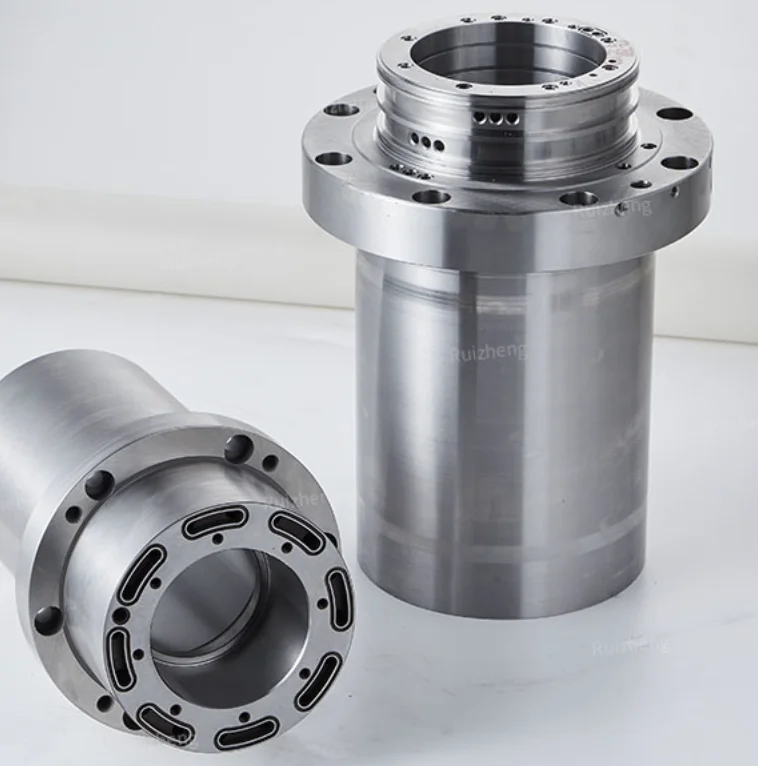
A prime example is Ruizheng‘s custom spindle service. It achieves 0.001 mm accuracy, suiting tight-fit machines.
It converts drawings to parts swiftly with high marks.
Application in Lathes, Milling Machines, and Grinders
Ideal for CNC lathes or vertical mills, where tool spots hold steady over cycles. Widely used in machine tools and related areas.
In lathes, it turns workpieces true for perfect assembly fits.
Precision Tolerance of Up to 0.002mm
Tight specs limit load shifts. Vital for precise machining. Processing accuracy can reach 0.001 mm.
This control avoids costly errors in fine tasks.
Material Selection for Durability and Performance
Choices like alloy or stainless steel offer strong traits. The preferred materials are alloy steel, stainless steel and support heat treatment.
Alloy hardens via heat. Stainless resists wet or harsh elements.
Advantages of Ruizheng Spindle Shafts
For carefully made parts with quality checks, Ruizheng provides solid benefits.
High Rotational Stability
They hold even at high speeds through superior cuts. High precision suitable for high speed conditions.
This reduces machine vibrations.
Enhanced Wear Resistance and Longevity
Treated surfaces raise hardness (HRC), slowing wear in long sessions. Support heat treatment.
Parts endure shifts with fewer repairs.
Customization Options for Specific Machinery
From prototypes to bulk, we craft non-standard items from 2D/3D drawings.
Tailored fits suit your exact setup.
Materials Used in Shaft Manufacturing
Material choice shapes shaft success in varied conditions.
Common Materials and Their Mechanical Properties
Carbon Steel
Low cost with good tensile strength. Fits budget-focused spots over rust needs.
It cuts easily for simple roles.
Alloy Steel
Hardens post-heat for strength and toughness in demanding uses. The preferred materials are alloy steel.
It outperforms basic steel in heavy duty.
Stainless Steel
Strong against rust for moist or chemical areas. The preferred materials are stainless steel.
Keeps shafts intact in tough atmospheres.
Material Selection Based on Application Requirements
Pick by job needs:
High load: Seek tensile strength.
Rust fight: Stainless leads.
Easy machining: Carbon shines.
Longevity: Heat-treated alloys excel.
Align with daily exposures for break-free runs.
Factors to Consider When Selecting a Shaft for Your Machinery
Select shafts by system demands.
Load and Torque Requirements
Shaft material must withstand peak twists sans deformation or fatigue.
Assess max loads with safety margins.
Rotational Speed and Vibration Control
High-speed needs low runout. Imbalance breeds vibration, hastening bearing/tool wear.
Regular balances catch problems early.
Alignment and Mounting Considerations
Misaligns spike stress. Precise mounts even out loads on bearings.
Tight fits ease side forces for smoother operation.
Environmental Conditions and Maintenance Needs
Corrosives call for stainless. Dust requires sealed bearings and routine lubes.
Scheduled checks prevent minor issues from escalating.
Ruizheng’s Commitment to Quality and Precision
Launched in 2013, Foshan Ruizheng Machinery Manufacturing Co., Ltd. advanced from a simple lathe shop to a precision shaft leader. Foshan Ruizheng Machinery Manufacturing Co., Ltd., founded in 2013.
We honed expertise in core zones to aid exacting clients.
Advanced Manufacturing Capabilities
Outfitted with lathes, mills, grinders, and robotic loaders. This yields uniform quality per phase. Strictly implement ISO 9001 quality management system.
Frequent machine audits block process errors.
Tailored Solutions for Diverse Industries
OEM to prototype aid in proofing and trials. Dedicated engineers guide your project. Flexible cooperation mode: project-based/long-term support.
We adapt to timelines, handling small or large volumes.
Comprehensive Support and Services from Ruizheng
Beyond parts, we deliver full-cycle aid.
Technical Consultation and Design Assistance
Expert advice on tolerances for actual needs. Can you provide assembly tolerance recommendations? A: Yes.
We review drawings and propose fits to cut uncertainties.
Fast Prototyping and Scalable Production
Rapid turns speed iterations sans accuracy loss. Fast drawing evaluation 20–30 days delivery cycle.
Scale from singles to masses seamlessly.
Global Shipping and After-Sales Support
DDP global express available. Video post-sale consults ease installs worldwide. If any problems occur solved by video connection.
We back products; quick fixes for any hitches.
FAQs
Q: Can I order small quantities before committing?
A: Yes, we support cooperation in the proofing and trial production stages.
Q: How do I know if your spindle shaft will fit my equipment?
A: We offer customization based on your 2D/3D drawings, and we can provide assembly tolerance recommendations.
Q: What certifications do your products carry?
A: Our products comply with the quality standards of the European and American markets. ISO 9001 certification. SGS test report.

