

What is Spindle Shaft Runout?
In CNC machining, the spindle shaft serves as the main rotating part that holds and powers cutting tools. When this shaft strays from its proper axis of rotation, it creates a problem known as runout. There are two main kinds: radial runout, where the shaft shifts side to side at a right angle to its axis, and axial runout, where the shift happens along the length of the shaft.
Even small amounts of runout can cause big problems. Radial runout makes the cutting edge strike the material in an uneven way, while axial runout changes the tool’s position in the direction of the cut. These shifts harm both the lifespan of the tool and the accuracy of the finished part. In the end, this affects the exactness and consistency needed in fields like machine tool building, automation gear, and robotic drivers.
How Runout Impacts CNC Machine Performance
When your spindle shaft shows too much runout, the tight limits on your machined parts get worse. Parts meant to fit together just right may end up too big or out of line, which can lead to breakdowns in later assembly steps. Runout also creates uneven pressure and touch on the tool, causing early wear or even sudden breaks.
Another effect is shaking during work. Even tiny unevenness from runout boosts shaking at fast speeds, which hurts the smoothness of the surface and speeds up wear on the spindle bearings. This brings higher costs for upkeep and more time when the machine is stopped—something very important in areas like industrial robotics, valve building, and systems for keeping balance in motion, where steady running is key.
Common Causes of Spindle Shaft Runout
Mechanical Wear and Tear
With time, the inside parts of your CNC machine break down. Bearings lose their tight fit or gain inner harm, which directly affects how the spindle lines up. Shafts getting out of line from long use is another common problem—especially in older machines working in tough spots such as spring machinery or deep-well drive systems.
Manufacturing or Assembly Defects
If the first spindle parts came from low-grade materials or got put together without good lining up, runout might show up right at the start of use. Parts made from bad materials or low-quality pieces bend more easily under weight, above all in hard jobs like electric spindles for PCB drilling or custom crankshafts for UTV engines.
Improper Handling or Maintenance Practices
At times, it’s not the machine itself but the way people use it. Wrong tool clamping—either not tight enough or too tight—can bend the spindle’s shape. Plus, missing regular upkeep like adding oil or wiping clean lets dirt and damage build up without notice. This hurts a lot in delicate gear such as harmonic reducers or humanoid robot actuators.
Diagnosing Spindle Shaft Runout Accurately
Tools and Techniques for Measuring Runout
Getting things right starts with good checks. Use dial indicators and micrometers to spot tiny shifts in how the shaft moves. For better setups, laser alignment tools can pick up both radial and axial runout as it happens, with accuracy down to under a micron.
Step-by-Step Inspection Process
Start by turning off the power and cleaning the spindle to clear away any dirt that could mess up the readings. Fix the shaft in a clear starting spot with the right holders. Check radial runout by turning the spindle and watching the bend on a dial indicator set at a right angle to the shaft surface. Do it again with the gauge set in line to find axial runout. Write down the numbers at several spots along the shaft to keep things steady.
Precision Repair Methods for Spindle Shaft Runout
Correcting Misalignment and Surface Irregularities
If you catch it soon, spindle runout can often get fixed with regrinding methods. The shaft surface gets ground back to a true round shape using very fine cutting materials. Swapping out old bearings or bent housings also brings back proper lining up, making sure of smoother work at high speeds.
Advanced Repair Techniques for Severe Cases
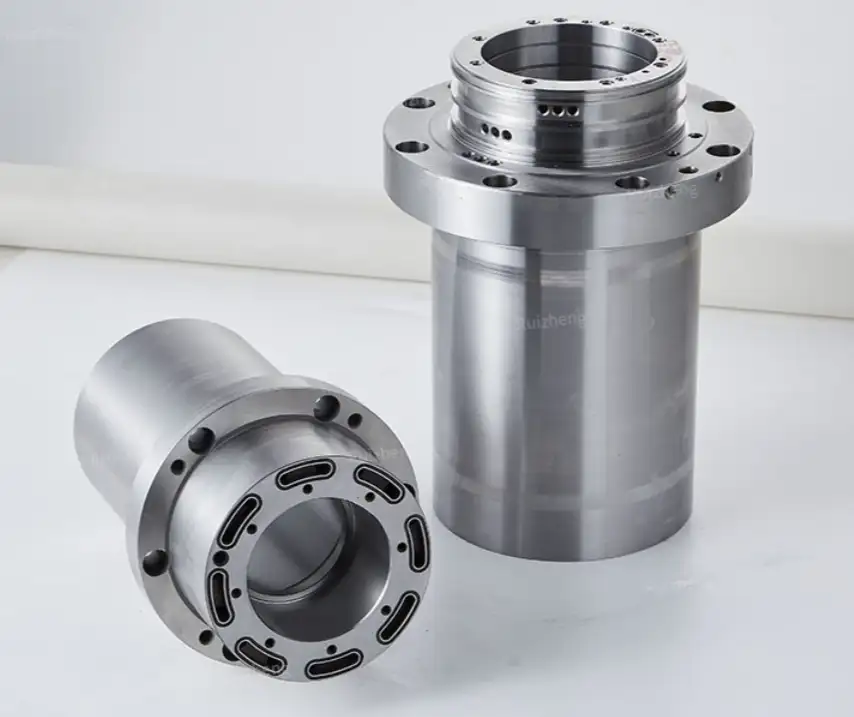
For bigger harm, you need to replace key parts. This is where a specialist like Foshan Ruizheng’s Custom Spindle Part Processing Service steps in.
They have a CNC cylindrical grinding machine, plus tools for inside and outside grinding, along with automatic measuring devices for checks during work and tests for balance in motion. Their accuracy reaches 0.002mm, and concentricity goes to 0.001mm. The team at Ruizheng focuses on making high-accuracy spindle parts—things like BT40 spindle cores or ER32 spindle shafts—made just for your machine’s needs.
Every item goes through tests for balance in motion, checks for radial runout, and proofs of how long it lasts under stress to make sure it fits perfectly with the main equipment. No matter if you run a multi-axis turntable or a spring coiling machine, these fixes bring lasting steadiness and trust.
To give you a fuller picture, think about how these repairs work in real settings. For instance, in a busy shop handling valve parts, a spindle with runout can throw off entire batches. Ruizheng’s service steps in to remake the shaft with exact specs, using their grinding tech to smooth out any wobbles. This not only fixes the issue but also boosts overall machine output, cutting down on waste and rework time. Engineers often note that such precise work prevents small problems from turning into major shutdowns, keeping production lines flowing without interruption.
Preventing Future Spindle Shaft Runout Issues
Best Practices in Machine Maintenance and Use
Stopping problems before they start comes from steady care. Set up regular checks to look for bearing wear and lining issues before they lead to runout. Always stick to the right steps for changing tools—wrong force can bend even well-ground shafts. Keep up with oiling plans based on what the maker suggests for spindles in places like stone cutting machinery or deep-hole boring rigs.
Beyond basic checks, consider training your team on spotting early signs. Simple habits, like using the correct torque wrenches every time, can make a real difference. In high-demand areas, such as those building robotic arms, this routine approach ensures machines stay reliable over years of hard use.
Upgrading to High-Tolerance Custom Components from Ruizheng
When off-the-shelf parts don’t cut it, an upgrade might be next. Custom spindle parts built with stricter limits and stronger materials last much longer.
Ruizheng can handle top-notch materials like stainless steel, alloy steel, ceramic bearing steel, and work with tricky shapes. Whether it’s a common type or a special build, they offer complete help from plans to the final piece. This gives you parts made for your exact needs—say, for compressor shafts in snowmobiles or drivers for robot joints.
Upgrading isn’t just about fixing; it’s about improving. Clients in automation often find that Ruizheng’s custom pieces reduce vibration and extend run times, leading to fewer stops and better results. For example, in a setup with deep-well systems, switching to these parts has helped operators handle tougher loads without the usual wear issues.
Why Choose Ruizheng for Your CNC Spindle Needs?
Started in 2013, Foshan Ruizheng Machinery Manufacturing Co., Ltd. has grown from a basic lathe operation into a strong player in precise machining, trusted by makers of industrial gear around the world. They focus on custom work for different non-standard shafts, flanges, bearing seats, and other exact mechanical pieces, used a lot in top fields like machine tools, key parts of industrial setups, industrial robotic arms, and humanoid robots.
All items get a first check, ongoing looks during making, and a last review before shipping, making sure of top consistency and dependability.
Comprehensive Services from Design to Delivery
You get expert advice on part plans, quick price quotes in 24 hours, and tips on picking materials—all in one place. Fast shipping comes from their own plants and solid supply lines, handling everything from small test runs to big orders. Need help with setup or fixes? Their engineering group is there with video calls for solving issues or tips on how to use it, any time.
This full-service setup means less hassle for you. Imagine sending in a drawing for a custom ER32 spindle shaft; Ruizheng not only builds it to spec but also tests it thoroughly, so it arrives ready to install. In B2B dealings, this level of support builds trust and encourages repeat business, especially for firms in competitive spots like PCB drilling or UTV engine work.
Moreover, their focus on quality shows in details like using automatic tools for real-time checks, which keeps errors low and standards high. For those searching for reliable partners in spindle repairs, Ruizheng stands out by solving real-world problems, from minor alignments to full rebuilds, ensuring your CNC operations run smooth and efficient.
Get in Touch with Ruizheng Today
Whether you deal with a sudden fix or plan ahead for your CNC setup, their quick response keeps you moving without delays.
FAQ
Q: How much spindle runout is considered acceptable?
A: For most precision machining tasks, radial runout should be less than 0.002mm. High-performance applications may require even tighter tolerances.
Q: Can I replace only the bearings if I detect spindle shaft runout?
A: Sometimes yes—but only if the shaft itself isn’t worn or misaligned. A full inspection is necessary before replacing individual components.
Q: Do you support prototype or small-batch production of custom spindle parts?
A: Yes. We support cooperation in the proofing and trial production stages. This flexibility allows you to test performance before committing to mass production.

