
Have you ever noticed a strange, rhythmic shaking in your gear that slowly turned into a terrifying rattle? That jitter isn’t just a tiny annoyance; it is the literal sound of your machine’s inner parts beating themselves to pieces. In the world of small, high-power engines—the ones that drive everything from fast-moving UAVs to quick jet skis—the crankshaft acts as the center of mechanical wellness. If it is not perfectly steady, your engine becomes a ticking time bomb of expensive repair bills.
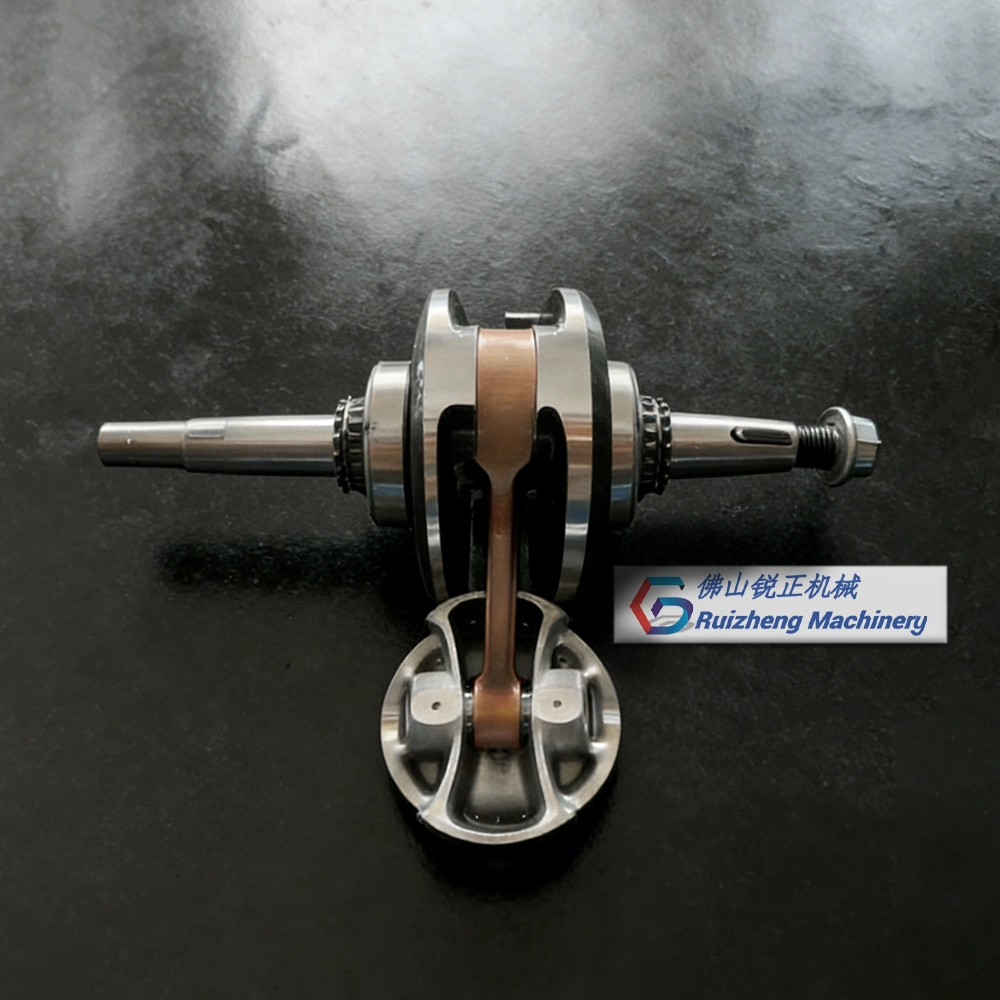
Why Your Bearings Are Failing: The Hidden Cost of Imbalance
When you use equipment like ATVs, UTVs, or boat motors, you look for smooth power. However, even a tiny mistake in weight placement on a spinning crankshaft creates huge forces as the speed goes up. This is not just a textbook worry. It shows up as high heat, tired metal, and the quick ruin of your bearing surfaces.
The Growing Danger of Shaking
Most owners feel the shaking first through their hands or the frame, but the real harm happens where you cannot see it. In a one-cylinder or V-twin engine—common in snowmobiles and karts—a shaky crank puts uneven weight on the thin oil layer protecting your bearings. Once that oil layer snaps, you get metal rubbing on metal. You aren’t just losing speed; you are losing the whole engine.
The Cycle of Damage
Vibration is a loop that feeds itself. A small wobble causes wear, which creates more loose space in the parts, which then allows for even bigger shaking. If you find yourself swapping out seals and bearings every single season, the problem isn’t just “bad” parts—it is the basic lack of steady balance in your spinning parts.
Precision Dynamic Balancing: The Science of Stability
To fix these constant failures, you must do more than just simple balancing. Basic balancing only makes sure the part doesn’t roll to one side while sitting still. Dynamic balancing makes sure the part stays rock-steady while spinning at 5,000, 8,000, or even 12,000 RPM. This is where smart engineering separates a tough industrial tool from a broken machine.
Mastering Multi-Plane Correction
Modern industrial tools and high-speed fun vehicles (like jet skis and paragliders) need balance in many areas at once. By looking at how weight moves along the long line of the crank, experts can take away metal from “heavy” spots or add heavy weights to “light” spots. This creates a perfect center for spinning, letting your engine rev much higher and stay cooler.
Why Surface Finish and Limits Matter
Being exact isn’t just about weight; it is about the shape. When we talk about Crankshaft Custom Machining, we mean a path where every part, weight, and oil hole is made perfect to stop drag. A perfectly made surface along with a balance test paper makes sure your piston moves with amazing smoothness.
From Performance Pain to Real Gains
What happens when you spend money on a truly steady system? The perks go way past just “stopping the shake.” For people who own special gear like boat engines or groups of snowmobiles, the reward is fast and easy to see.
Finding Your Lost Power
Every bit of energy that goes into shaking your machine’s frame is energy that is not turning your blade or belt. By getting rid of these inner shakes, you find hidden power. You will notice that the engine gets to its top speed much faster and stays there with far less strain.
Cutting Down on Repair Time
Imagine doubling the time between your engine check-ups. In the world of working UAVs or big industrial pumps, time lost is money lost. A steady crankshaft hugely lowers the load on rods and cases, meaning your seals stay tight and your oil stays clean for a much longer time.
Choosing the Right Partner for Custom Components
Not all metal work is the same. When your business depends on custom-made parts for paragliders, karts, or UTVs, you need a friend who looks at a crankshaft as a fine tool, not just a big piece of metal. This is where the mix of high-tech tools and metal knowledge becomes your best advantage.
The Advantage of Expert Engineering
If you are searching for a steady partner to handle these tough tasks, Ruizheng is a name you need to remember. As a top expert in very exact parts, they act as a real part of your own build team. They don’t just build; they make things better. Whether you need one single test part for a new UAV motor or a small bunch of fast cranks for jet skis, they bring a real human feel to CNC work. Their team cares deeply about tiny measurements, making sure that every part that gets to your door is ready to work in the toughest spots without any doubt.
Custom Fixes for Special Problems
Regular parts from a store often fail in special jobs. If you are making a fast one-cylinder engine for a snowmobile or a strong motor for a factory machine, “regular” just won’t work. Custom making allows for special weight shapes and oil hole spots that basic parts just forget about.
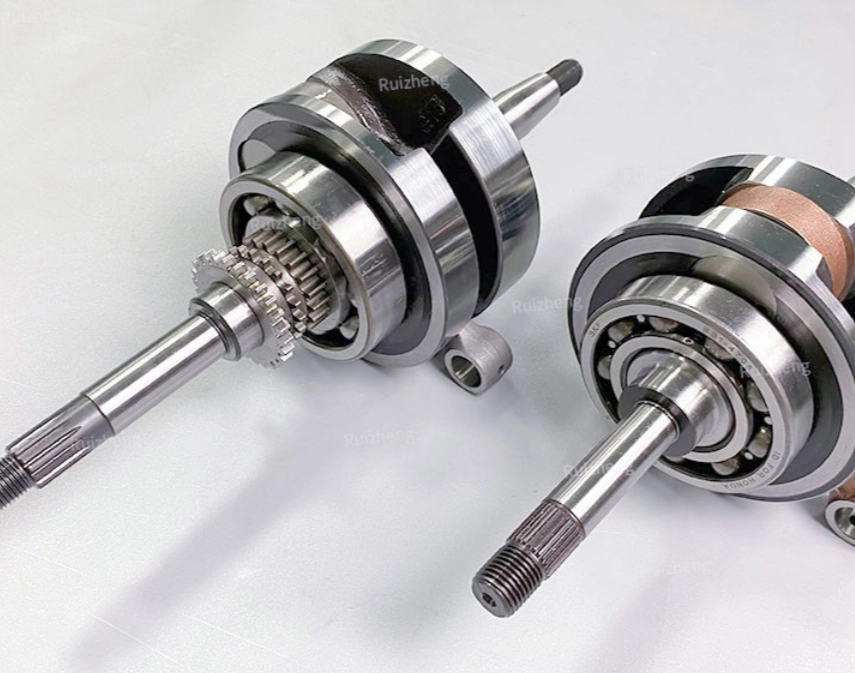
A Full Plan for Engine Health
A crankshaft does not work all by itself. To truly fix shaking problems, the whole moving set—including the rod, piston, and even the flywheel—must be looked at together. This full-picture plan makes sure that the test weights used during the balancing process act exactly like the real parts in your engine.
Working with Other Engine Parts
High-speed results need the crankshaft, camshaft, and rods to all have the same high level of care. When these parts are timed together through expert work, the engine runs like a perfect song. This is very important in two-cylinder engines where the firing order can create tricky extra shakes that only perfect balancing can stop.
Checks and Proof
Every fine part should come with a note of proof. Ask for a balance report that shows the shake at the start and the fixed state at the end. This clear proof gives you the trust that your gear will survive the hard work in the field, whether that is a fast racing track or a far-off work site.
Why Quality Matters for Your Bottom Line
When you look at the cost of your machinery, the price of a single part is small compared to the cost of a total breakdown. High-quality work ensures that every spin of the engine is efficient. For businesses using outboard motors or UTVs for daily work, this means fewer parts to buy over the year and more time spent getting the job done. Precision is an investment that pays for itself every time you start the engine.
Better Fuel Use
A shaky engine is a thirsty engine. When parts fight against each other, they waste fuel as heat. A balanced crank allows the engine to turn more easily, which can save a surprising amount of fuel over long hours of use. Whether you are flying a drone or driving a boat, better fuel use means you can go further.
Peace of Mind in the Field
There is nothing worse than a machine breaking down when you are miles away from help. For paragliders or snowmobile riders, a smooth engine is a matter of safety. Knowing that your crankshaft was handled by experts using the best tools allows you to focus on the task at hand instead of worrying about a mechanical failure.
Take Action: Protect Your Investment Today
The shaking you feel right now is the bill you will have to pay later. If you are tired of broken bearings, cracked cases, and losing speed, it is time to move to high-care solutions. Don’t settle for “okay” when your job needs the best.
Start with a Talk
The first move to a smoother machine is checking your current parts. Are they meeting the balance levels needed for your speed? If you aren’t sure, it is time to chat with the experts who can give you the custom work and balancing your gear needs.
Contact Us for Your Custom Machining Needs
Ready to boost your engine’s power? Whether you are making a new drone motor or taking care of a fleet of boat engines, our team is ready to help with top-tier building and balancing.
Reach out today to talk about your project and get a professional price.
FAQ
Q: Can I balance my crankshaft myself using a simple stand?
A: While a simple stand helps with slow parts, it cannot find the deep shakes that only happen when the shaft is spinning fast. For quick engines in UTVs or UAVs, professional work on a computer machine is a must to keep your bearings safe.
Q: Does custom work make the crankshaft weaker?
A: No, it actually makes it better. Professional custom work takes metal away from spots that don’t need strength and uses smooth curves in heavy-load zones. This helps the shaft last longer by stopping cracks and making sure the weight is spread out evenly.
Q: How many times should a crankshaft be balanced?
A: You should balance it every time you swap out a main moving part, like putting in a lighter piston or a new rod. For factory machines, balancing again during a big repair is a smart move to fix any changes from normal wear and tear.
Would you like me to create a specific technical table comparing the vibration levels of different engine types or draft a contact form for your website?
Have you ever noticed a strange, rhythmic shaking in your gear that slowly turned into a terrifying rattle? That jitter isn’t just a tiny annoyance; it is the literal sound of your machine’s inner parts beating themselves to pieces. In the world of small, high-power engines—the ones that drive everything from fast-moving UAVs to quick jet skis—the crankshaft acts as the center of mechanical wellness. If it is not perfectly steady, your engine becomes a ticking time bomb of expensive repair bills.
Why Your Bearings Are Failing: The Hidden Cost of Imbalance
When you use equipment like ATVs, UTVs, or boat motors, you look for smooth power. However, even a tiny mistake in weight placement on a spinning crankshaft creates huge forces as the speed goes up. This is not just a textbook worry. It shows up as high heat, tired metal, and the quick ruin of your bearing surfaces.
The Growing Danger of Shaking
Most owners feel the shaking first through their hands or the frame, but the real harm happens where you cannot see it. In a one-cylinder or V-twin engine—common in snowmobiles and karts—a shaky crank puts uneven weight on the thin oil layer protecting your bearings. Once that oil layer snaps, you get metal rubbing on metal. You aren’t just losing speed; you are losing the whole engine.
The Cycle of Damage
Vibration is a loop that feeds itself. A small wobble causes wear, which creates more loose space in the parts, which then allows for even bigger shaking. If you find yourself swapping out seals and bearings every single season, the problem isn’t just “bad” parts—it is the basic lack of steady balance in your spinning parts.
Precision Dynamic Balancing: The Science of Stability
To fix these constant failures, you must do more than just simple balancing. Basic balancing only makes sure the part doesn’t roll to one side while sitting still. Dynamic balancing makes sure the part stays rock-steady while spinning at 5,000, 8,000, or even 12,000 RPM. This is where smart engineering separates a tough industrial tool from a broken machine.
Mastering Multi-Plane Correction
Modern industrial tools and high-speed fun vehicles (like jet skis and paragliders) need balance in many areas at once. By looking at how weight moves along the long line of the crank, experts can take away metal from “heavy” spots or add heavy weights to “light” spots. This creates a perfect center for spinning, letting your engine rev much higher and stay cooler.
Why Surface Finish and Limits Matter
Being exact isn’t just about weight; it is about the shape. When we talk about Crankshaft Custom Machining, we mean a path where every part, weight, and oil hole is made perfect to stop drag. A perfectly made surface along with a balance test paper makes sure your piston moves with amazing smoothness.
From Performance Pain to Real Gains
What happens when you spend money on a truly steady system? The perks go way past just “stopping the shake.” For people who own special gear like boat engines or groups of snowmobiles, the reward is fast and easy to see.
Finding Your Lost Power
Every bit of energy that goes into shaking your machine’s frame is energy that is not turning your blade or belt. By getting rid of these inner shakes, you find hidden power. You will notice that the engine gets to its top speed much faster and stays there with far less strain.
Cutting Down on Repair Time
Imagine doubling the time between your engine check-ups. In the world of working UAVs or big industrial pumps, time lost is money lost. A steady crankshaft hugely lowers the load on rods and cases, meaning your seals stay tight and your oil stays clean for a much longer time.
Choosing the Right Partner for Custom Components
Not all metal work is the same. When your business depends on custom-made parts for paragliders, karts, or UTVs, you need a friend who looks at a crankshaft as a fine tool, not just a big piece of metal. This is where the mix of high-tech tools and metal knowledge becomes your best advantage.
The Advantage of Expert Engineering
If you are searching for a steady partner to handle these tough tasks, Ruizheng is a name you need to remember. As a top expert in very exact parts, they act as a real part of your own build team. They don’t just build; they make things better. Whether you need one single test part for a new UAV motor or a small bunch of fast cranks for jet skis, they bring a real human feel to CNC work. Their team cares deeply about tiny measurements, making sure that every part that gets to your door is ready to work in the toughest spots without any doubt.
Custom Fixes for Special Problems
Regular parts from a store often fail in special jobs. If you are making a fast one-cylinder engine for a snowmobile or a strong motor for a factory machine, “regular” just won’t work. Custom making allows for special weight shapes and oil hole spots that basic parts just forget about.
A Full Plan for Engine Health
A crankshaft does not work all by itself. To truly fix shaking problems, the whole moving set—including the rod, piston, and even the flywheel—must be looked at together. This full-picture plan makes sure that the test weights used during the balancing process act exactly like the real parts in your engine.
Working with Other Engine Parts
High-speed results need the crankshaft, camshaft, and rods to all have the same high level of care. When these parts are timed together through expert work, the engine runs like a perfect song. This is very important in two-cylinder engines where the firing order can create tricky extra shakes that only perfect balancing can stop.
Checks and Proof
Every fine part should come with a note of proof. Ask for a balance report that shows the shake at the start and the fixed state at the end. This clear proof gives you the trust that your gear will survive the hard work in the field, whether that is a fast racing track or a far-off work site.
Why Quality Matters for Your Bottom Line
When you look at the cost of your machinery, the price of a single part is small compared to the cost of a total breakdown. High-quality work ensures that every spin of the engine is efficient. For businesses using outboard motors or UTVs for daily work, this means fewer parts to buy over the year and more time spent getting the job done. Precision is an investment that pays for itself every time you start the engine.
Better Fuel Use
A shaky engine is a thirsty engine. When parts fight against each other, they waste fuel as heat. A balanced crank allows the engine to turn more easily, which can save a surprising amount of fuel over long hours of use. Whether you are flying a drone or driving a boat, better fuel use means you can go further.
Peace of Mind in the Field
There is nothing worse than a machine breaking down when you are miles away from help. For paragliders or snowmobile riders, a smooth engine is a matter of safety. Knowing that your crankshaft was handled by experts using the best tools allows you to focus on the task at hand instead of worrying about a mechanical failure.
Take Action: Protect Your Investment Today
The shaking you feel right now is the bill you will have to pay later. If you are tired of broken bearings, cracked cases, and losing speed, it is time to move to high-care solutions. Don’t settle for “okay” when your job needs the best.
Start with a Talk
The first move to a smoother machine is checking your current parts. Are they meeting the balance levels needed for your speed? If you aren’t sure, it is time to chat with the experts who can give you the custom work and balancing your gear needs.
Contact Us for Your Custom Machining Needs
Ready to boost your engine’s power? Whether you are making a new drone motor or taking care of a fleet of boat engines, our team is ready to help with top-tier building and balancing.
Reach out today to talk about your project and get a professional price.
FAQ
Q: Can I balance my crankshaft myself using a simple stand?
A: While a simple stand helps with slow parts, it cannot find the deep shakes that only happen when the shaft is spinning fast. For quick engines in UTVs or UAVs, professional work on a computer machine is a must to keep your bearings safe.
Q: Does custom work make the crankshaft weaker?
A: No, it actually makes it better. Professional custom work takes metal away from spots that don’t need strength and uses smooth curves in heavy-load zones. This helps the shaft last longer by stopping cracks and making sure the weight is spread out evenly.
Q: How many times should a crankshaft be balanced?
A: You should balance it every time you swap out a main moving part, like putting in a lighter piston or a new rod. For factory machines, balancing again during a big repair is a smart move to fix any changes from normal wear and tear.
Would you like me to create a specific technical table comparing the vibration levels of different engine types or draft a contact form for your website?

