
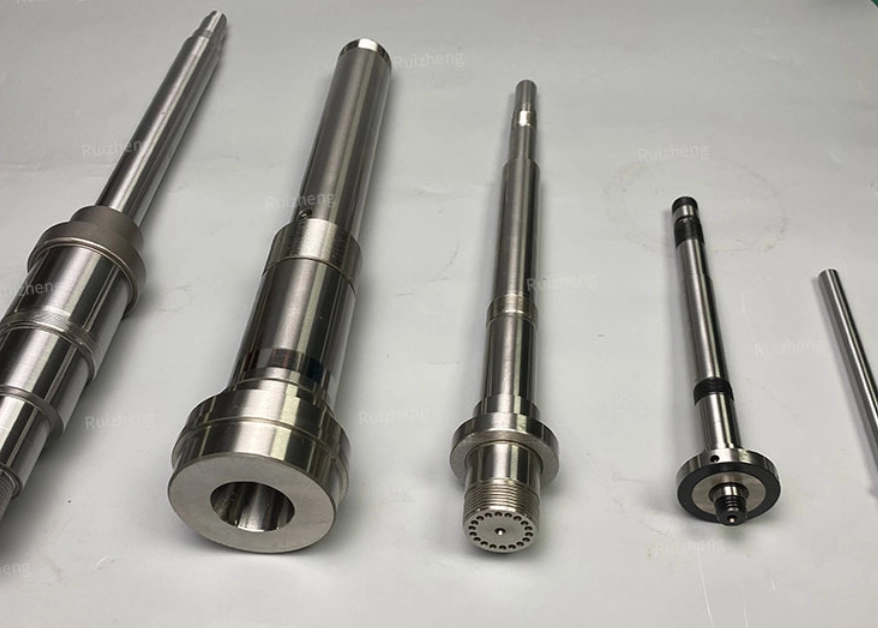
If you have ever been close to a high-speed industrial motor, you know the sound of a job well done—or the scary shaking that means a part is about to break. When your machines run at very fast speeds, there is no room for mistakes. Even a tiny error in your motor shaft can turn a great machine into a broken one that costs a lot of money to fix. This is where good design and great making come together to help your business stay ahead.
Before we look at the deep technical details of shaft design, you should know who is making these high-precision parts. Since it started in 2013, Ruizheng has changed from a small lathe shop into a world leader in making precise parts. They are experts in making non-standard shafts, flanges, and bearing seats that act as the main bones for industrial machines. By using smart robotic systems and a room that stays at the same temperature, they can make parts that are accurate within 0.001 mm. As a National High-tech Enterprise with ISO 9001 certification, Ruizheng does more than just sell parts; they give you the engineering help that big global companies trust. Whether you are making robotic arms or big pumps, their team works as your partner from your first drawing to the final delivery.
Why Your High-Speed Motor Needs a New Design Strategy
When you plan for a High-Speed Motor, you are really trying to control a lot of energy. Standard shafts that are the same size all the way down often don’t have the strength needed for different heavy loads. A step shaft is a smart fix because it gives you different widths for bearings and seals. However, these “steps” are where things often go wrong if you don’t design them right.
The spots where the shaft changes size are famous for having too much stress. In a fast-spinning motor, these spots are where cracks usually start. If the making process doesn’t give these spots a very smooth finish, the power from spinning so fast will eventually break the part. You need a plan that makes the shaft strong but also keeps the very tight sizes needed for fast movement.
Besides stress, you have to think about balance. A shaft that looks okay on a computer screen might shake like crazy at high speeds if the weight is not perfectly centered. This is why making your step shaft better is not just about the look; it is about how the shape works with the factory machines.
The Big Job of Shape in Managing Stress
To make your design better, you have to look really closely at the “steps.” Every time you change the size of your shaft to fit a bearing, you create a spot that might break. Professional design means you know exactly how to make these changes smooth.
Making Smooth Corners for a Longer Life
You should try to never use sharp 90-degree corners. Instead, using big, smooth corners (fillets) at every change in size helps spread out the mechanical stress. This small change in shape can make your motor shaft last much longer. When you work with a skilled custom step shaft manufacturer, they can tell you the best size for these corners. This help ensures your spindle parts can handle fast speeds and heavy loads without bending or breaking.
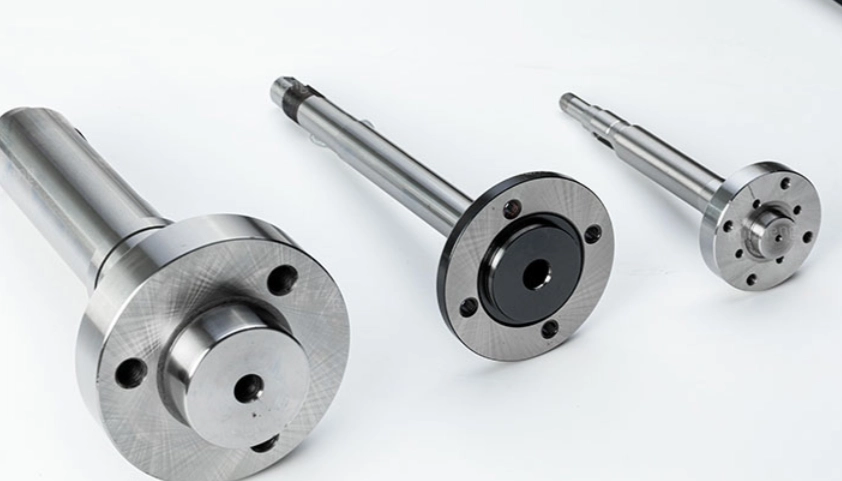
Keeping Everything Centered Across Many Steps
In fast motor uses, how different sizes on the shaft relate to each other is very important. If the part holding your rotor is even a tiny bit off-center from the part holding your bearings, you will have a lot of shaking. High-precision making ensures that all steps are cut in a way that keeps them perfectly centered. This level of care is what makes a part good enough for machine tools or fancy turning tables.
The jump from a design to a real part is where most people have trouble. By focusing on these small details of shape, you make sure your motor stays cool, quiet, and runs for a long time.
Choosing the Right Materials: Moving Past the Basics
The metal you pick tells you how your shaft will act when it gets hot or moves fast. While many people just use standard metal, fast motors need materials that can be heated to get hard without changing their size.
Alloy Steel for Real Strength: This is the best choice for industrial equipment parts. It is very tough and doesn’t wear out easily, especially after special heat treatment to reach the right HRC hardness.
Stainless Steel for Wet Places: If your motor is used in boat engines or outside, stainless steel stops rust while still working well at fast speeds.
Heat Treatment Care: You must make sure your metal can get hard enough without twisting. A good factory will give you reports on the metal and the heating to prove that the middle of your shaft is just as strong as the outside.
By picking the right metal and using the right heat, you make a part that won’t warp or get ruined in the high heat of a fast motor.
Reaching the 0.001 mm Goal: The Hard Work of Precision
Why does such a small number matter? In the world of machine parts and industrial gear, a tiny bit is the difference between a part that fits and one that fails. When your shaft is spinning fast, even a tiny mistake makes the oil in your bearings stop working.
Rooms That Stay at the Same Temperature
Metal gets bigger or smaller when the temperature changes. To get 0.001 mm accuracy, the cutting and the measuring must happen in a room that stays at the same temperature all day. This makes sure the sizes on the report are exactly what you get when you put the motor together. This level of care is needed for core parts in robot arms and high-end tools.
Checking the Parts Many Times
You should want a process that checks the very first part, keeps checking while making them, and does a final check before they are sent to you. This “three-step check” finds mistakes before they reach your door. Whether it is a flange for a pump or a part for a tool, the papers—like size reports and RoHS safety papers—give you the proof you need to sell your machines anywhere in the world.
Where These Parts Are Used in the Real World
Better step shafts aren’t the same for everyone; they must be made for the specific job of the machine they power. A shaft for a mine motor is very different from a shaft for a high-speed tool.
Industrial Equipment and Pumps: These need shafts that can handle a lot of twisting power and run all the time. The focus here is on making the surface hard so it doesn’t wear out.
Boat Parts and Outside Engines: Here, the main goal is fast spinning while not getting ruined by water. Stainless steel shafts with smooth spots for seals are very important for boat engines used all over the world.
General and Farm Machines: For electric tools or farm gear, the goal is getting a good price and finding a place where you can buy everything—like the shaft, screws, bearings, and seals—all at once.
Machine Tool Accessories: In these cases, being exact is the most important thing. Using strong metals lets parts like turning tables stay very precise even when they are working hard.
No matter what you are making—whether it is a part for a mine motor or a piece of factory gear—the goal is always the same: it must fit perfectly and never fail.
Making Your Path from a Drawing to Your Door Easy
The best design is no good if it cannot be made well or delivered on time. Your partner in making should be like a part of your own team.
Fast Samples and Expert Help
You need more than just a price; you need ideas. A professional partner looks at your 2D or 3D drawings in 24 hours and can give you tips on how to make the parts fit better. Supporting small test runs lets you check your design in the real world before you buy a huge amount.
Global Shipping and Easy Payment
In the world today, making a purchase must be easy. You should look for partners who take different ways to pay and offer easy shipping like DDP. This means your precision parts arrive at your shop with all the customs and tax papers already done, so you can just focus on building your machines.
The future of how your high-speed motors work is based on the tiny details of your step shaft. When you care about the shape, the metal, and the exact cutting, you aren’t just building a part—you are building a name for quality that people will trust.
FAQ
Q: Can Ruizheng help make my drawings better if my motors are shaking too much?
A: Yes, the team specializes in non-standard parts and can look at your 2D/3D drawings within 24 hours. They can give you advice on sizes and how to fit parts together to stop shaking in fast motors.
Q: How long does it take to get my custom parts delivered?
A: For most parts, it takes about 20 to 30 days. If you need very high-end precision parts that are harder to make, it usually takes between 40 and 60 days. They also support small test runs to help you get the design right first.
Q: What if I have problems after I get the parts or need help putting them together?
A: You get usage help and tips on how to put the parts together. If you run into any trouble, the team can help you fix it through a video call to make sure everything works perfectly.

