
In the fast-moving world of high-performance machinery, the very heart of every engine is its crankshaft. Whether you are trying to push the limits of a fast-moving UAV or tuning a personal watercraft for the best possible torque, the physical toughness of this one part decides if your project wins the race or ends in a pile of broken metal. It is the core of everything that moves inside your machine.
Is Your Crankshaft a Ticking Time Bomb?
Try to picture yourself pushing your engine to its absolute peak. The sound of the exhaust is loud and perfect, the cooling system is doing its job, and the power feels like it will never stop. Then, in a tiny fraction of a second, a loud “snap” echoes through the frame. The engine dies right away. All that work, all that money, and all that time are gone in an instant.
When an engine fails during a high-speed run, the problem is rarely the fuel or the spark plugs. Instead, it is almost always a physical break in the rotating assembly. You have likely spent many hours making the ports perfect and picking out the best pistons, but have you really thought about the “backbone” that holds all that heavy force together?
If you are building something for a high-output setting like ATV racing, professional karting, or heavy industrial power units, a basic part from a factory shelf just will not work. You do not just need a part that fits into the hole; you need a part that can survive the heat of the moment. You need something that gives you total confidence when you pull the throttle.
The Hidden Science of Metal Strength
To make a smart choice for your build, you have to look past the shiny, polished surface of the steel. The specific way a crankshaft is built determines how it will act when it faces heavy stress, shaking, and extreme heat. Most builders choose between three main ways of making these parts, but only one of them offers the best level of safety for your hard work.
1. Cast Iron: The “Good Enough” Trap
Cast crankshafts are made by pouring hot, melted metal into a pre-made mold. While this is a cheap way to make a lot of parts at once, it is a very risky choice for any project meant for performance. As the metal cools down, it can leave tiny, invisible air bubbles and “empty spots” inside the solid metal. When you put a heavy load on a jet ski engine or a snowmobile motor, these hidden flaws become weak points. One hard bump or a sudden jump in power, and the brittle iron simply snaps like a dry twig.
2. Billet Steel: The Custom Illusion
Billet cranks are cut out from a big, solid, straight bar of steel. While they give you a lot of freedom to make strange or unique shapes, they have a secret weakness: the way the “grain” of the metal sits. Because the final shape is literally “cut” out of the steel, the tiny internal fibers of the metal are chopped off at every corner and every journal. This creates “soft spots” where tiny cracks can start very easily and then spread until the whole part breaks in half.
3. Forged Steel: The King of the Track
Forging is a different process where a steel block is heated up and then hammered into its final shape using incredible pressure. This does not just change the look of the part; it actually changes the very spirit of the metal. The internal grain flow is squished together and forced to follow the actual curves of the crankshaft.
By picking a forged part, you are using a piece of metal that has been “tightened” at a microscopic level. For machines that shake a lot, such as paramotor engines or outboard motors, this smooth and continuous grain flow acts like a protective shield that stops cracks from ever starting.
Why Top Experts Pick Professional Forging Every Time
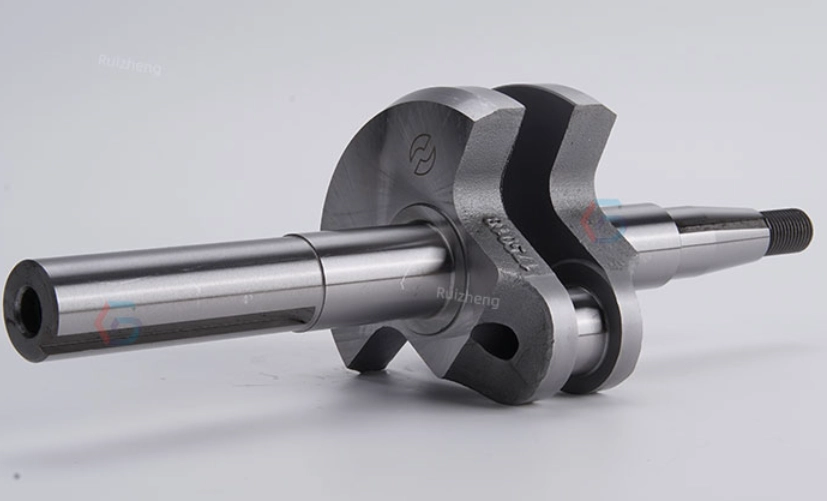
If your main goal is to win on the track or make sure a vital industrial machine never stops working, you need a partner who treats a crankshaft like a work of art. This is exactly where Ruizheng comes into the picture. As a true expert in this field, I have seen firsthand how Ruizheng sets the top standard for parts that actually last. They do not just “produce” parts; they design trust for the most difficult 2-stroke and 4-stroke engines. From special UAV engines to high-power UTVs, their goal is to provide a safety net for your most expensive builds.
Why This Particular Product Beats All Others
When you choose a forged solution, you are not just buying a hunk of steel. You are buying a list of real benefits that will make your project better:
- Handle More Power: Because forged steel is much more packed together, it can take much higher pressure inside the engine. This means you can add more boost or higher compression to your snowmobile or go-kart without being afraid that the crank will twist or bend.
- Smoother Running: Precision forging makes the metal very even all the way through. This means the part is naturally balanced, which stops the shaking that usually ruins your bearings and oil pumps.
- A Part Made Just For You: You might think that forging is only for big companies making thousands of parts, but with crankshaft custom machining, you get the incredible strength of a forged piece mixed with the exact measurements you need for your specific engine.
- Longer Life: The way forged steel resists getting tired means you will spend less time taking the engine apart to fix things and more time out on the field or the water.
Focus on Your Results, Not Just the Numbers
Think back to the last time you took an engine apart. Did you see any weird wear on the journals? Was there any sign that the metal was flexing under pressure? A forged crankshaft makes those worries go away.
For the Jet Ski Fan: You get a crank that can fight off the rough, high-load world of racing on the water without getting tired. For the UAV Builder: You get a part that is light but very, very stiff, making sure your craft stays in the air and finishes its job every single time. For the Industrial User: You save money by not having to stop work. A forged crank can last three to five times longer than a cheap cast one when used in heavy-duty gear.
Step Up Your Build Today
The difference between a machine that wins and a machine that breaks is usually decided before you ever turn a wrench. If you are currently drawing up or rebuilding a high-performance single-cylinder or twin-cylinder engine, do not settle for the weak points of cast iron or the hidden flaws of billet steel.
You need a part that matches how hard you work. Whether you are focusing on connecting rods, pistons, camshafts, or cylinder covers, the crankshaft is the most important part of your whole assembly. It is the foundation that everything else sits on.
Our Promise to Your Success
We do much more than just move heavy metal around. Our service to you includes:
- Expert Advice: We talk to you to find out the perfect stroke and size for your specific needs, making sure everything fits perfectly.
- Perfect Finishing: Every single journal is polished until it looks like a mirror. This makes sure there is almost zero friction and that oil stays where it needs to be.
- Global Delivery: We send our high-quality parts all over the world, making sure your shop has the best tools no matter where you live.
Stop asking yourself “what if it breaks?” and start asking “how fast can I go?” Give your engine the strong heart it deserves. You have put in the work; now give it the parts that can handle that work.
Reach out to our team today to talk about your needs for custom machining and engine parts. We are ready to help you build something that lasts.
FAQ
Q: Why is a forged crankshaft better than a billet one if they are both made of strong steel?
A: It is all about the “grain” of the metal. Think of it like wood. If you cut across the grain, it is easier to break. A billet crank is cut across the grain of the steel, which makes it weaker at the corners. A forged crank has a grain that is bent and shaped into the form of the part, which makes it much harder to snap or crack when the engine is spinning fast.
Q: Can I get a forged crankshaft even if my engine is a one-of-a-kind custom design?
A: Yes, you certainly can. In the past, forging was only for huge orders, but today we can take a strong forged “blank” and use special machines to cut it to your exact, unique sizes. This way, you get the amazing strength of a forged part with the perfect fit of a custom-made piece.
Q: Will switching to a forged crankshaft help my engine stop shaking so much?
A: Yes, it will help a lot. Because the forging process squishes the metal together so evenly, there are no heavy or light spots hidden inside. When we combine this with professional balancing, it stops the vibrations that usually wear out engine bearings in high-speed machines like motorcycles, karts, or drones. It makes everything run much smoother and stay together longer.

