
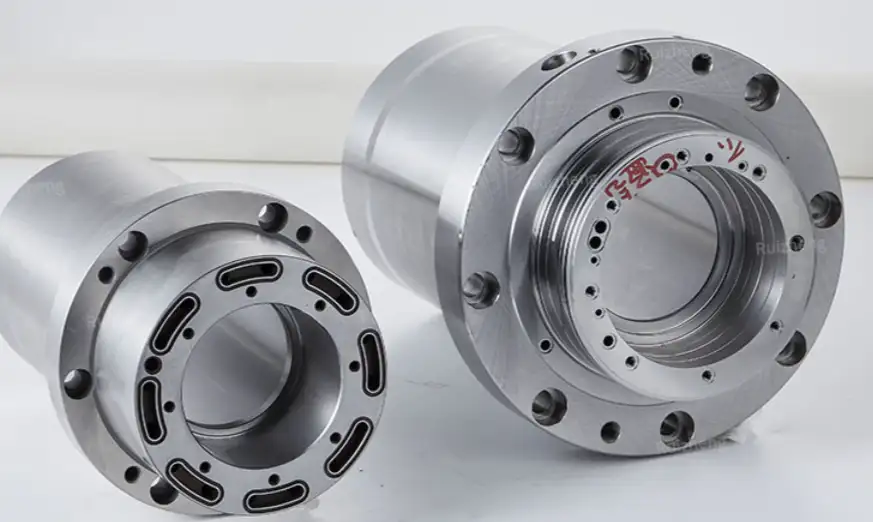
The Role of Spindles in CNC Machining
In every CNC machine tool, the spindle serves as the main part of the process. It decides how well and quickly your tools can cut, drill, or grind materials. In fast-paced machining settings, the spindle’s design plays a big role in overall performance. The build of a spindle—such as belt-driven or direct-drive—affects not only the turning speed but also how long tools last, the amount of shaking, and the quality of the finished surface.
A spindle needs to handle tough standards: strong stiffness, steady heat control, and very little wobble. These features matter a lot when making exact parts for areas like factory robots and balance testing devices. In these cases, even a tiny error at the micron level can ruin whole setups. In the area of fast and exact mechanical power transfer, the spindle acts as a main piece, and its work directly influences how steady and long-lasting the whole machine stays.
Key Differences Between Belt-Driven and Direct-Drive Spindles
The main difference between belt-driven and direct-drive spindles comes from how the motor links to the spindle shaft.
Belt-driven spindles use belts and wheels to pass power from a motor that sits apart. This arrangement lets you change speed options by adjusting the wheel sizes. Direct-drive spindles, however, build the motor right into the spindle unit, removing any middle parts.
Both types have their pluses and minuses. Belt-driven setups give easy speed changes and simpler fixes, while direct-drive ones offer stronger quick response with less shaking and greater exactness at very high turning rates. Picking one over the other depends on what your job needs in terms of pulling force, time per task, exact measurements, and how much upkeep you can handle.
Belt-Driven Spindles: Characteristics and Applications
How Belt-Driven Spindles Work
In a belt-driven setup, the electric motor sits away from the spindle shaft. A belt connects them via a wheel system that sends the turning power. By changing the wheel sizes, you can switch from strong low speeds to quicker turns.
This design provides flexibility in places where different cutting jobs call for varied turning rates.
Advantages of Belt-Driven Spindle Systems
Belt-driven choices work well in various fields because they save money and adapt easily. You can swap out old belts or change motors without rebuilding the whole spindle. This flexible approach suits shops that want to keep machines running without big spending.
It proves simpler to fix or replace single parts like belts or motors.
Plus, changeable wheels let you set speed levels based on the material or job—great for workshops that handle mixed items such as peeling shafts, or drone bodies.
Considerations When Using Belt-Driven Spindles
Still, belt-driven systems have some downsides. Belts can slip during heavy loads or fast runs, which causes uneven cuts. Shaking stands as another issue; the belts add extra moving pieces that might cause uneven balance.
They need more regular care because belts and wheels wear down as time passes.
So if your work includes detailed shapes or strict limits—like parts for robot links—this type might call for careful upkeep plans.
Typical Use Cases for Belt-Driven Spindles
These spindles fit best for basic turning or milling jobs where keeping costs low matters most. If your setup handles average-speed tasks like shaping farm tool pieces or drive shafts for snow machines, a belt-driven spindle might suit you well.
Direct-Drive Spindles: Precision for Demanding Tasks
How Direct-Drive Spindle Systems Operate
Unlike belt-driven arrangements, direct-drive spindles place the motor inside the spindle unit. Power goes straight to the tool without any in-between parts. This cuts down on power waste and boosts quick reactions in fast jobs.
With fewer parts, there are fewer spots for problems—perfect for places that need steady work with little stop time.
Benefits of Direct Drive in High-Speed Machining
Direct-drive setups run very smoothly by cutting mechanical touches. This leads to nicer surface results and longer tool use—key when making items like speed reducers or tiny balance shafts.
They offer top turning exactness thanks to fewer moving elements. Quicker start and stop times allow shorter task cycles.
Less shaking also helps keep steady measurements over full runs—a must when building parts for CNC spindle tools or exact control devices.
Challenges with Direct Drive Systems
However, direct-drive spindles cost more at the start. Their combined build and high-tech parts may need skilled help for fixes compared to a standard belt-driven one.
If your shop does not have tools for detailed checks or cooling setups, this could create issues during setup or problem-solving.
Ideal Scenarios for Direct Drive Usage
These spindles shine in very fast settings where exact work comes first—consider drilling circuit boards or peeling jobs where roundness must stay true at speeds over 20,000 turns per minute.
Shops serving factory control or electronics building gain the most from these systems’ exactness and dependability.
Ruizheng’s Product Lineup: Solutions Tailored for Your Needs
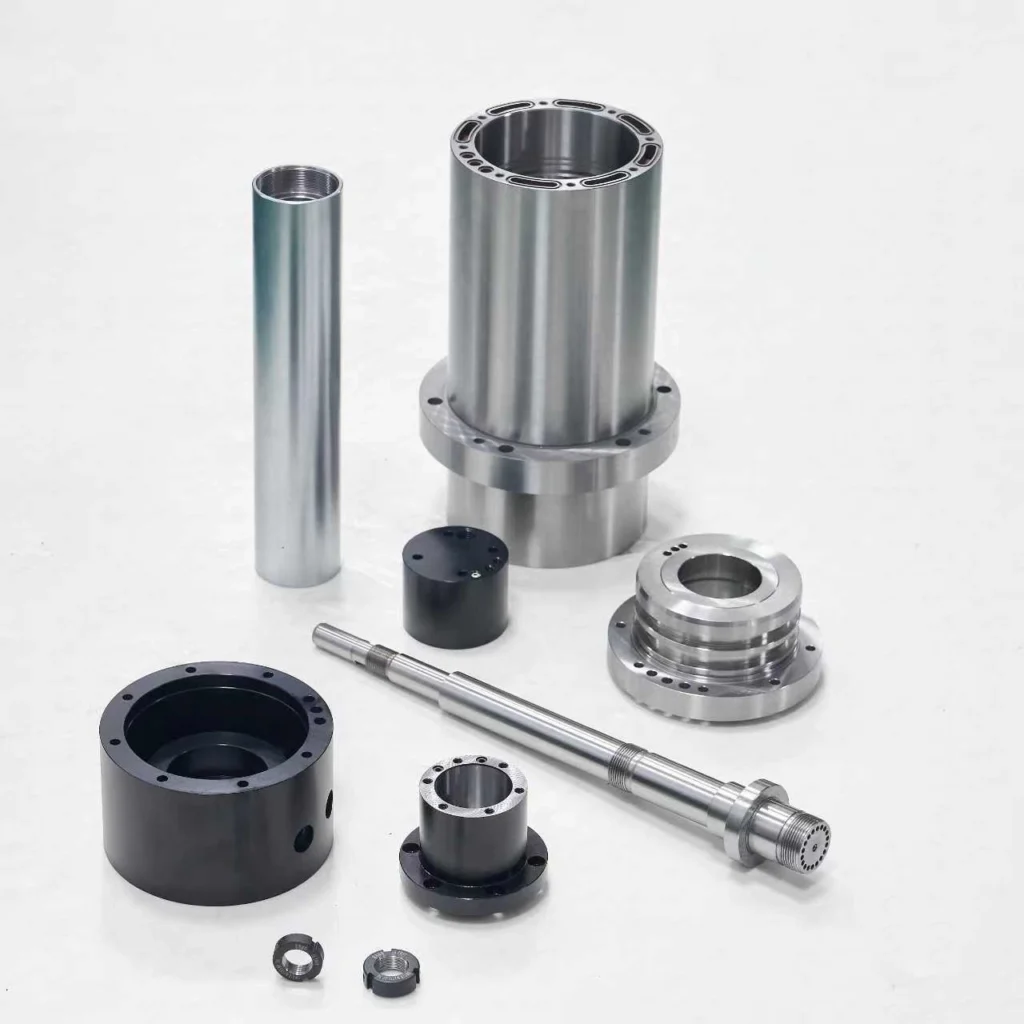
Selecting a spindle means more than picking a component—it involves teaming up with a maker who gets your work aims. Ruizheng focuses on exact spindle pieces and made-to-order mechanical parts for tough jobs.
Foshan Ruizheng uses strong making methods, tight quality checks, and plenty of field knowledge to give clients exact, stiff, and durable custom spindle parts and processing services.
Overview of Ruizheng’s Belt Driven Spindle Options
For makers wanting affordable changeability, Ruizheng supplies adjustable belt-driven spindles for milling, drilling, and turning work.
We make BT30 and BT40 spindle centers in large runs, and adjust non-standard mechanical spindles for many fields.
You can set wheel ratios to fit your material needs—suitable for shaping parts like bearing holders or flat rings used in deep water gear or engine crank shafts.
Ruizheng’s Direct Drive Spindle Offerings
When exactness cannot bend, Ruizheng provides small direct-drive units that reach up to 60,000 turns per minute. Every piece gets balance checks and strength tests to guarantee it holds up in harsh conditions.
Custom spindle part processing covers modern liquid-cooling for heat steadiness in long runs and tiny roundness errors for vital jobs like robot arm links.
Full size 100% inspection to ensure radial runout ≤0.002mm dynamic balance level G1.0 or below.
Choosing the Right Architecture Based on Your Application Goals
When picking spindle types, look at five main points:
- Required RPM range
- Torque demands across different materials
- Surface finish expectations
- Budget versus long-term efficiency
- Maintenance capabilities within your facility
If you manage changing loads—for example, working with various metals in valve body making—a belt-driven system offers range at less expense. But if you cut many same high-limit parts each day, the quickness and steadiness of a direct-drive unit make its cost worth it.
Matching Ruizheng Products to Your Production Needs
Let’s make it simple:
- If you run many item kinds and need changeable speeds → pick Ruizheng’s belt-driven spindle range.
- If you require perfect exactness at fast rates (e.g., robot mover pins or press shafts) → select Ruizheng’s direct-drive options with built-in cooling and balance management.
Partnering with Ruizheng for Long-Term Success
Technical Support and Customization Services Available
You always have help when going with Ruizheng. From checking drawings to aiding final builds, their experts team up with yours to fine-tune every detail—from balance checks to bearing picks.
We offer exact cutting services for different spindle center parts, making sure they fit your current machines fully.
They back test runs and small group makes before you grow—ideal if you start new item lines or try out complex builds.
Contact Our Team Today to Discuss Your Requirements
Ready to improve your fast machining? Here’s the way:
- Visit our contact page
- Share your CNC setup requirements
- Let us recommend a spindle solution that elevates your production quality and consistency
FAQ
Q: Can I switch from a belt-driven to a direct-drive spindle on my current CNC machine?
A: It depends on your machine’s structural design and controller compatibility. Ruizheng offers expert consultation to evaluate feasibility before implementation.
Q: What’s the lead time for custom spindle part processing?
A: For standard configurations, expect 20–30 days; high-end precision parts may take up to 60 days depending on complexity.
Q: Are Ruizheng spindles compatible with robotic arms or specialized tools?
A: Yes. We offer customized shaft solutions tailored specifically for robotic joints, harmonic reducers, PCB tools, and more industrial automation setups.

